
I went to see Whitney Mather sing yesterday afternoon. It was her second masters degree performance at Walter Hall with David Eliakis at the piano. (Probably the first time I’ve heard David play a proper piano!)

It was an interesting and well chosen program that allowed Whitney to demonstrate her musicianship and sensitivity to text. For the most part it avoided overly obvious territory, starting with Purcell’s rarely heard The Blessed Virgin’s Expostulation which was followed by the obligatory CanCon. In this case John Greer’s The Red Red Heart; settings of poems by Marianne Bindig. The Purcell allowed some tasteful decoration and an opportunity to display appropriately baroque style. The Greer, like so many modern songs, perhaps had more of interest in the piano line than for the voice but it did allow a brief coloratura flourish.
Next up were Respighi’s Quattro Rispetti Toscani to texts by Arturo Birga. These are rather beautiful songs and should be heard more often. Whitney brought out both the pathos and humour in the rather rustic (Tuscan dialect?) texts.
After the interval we were on more familiar ground with Schubert’s Der Hirt auf dem Felsen. Tiago Delgado played the clarinet part quite beautifully and Whitney managed the crazy pace of the piece very well, managing to maintain a clear sense of shape and line. She wrapped up with Milhaud’s Chansons de Ronsard. These are a bit of a tour de force. Some passages are really fast and much of the music lies high in the soprano range. Whitney may not have the easiest, most beautiful, high notes ever but she does have all the notes and she hit them here with accuracy and without sense of strain. She was particularly impressive in the crazy fast Tais-toi, babillarde.
All in all not a bad way to spend a late Saturday afternoon!
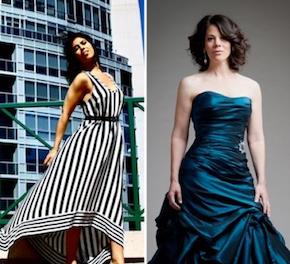 Not much sign of spring as we move into the second half of the month but there are some things musical to enjoy while we await the return of the sun. On March 18th at 2pm in Mazzoleni Hall there is You’re Welcome Rossini with the glamorous duo of Allyson McHardy and, the not seen often enough in Toronto, Lucia Cesaroni. This one is officially sold out but there may be rushes. Ten bucks says they do the Cat duet.
 Soundstreams have announced their 2018/19 season. There’s an intriguing mix of concerts at a wide range of venues. The two shows that particularly caught my attention were, firstly, Seven Deadly Sins; a show featuring singer songwriters Lizabeth Shepherd, Aviva Chernick and Robin Dann with composers Christopher Mayo and Analia Llugdar being sinful. This one plays at The Great Hall on April 9th to 11th next year.
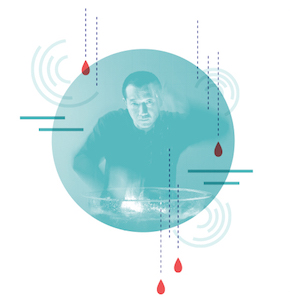 Tan Dun’s Water Passion After St. Matthew, given last night by Soundstreams at Trinity St. Paul’s is very Tan Dun. The work is in nine movements and scored for chorus, soprano and bass-baritone soloists, violin, cello, electronics and lots of percussion. And bowls of water and rocks. The texts broadly follow the Passion story finishing with a final Resurrection movement in which water is the symbol of rebirth, recycling and spiritual completeness. There are also ritual elements. Bowls of water laid out in a cruciform pattern are lit from beneath. The musicians change position and the players, especially the percussionists, perform hieratic gestures with the water bowls and their contents. It also involves a complex and dramatic lighting plot.
 This year’s Toronto Summer Music Festival runs from July 12th to August 4th and, in commemoration of the 100th anniversary of the end of WW1 is war themed, though to be honest it wears it pretty lightly. As always there is one big vocal star. This year it’s German tenor Christoph Prégardien. He has a recital at Walter Hall with Julius Drake at 7.30pm on July 17th. He also pops up on the 20th at the same time and place to sing Schubert’s Die Forelle with Stephen Philcox in a program that features chamber music by Schubert, Shostakovich and Rachmaninoff. There’s no word on public masterclasses but he’s around for a few days so I suspect that something will emerge.
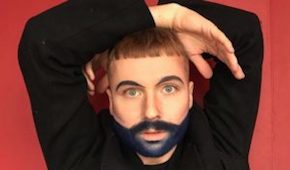 FAWN Chamber Creative have just announced their latest project, Belladonna. It’s a queer chamber work blending techno and opera. The libretto and dramaturgy are by UK LGBT specialist Gareth Mattey. Music composition, arrangement and performance will feature modular synth artist
 The TSO has announced its 2018/19 season; the first under the temporary (maybe!) direction of Sir Andrew Davis. I think there’s a lot to like. As ever it’s an eclectic mix of mainstream and contemporary orchestral music, major choral works, and more popular fare like film screenings with orchestra pops and Broadway but there are more guest conductors and, it seems to me, more focus on the core symphonic repertoire.
 operaramblings