
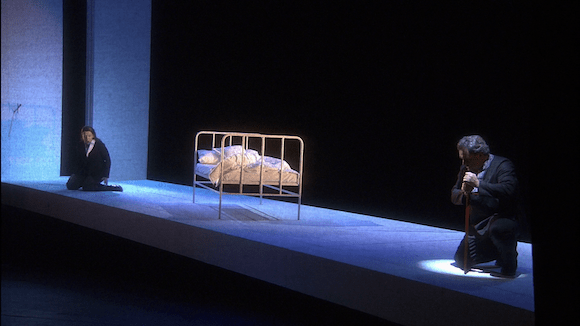
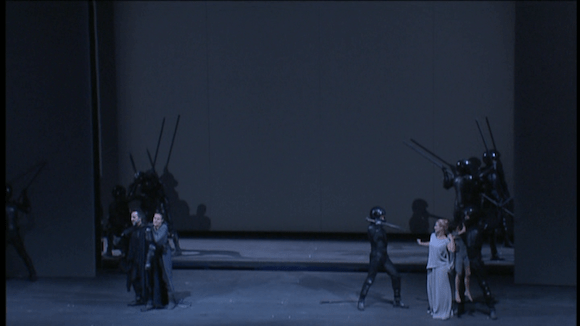
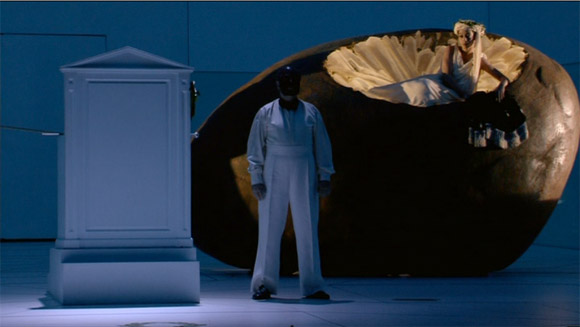
David Pountney is rarely afraid of taking risks in pursuit of an idea and that seems to be what’s going on in his 2008 Wiener Staatsoper production of Verdi’s La forza del destino. The basic concept seems to be to draw as much distinction as possible between the piece’s predominantly dark tone while making the ‘scherzo’ like elements as mad as possible. And occasionally mixing up the two to create deliberate confusion. To this end he uses a lot of moving set elements and projections; often fuzzily superimposed on stage action. Preziosilla and the camp followers are hot pants clad cowgirls. The full effect is seen in the Act 3 “orgy” where hospital patients, some on drips etc, interact with cow girls and a marching band while giant fuzzy B&W projections of WW2 armour play on the scrim. It’s really busy and takes some decoding.
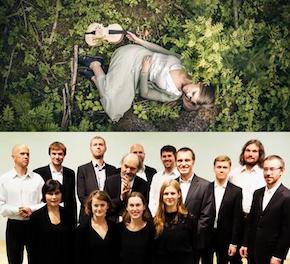 There have been quite a few announcements in the last couple of weeks or so. Here’s what’s coming up.
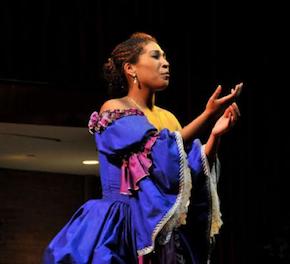 Here’s what’s coming up in the first part of March. Thursday 1st is Opera Pub Night at the Amsterdam Bicycle Club at 9pm. On Friday March 9th Soundstreams are presenting Tan Dun’s Water Passion at Trinity St. Paul’s at 8pm. On Wednesday 14th and Friday 16th the Glenn Gould School is presenting Die Fledermaus in a production by Joel Ivany. That’s at 7.30pm in Koerner Hall. It’s a good looking cast and recommended. Thursday 15th through Sunday 18th the UoT Opera is presenting Gershwin’s Of Thee I Sing in the MacMillan Theatre. The production is by Michael Patrick Albano and start times are 7.30pm except for Sunday at 2.30pm.
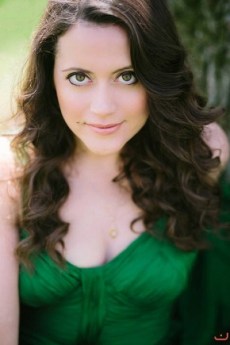 Handel’s Alexander’s Feast is an oratorio to a text by Newburgh Hamilton based closely on an earlier Dryden St. Cecilia’s Day ode. The basic plot is that Alexander is feasting in captured Persepolis with his mistress Thaïs. Inflamed by the music of Timotheus he decides to burn down the city in revenge for his fallen soldiers. Cecilia descends from Heaven and substitutes music for the king’s barbarous intentions. There are solo and choral numbers and a couple of duets and there are two concerti; one for triple harp representing Timotheus’ lyre playing and an organ concerto for St. Cecilia. It’s all quite tuneful and interesting if not as inspired as some of the better known oratorios.


 operaramblings