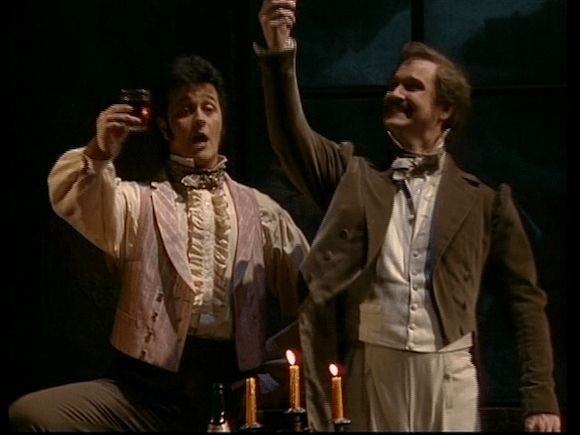
There are lots of ways of presenting opera short of a fully staged/costumed performance with an orchestra. In Toronto I’d say “concert” or “semi-staged” performances are probably at least as common as the full Monty; partly for reasons of cost and partly because there aren’t that many venues with a pit and a fly loft. It’s generally pretty clear what “concert” performance means; concert wear and music stands, but what does the average punter expect when they see the words “semi-staged”? I really don’t know what to expect. Surtitles? Costumes? Props? Blocking? Orchestra, piano or something in between? I’ve probably seen all possible combinations of the above described as “semi-staged” and I don’t think I detect any pattern in what works and what doesn’t. Anyway Domoney Artists have a semi-staged version of Rossini’s Le comte Ory coming up on Saturday so I took the opportunity to ask director François Racine about his approach, which turned out to be not quite like any approach I’d come across before.
Tag Archives: rossini
Not Sam
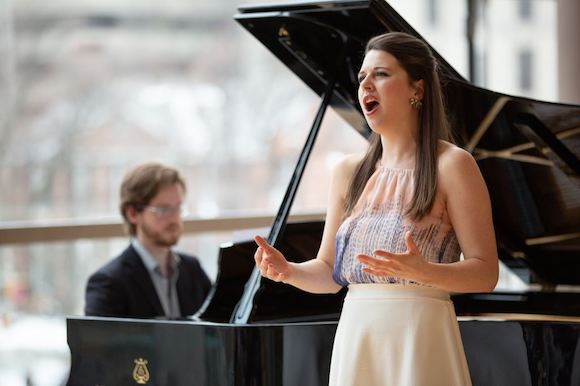
Off I went to the Four Seasons Centre to see Samuel Chan and Stéphane Mayer perform some Schubert. Sadly Sam was indisposed so what we got was a hastily, but very well, constructed program featuring some of the other singers in the Ensemble Studio.
Things kicked off with the increasingly impressive Anne-Sophie Neher in an accomplished rendering of Mozart’s “show off” piece Exsultate jubilate, in which she showed very decent control in the rather fiendish runs. She was back later with “The Presentation of the Rose” from Der Rosenkavalier which sounded suitably Straussian and sufficiently girlish at the same time. Nicely done. She made a third appearance with one of Adèles’s arias from Le comte Ory. This didn’t quite do it for me but it was fun to hear Stéphane playing around with the very Rossiniesque accompaniment.

COC 19/20 revealed
The COC 2019/20 season was revealed last night at the Four Seasons Centre. I liked the set up this time. A brief introduction from Alexander Neef, an overture and then a well scripted narrative, read by William Webster, describing the works in turn within the theme of “Once Upon A Time”, with a performance of one number from each opera. And so, what do we get:
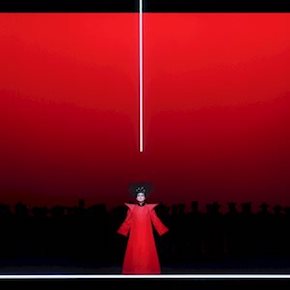
Puccini – Turandot – September 28th to October 27th 2019 – 9 performances.
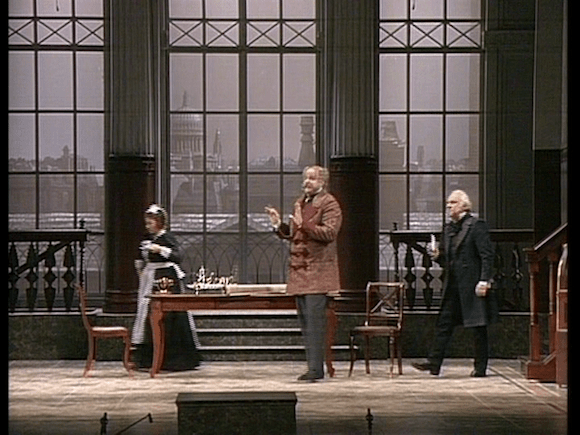
This is the Robert Wilson production from Madrid. Tamara Wilson and Marjorie Owens share the title role with Sergey Skorokhodov and Kamen Chanev as Calaf and Joyce El-Khoury/Vanessa Vasquez as Liu. Carlo Rizzi conducts. I’m not a huge fan of Wilson’s elegant but static productions but I could see it working for Turandot. I’m told the usual Alfano completion will be used.
Lauren Margison gave us Liu’s aria. Continue reading
Meet the Orchestra Academy
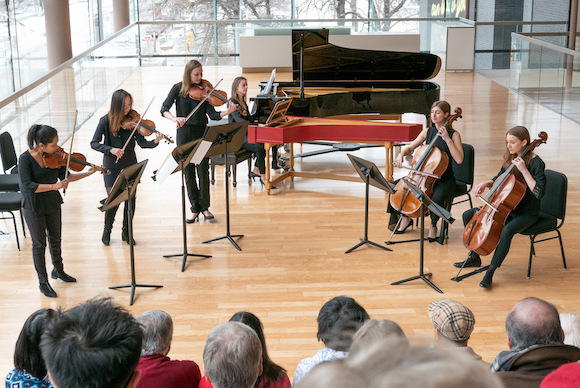
Yesterday’s concert in the RBA, the first I’ve been to in a while, featured the five members of the Orchestra Academy; violinists Joella Pinto and Gloria Yip, violist Carolyn Farnand and cellists Erin Patterson and Alison Rich, with Joel Allison and Samuel Chan and Rachael Kerr on keyboards. It was an interesting concert in many ways. We don’t get to see the young instrumentalists much nor do we often see Ensemble members sing with a chamber ensemble. It was also interesting to hear the contrast between Joel’s dark toned bass-baritone, often singing in a very low tessitura, with Sam’s much brighter, lighter baritone which sometimes was well up in tenor territory.

A Canadian in Rossini?
Yes, there is a Rossini opera with a Canadian character. Well, OK it’s a bit ambiguous whether he’s Canadian or American and the librettist doesn’t seem quite sure that they aren’t the same thing. Anyway, likely the earliest of an appearance of a Canadian in opera unless one counts the Les sauvages d’Amérique section of Rameau’s Les Indes Galantes. The opera is the early one act comedy, La cambiale di matrimonio. It’s a bit of a one trick pony. An English merchant has contracted to marry his daughter to the Canadian, Snook, but she’s already unofficially engaged to another. After much faffing about Snook makes the contract over to the other suitor and makes him his heir. The joke, such as it is, is that all this is carried out in the language of commercial contracts. For example, when Snook minds out that Fanny is engaged he considers the “merchandise” to be “mortgaged” and so on. Still it provides a back drop for some showy singing and the usual rapid fire Rossini ensemble numbers.

Bartoli’s Rosina
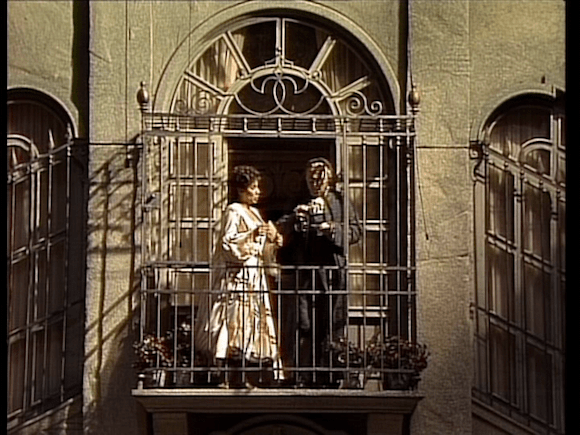
It’s a bit hard to believe, but, as far as I can tell, the only available video recording of Cecilia Bartoli singing Rosina in Rossini’s Il barbiere di Siviglia is a 1988 recording made at Schwetzingen when she was 22 years old. It’s pretty typical of Michael Hampe’s productions of that period; traditional, elegant, symmetrical and generally well composed, but nothing terribly insightful. It’s also rather dark and grey in places which taxes the recording technology of the period sorely.

La scala di seta
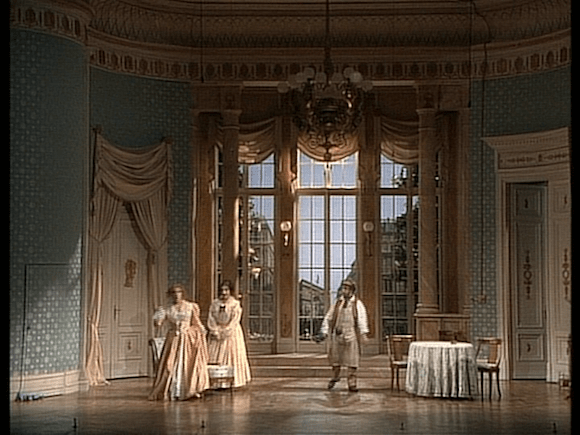
So here’s another Rossini one act farsa from Schwetzingen. It’s a 1990 La scala di seta in, inevitably, a production by Michal Hampe. It’s predictably pretty to look at and well constructed dramaturgically. The Paris background is a nice touch. There’s some fine singing and energetic fooling from Alessandro Corbelli as the servant Germano. The principal quartet of lovers; Luciana Serra, David Kuebler, Jane Bunnel and Alberto Rinaldi backed up by David Griffith as the girls’ guardian are stylish and toss off the various quick fire ensembles with aplomb. Gianluigi Gelmetti and the Radio-Sinfonieorchester Stuttgart round things out with an equally accomplished reading. So there it is, straightforward Rossini in a typical Hampe production pulled of nicely in Scwetzingen’s elegant rococo theatre.

The other Naples opera
There are two girls and two guys. The guys are not who they appear to be. Nobody is sure who is pairing off with who and there’s a scheming servant. And we are in Naples. You know the opera of course. It’s Rossini’s L’occasione fa il ladre. It’s one of Rossini’s early one act farsi for La Fenice and it’s quite good, if very silly. There are plenty of musical high jinks with fast paced ensembles and some wicked coloratura. And it has an unambiguously happy ending. You will also likely recognise some of the music as, in best Rossini fashion, he used chunks of it in later works.

Flurries
There have been a series of interesting announcements about composers and commissions from the Canadian Opera Company recently. First is the announcement that Ian Cusson is to become composer-in-residence from August 2019. Cusson is part Métis and, readers may recall, featured as half of a memorable evening kicking off the new Confluence concert series in October. There’s an initial commission announced too. He will work with Colleen Murphy on a piece for “families and young people” that weaves elements of myth into a contemporary urban setting.
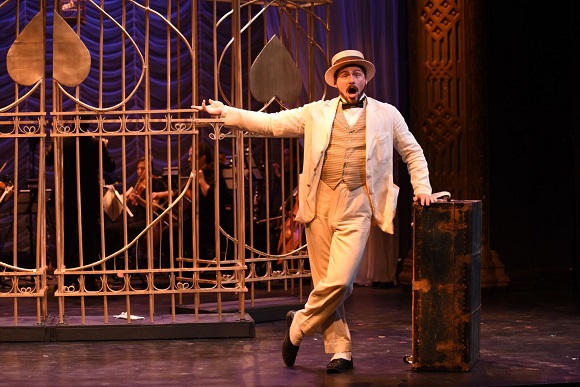
Opera 5’s Barber of Seville
Opera 5 opened a run of Rossini’s The Barber of Seville at the Factory Theatre last night. It’s arguably the most conventional thing Opera 5 have done. It’s a (very) mainstream piece. There was no accompanying themed food or drink (a glass of Rotsina?). There was no audience participation. There weren’t even Aria Umezawa’s characteristically minimalist touches. What there was a carefully constructed Barber for reduced forces directed by new Artistic Director Jessica Derventzis and conducted by Evan Mitchell.