 2020 started with news of yet another anti-semitic atrocity in the United States. My musical 2020 started with a new recording of that finest of all musical acts of resistance to anti-semitism, Shostakovich’s Symphony no. 13 in B-Flat minor “Babi Yar”. It’s a setting of poems by Yevgeny Yevtushenko for orchestra, bass soloist and men’s chorus and it’s powerful stuff. It’s often performed at consistently high energy and volume and seething with anger. Riccardo Muti treats it rather differently. The recording, featuring bass Alexey Tikhomirov, the Chicago Symphony and the men of their chorus, doesn’t lack drama or intensity but it’s also often intensely lyrical. When require, Tikhomirov and the chorus produce some gorgeously beautiful, even delicate, singing and the orchestra do the same. There’s not much of the blaring brass one associates with the Leningrad recordings of the Shostakovich symphonies. Instead there’s some wonderful playing, especially by the low brass. The motif in the fourth movement, curiously reminiscent of the Fafner scene in Siegfried, features a sort of duet between tuba(?) and timpani to great effect. This is very fine music making.
The recording, on the CSO’s Resound label, is exemplary. The textures are crystal clear and the overall ambience feels like a proper symphony hall. This is the memorial for Babi Yar.

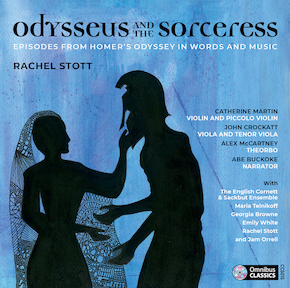 This is a really unusual CD. It combines readings; both in the original Greek and in English translation of some of the best known passages in Homer’s Odyssey with music for period instruments composed by Rachel Stott.
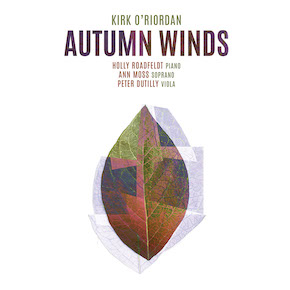 Autumn Winds is a new CD of vocal and chamber music by American composer Kirk O’Riordan. Much of the music is unashamedly beautiful but it doesn’t sound in the least retro. It’s a long way from the neo-Broadway style that drives me nuts.
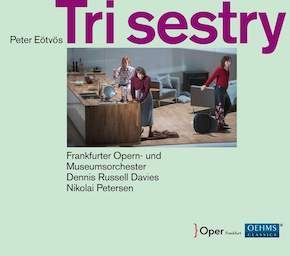 Peter Eötvös’ 1998 opera Tri sestry is based on the Chekhov play and was recorded live at Oper Frankfurt in 2018. It takes fragments of the original Russian play and recombines them in a non-linear way to create a prologue and three “Sequences” from the points of view of Irina, Andrei and Mascha repectively. The recombination is complex enough for the accompanying booklet to contain a table mapping Chekhov’s scene order to Eötvös’. There’s no libretto in the CD package so even flipping between the (fairly detailed) synopsis and the track listing it’s hard to figure out who is singing or about what. No doubt this was much clearer when watching the stage production.
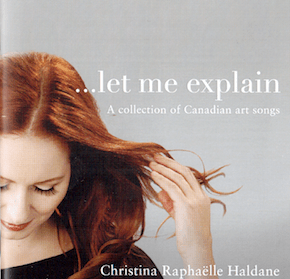 …let me explain is a new CD of Canadian art song (mostly) from soprano Christina Raphaëlle Haldane. The first set consists of three arrangements of Acadian folk songs by by Carl Philippe Gionet. The three are quite different. L’Escaouette is fast, high, rhythmic and very high energy. Tout Passe is much more elegiacal while Wing Tra La is very playful. They are sung quite beautifully with piano accompaniment from the arranger. Ahania’s Lament is a longish piece in which Blake’s text is set by Samy Mousa. It’s a tough sing with a lot of high exposed passages against a minimal accompaniment. It’s a piece that it’s easy to get drawn into. It’s a good vehicle for Haldane’s crystalline upper register. Piano accompaniment by M.Gionet again.
 The latest release on the Chandos label from Sir Andrew Davis consists of three works by Sir Arthur Bliss; The Enchantress, Meditations on a Theme by John Blow and Mary of Magdala.
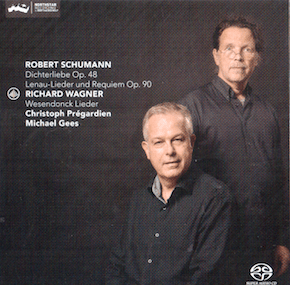 I’ve been listening to Christoph Prégardien and Michael Gees’ new Schumann and Wagner recording for a number of reasons. I was very impressed with
 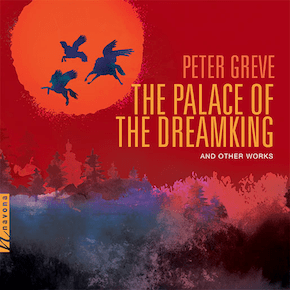 Peter Greve is a Dutch composer of works for various forces all of which could, I suppose, be considered tone poems as they all have thematic/storyline elements. The “stories” for the pieces on the CD can be found
 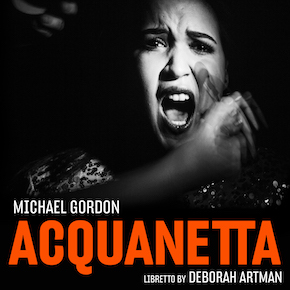 Acquanetta; music by Michael Gordon, libretto by Deborah Artman, is a one act chamber opera in ten scenes lasting around 70 minutes. It’s a sort of homage to the B movie horror genre and specifically riffs off the 1943 film Captive Wild Woman in which a mad scientist turns an ape into a sultry temptress. The opera got its North American premier in Brooklyn in January 2018 and was reviewed by Patrick Dillon in Opera Canada Volume LVIII No. 4. Subsequently a CD version was recorded in the studio.
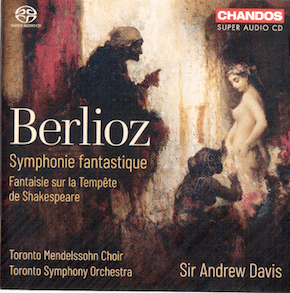 The Toronto Symphony have a new CD out. It’s a couple of Berlioz works recorded under the baton of Sir Andrew Davis at Roy Thomson Hall in September 2018. The first piece is the rarely heard Fantaisie sur la Tempête de Shakespeare for which the orchestra is joined by the Toronto Mendelssohn Choir. It’s an early piece inspired by one of Berlioz’ unrequited passions (like everything else by Berlioz!) and was considered daringly modern in its day. It’s said to be the first piece to introduce a harp to the symphony orchestra and it also includes piano four hands. It’s very colourful and rather brash which is territory that Sir Andrew excels in. There’s great clarity to both the singing and the playing.
 operaramblings