Up close with Aschenbach

Death in Venice is a curious opera.  Based on a Thomas Mann novella, it concerns the aging writer Gustav von Aschenbch and his meditations on aging and art, as well as his obsession with a Polish boy encountered at his Venice hotel.  Very little actually happens.  Aschenbach has a series of encounters with quotidien characters such as the hotel manager and a hairdresser but mostly he observes and what we hear are a series of inner monologues.  To work as theatre Aschenbach must capture our interest and our sympathy.  If he doesn’t the piece can be incredibly boring and irritating.

1.aschenbach Continue reading

In the summer of seventeen hundred and ninety seven

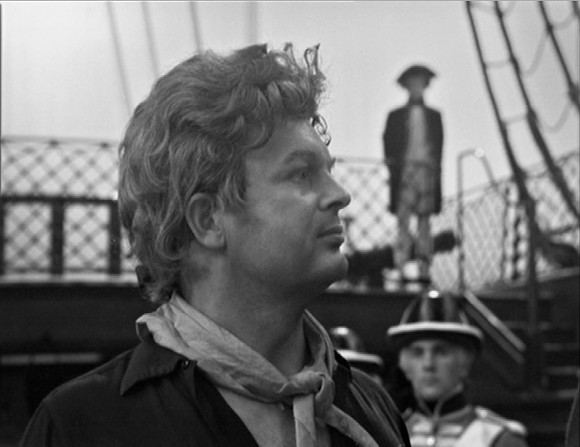
Billy Budd is the second of Britten’s large scale operas.  Originally envisaged as a four act piece with prologue and epilogue it was later reorganised into two acts and that’s the version the BBC recorded and broadcast in 1966.  That broadcast has now been released on DVD.  Technically it shows it’s age.  The picture is 4:3 black and white though there’s a remastered, and very decent, LPCM mono sound track.  There’s also an enhanced Dolby mono track.  The video too has been restored and looks pretty decent.

1.billy Continue reading

Of love and longing

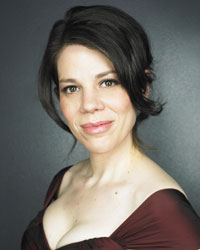
allysonMcHardy200x250Allyson McHardy’s lunchtime recital in the Richard Bradshaw Amphitheatre today was unusual and effective; combining contrasting works by Brahms, Robert Fleming and Britten.  Accompanied by Liz Upchurch on piano throughout, she was joined for the first set; Brahms’ Two Songs for Alto, Viola and Piano, Op. 91 by the COC’s principal violist, Keith Hamm.  They were rather beautifully sung and played and were true to music and text; both of which are a bit too German Romantic for my taste. Continue reading

Albert Herring fifty years on

It was quite a party at the MacMillan Theatre this afternoon.  The MacMillan opened fifty years ago with a production of Britten’s Albert Herring and this afternoon marked the final performance of a new production to celebrate the occasion.  Directed by Joel Ivany, it was a straightforward but lively and very well characterised interpretation that brought out many of the very specific and quirky elements of the local culture while taking it mysteriously up market in some ways. (*).  Coupled with very good singing by any standard, and this was a student production, it made for a most enjoyable afternoon.

Continue reading

Another chance to hear Sir Thomas Allen

Having seen him sing Don Alfonso in the COC’s Così fan tutte three times as well as having attended his RBA lunchtime recital and having interviewed him one would be forgiven for thinking that I might have had my fill of Sir Thomas Allen.  But no, Durham University organised a reception on Thursday evening for alumni at which Sir Thomas was the guest of honour in his capacity as Chancellor.  It was one of the filthiest nights of a filthy winter and a very nasty walk from the conference I was attending to the Music Room at Hart House but around fifty people turned up.  They were mostly Durham grads but the Dean of Music from UoT was there, as was the Chancellor of Queen’s (which was rather a surprise).  It was basically a drinks and canapés do but our esteemed Chancellor was prevailed on to sing a few numbers with the help of Rachel Andrist.  We got a ballad I didn’t recognise, Deh vieni alla fenestra, The Foggy Dew (arr. Britten) and Cole Porter’s Miss Otis regrets.  Fun, and a very welcome opportunity to hear something from Don Giovanni from a master of the role.

I had an interesting conversation with Sir Tom and Rachel about music in hospitals and now have a “to do” to sort out who to talk to at Sick Kids.  Oh yes, and to cap a filthy night, the lemur and I were engulfed in a tidal wave of filthy slush on our way to the subway and home.

More opera in cinemas

enogrimesThe latest entrant to the live HD cinema broadcast market is ENO.  The first broadcast, on 23rd February, will be the current David Alden production of Britten’s Peter Grimes which will, current lurgy permitting, feature Stuart Skelton in the title role.  As his is a Grimes I haven’t seen and particularly want to, I am not best pleased that no cinemas in Greater Robfordia seem to be carrying this program.  You can check out the details here.  May the tidal force be with you!

A reet canny lad

There was no doubt that the Four Seasons Centre was the place to be at noon today.  Few opera fans would willingly miss a free recital by Sir Thomas Allen and I doubt that anyone who attended was disappointed.  Perhaps the voice doesn’t have the bloom it had twenty years ago but it’s still exceptionally fine and the craftsmanship and sheer stage presence was little short of amazing.  Above all, perhaps, it’s the humanity of the man that shone through for the hour and a bit he entertained us.

Thomas Allen - credit Karen Reeves Continue reading

Grimes on the Beach

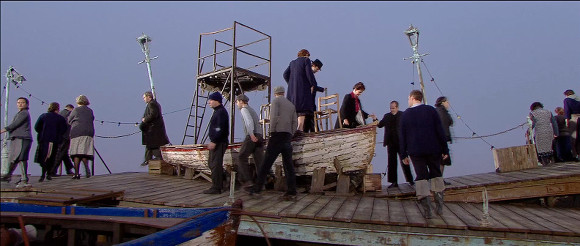
A performance of Peter Grimes in Aldeburgh to celebrate the Britten centenary seems loike one of those things that had to happen. The snag, of course, being that none of the performance venues there is remotely suitable.  The idea of staging it on the beach was a brilliant, if problematic, idea and it’s good that it was captured on film and is now available on DVD and Blu-ray.
1.prologue Continue reading

Best of 2013

So what was I most impressed with on the opera and related scene in in 2013?

Big house opera

frau1The COC had a pretty good twelve months.  I enjoyed everything I saw except, maybe, Lucia di Lammermoor.  Making a choice between Christopher Alden’s probing La Clemenza di Tito, the searing opening night of Peter Sellars’ Tristan und Isolde; the night when I really “got” why people fly across oceans to see this piece, Robert Carsen’s spare and intensely moving Dialogues des Carmélites or Tony Dean Griffey’s intense and lyrical portrayal of the title character in Peter Grimes is beyond me.  So, I shall be intensely disloyal to my home company and name as my pick in this category the Metropolitan Opera’s production of Die Frau ohne Schatten.  Wernicke’s production is pure magic and Anna Schwanewilms was a revelation.

Continue reading

The Rape of Lucretia

Britten’s Rape of Lucretia, which premiered at Glyndebourne in 1946, is an interesting work in a number of ways.  Musically it marks a distinct break from Peter Grimes and anticipates the later operas in a number of significant ways.  It’s written for much lighter forces than Grimes; string quintet, wind quintet plus harp, percussion and piano and there’s no chorus (in the conventional sense).  It’s also not a “numbers” piece.  There are no set pieces here.  The orchestral writing is spare and somewhat dissonant with that absolute clarity that is so characteristic of Britten.  Sometimes this almost distracts from the drama on stage.

1.chorus Continue reading