The ceremony of Innocence is drowned

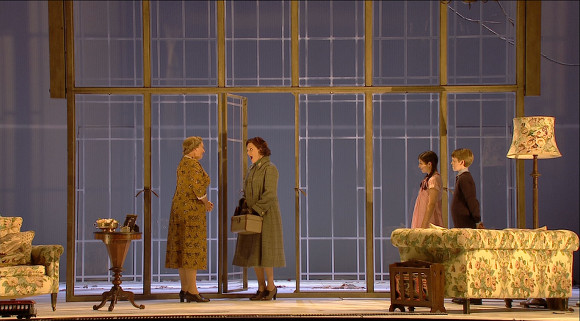
Jonathan Kent sets his 2011 Glyndebourne production of The Turn of the Screw in the 1950s.  It’s effective enough especially when combined with Paul Brown’s beautiful and ingenious set and Mark Henderson’s evocative lighting.  The set centres on a glass panel which appears in different places and different angles but always suggesting a semi-permeable membrane.  Between reality and imagination?  Knowledge and innocence?  Good and evil?  All are hinted at.  A rotating platform allows other set elements to be rapidly and effectively deployed.  There’s also a very clever treatment of the prologue involving 8mm home video.

1.arrival Continue reading

Moby Dick

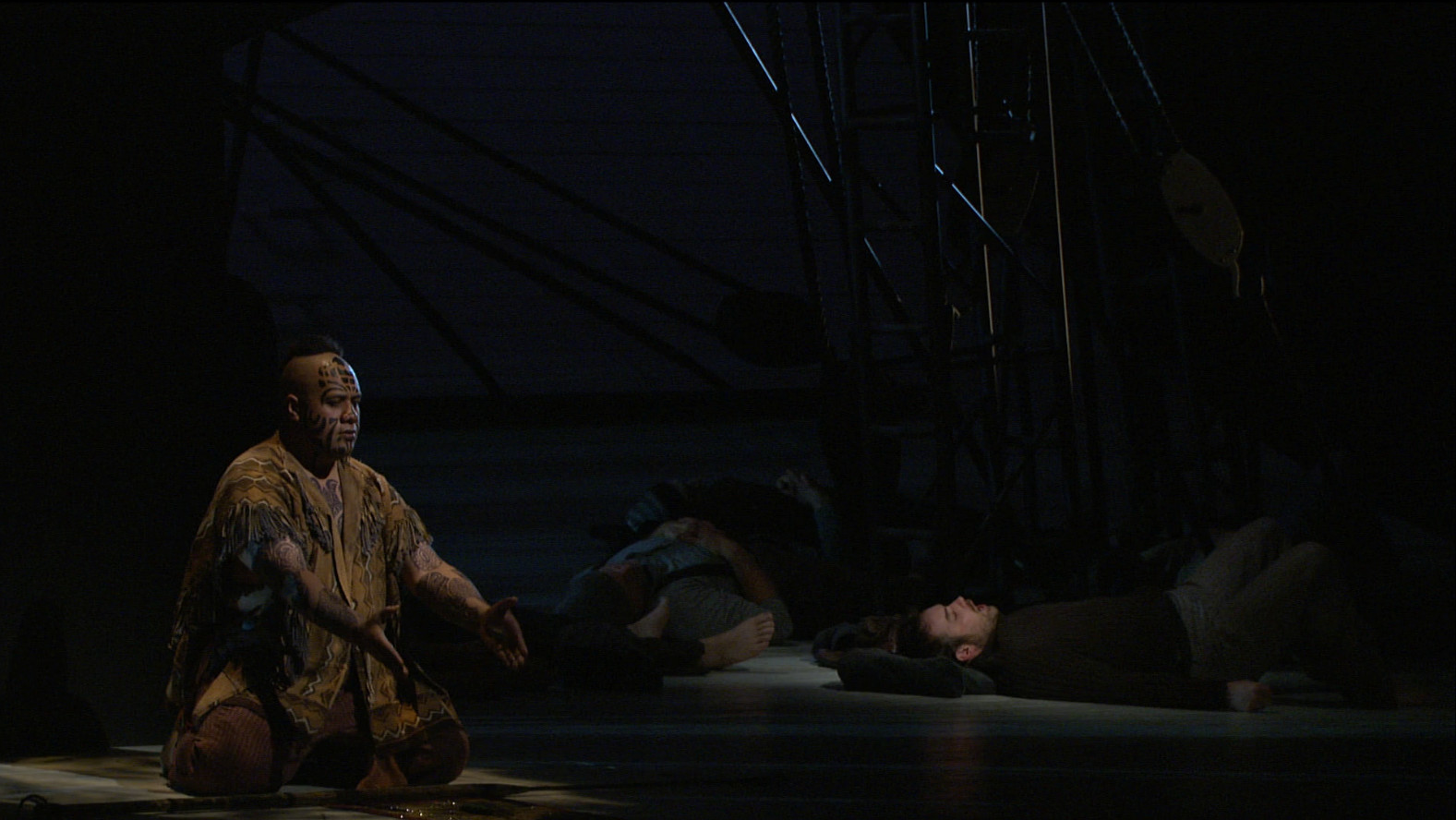
Jake Heggie’s Moby Dick has been successful in a way few contemporary operas are.  Since its Dallas premiere in 2010 it has been given in Adelaide, Calgary, San Diego and, most recently, San Francisco where it was recorded in 2012.  It’s not hard to see why it has been a success.  The subject is dramatic and has been skilfully compressed into a little over two hours by librettist Gene Scheer and the score steers the fine line between accessibility and triviality.  Add to that a visually appealing production and it’s a winning package.

1.queequeg Continue reading

Intense Dido and Aeneas

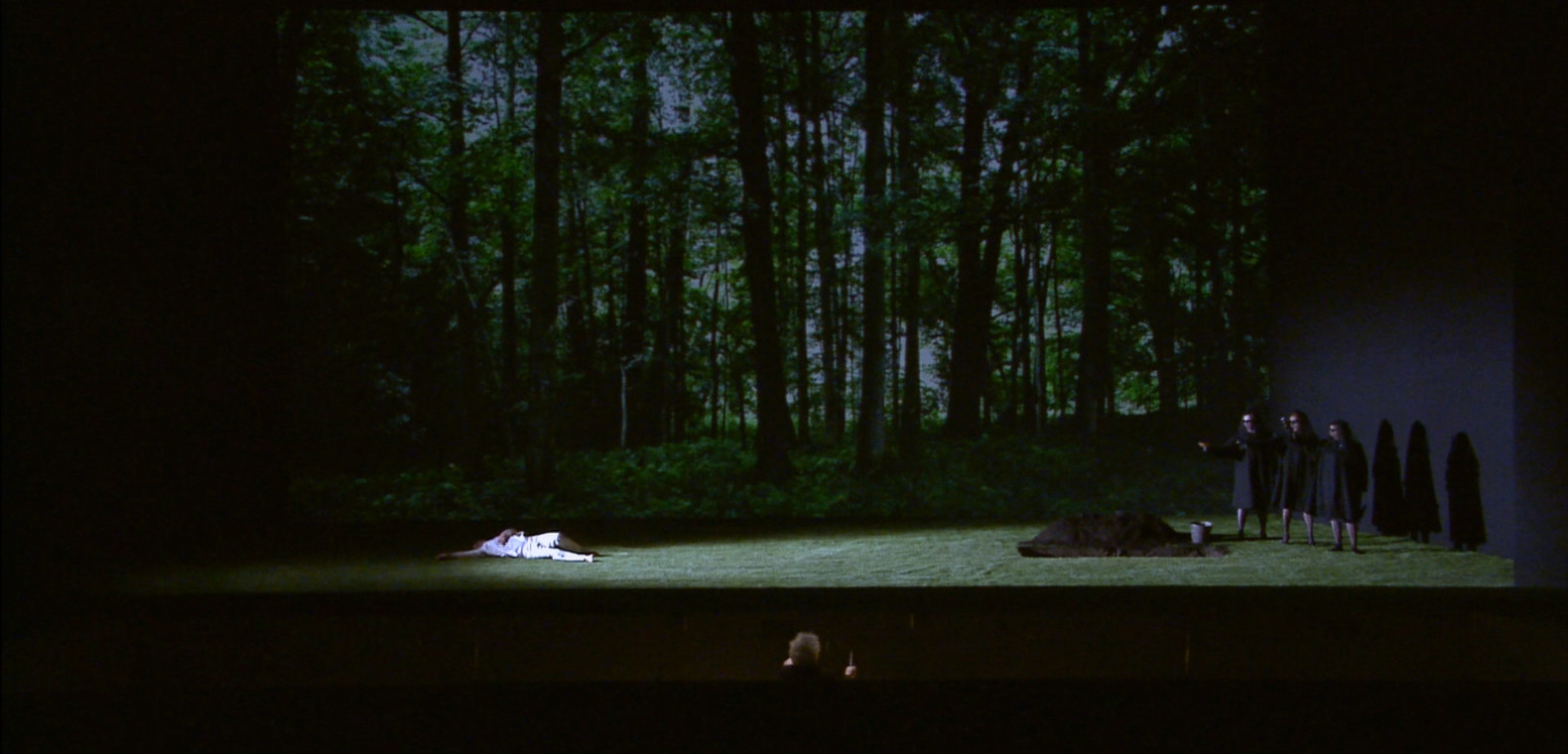
Deborah Warner’s entry point to Purcell’s Dido and Aeneas is the, almost certainly apocryphal, story about it premiering in a girls’ boarding school.  At various points in the action we get a chorus of schoolgirls in modernish uniforms commenting silently on the action.  They are on stage during the overture, are seen in dance class during some of the dance music and queue up for the Sailor’s autograph.  It’s quite touching and adds to the pathos of the basic, simple, tragic story.  Warner also adds a prologue (the original is lost).  In Warner’s version Fiona Shaw declaims, and acts out, poems by Ovid/Ted Hughes, TS Eliot and WB Yeats.  These additions aside the piece is presented fairly straightforwardly in a sort of “stage 18th century” aesthetic.  The witch scenes are quite well handled with Hilary Summers as a quite statuesque sorceress backed up by fairly diminutive (and, for witches, quite cute) Céline Ricci and Ana Quintans.  Their first appearance is quite restrained but they go to town quite effectively in their second appearance.

1.entrance Continue reading

Flute of death and life

It’s hard to fault any aspect of the new recording of Mozart’s Die Zauberflöte recorded earlier this year at the Baden-Baden festival.  The soloists are consistently good, and in some cases very good indeed, Simon Rattle is in the pit with the Berlin Philharmonic and Robert Carsen’s production is beautiful to look at and thought provoking without being pointlessly provocative.  Add to that first rate video direction and superb Blu-ray sound and picture quality and one has a disk that looks competitive even in the very crowded market for Zauberflöte recordings.

1.ladies Continue reading

Woe unto him who conceals deserts

coverWolfgang Rihm’s Dionysos is described by him as “eine Opernphantasie”.  It certainly isn’t an opera in the conventional sense lacking, as it does, anything resembling a plot.  It’s a staged setting of poems by Nietzsche written just before his final descent into madness (if one considers that’s not where he was from the start!).  Rihm conceives this as four scenes each dealing with a different “element” in Nietzscean terms.  The four are Water, a scene set on a lake; Air, a mountain scene; Intimate Space, a scene in a brothel; and Public Space, set in a town square.  So, episodic and linked only by a certain kind of mood and the characters.  The weight of the piece is carried by “N”, a baritone role.  he interacts variously with  a amle guest who doubles as Apollo and a high soprano who doubles as Ariadne.  In addition there is a trio of ladies; high soprano, mezzo, contralto, who play various roles from pseudo Rhinemaidens to tarts.

Continue reading

Orlando Paladino

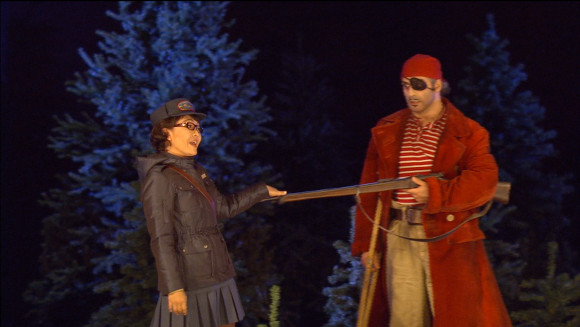
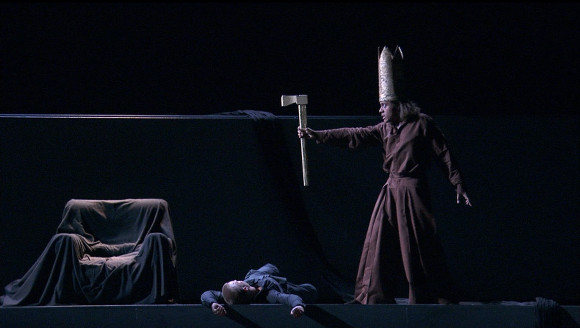
Haydn’s Orlando Paladino is a “heroic comedy” based, of course, on Ariosto.  In this version Angelica, queen of Cathay, and her lover Medoro have fled to a remote castle to get away from Orlando who is in love, of course, with Angelica.  There’s a shepherd and shepherdess, a sorceress, a squire and Rodomonte, the king of Barbary thrown into the mix and various misadventures ensue until the sorceress, Alcina, dips Orlando into the waters of Lethe causing him to forget being in love with Angelica and it all ends happily.  There are also a bunch of non-singing characters who, I think represent the “dangerous” people of this remote country.  For reasons I haven’t quite fathomed they include a bishop and a bearded air hostess.

1.eumillaetc Continue reading

Cunning Little Vixen short on magic

The 2009 Florence recording of Janáček’s The Cunning Little Vixen is bright, colourful, straightforward and fun but it doesn’t quite have the magic of the older Théâtre du Châtelet version.  Laurent Pelly’s production is quite straightforward with attractive sets and costumes and interesting choreography from Lionel Hoche.

1.vixen_frog Continue reading

Sex and violets

Cilea’s Adriana Lecouvreur isn’t performed very often and, when it is, it’s usually because some great diva of the day wants to do it.  That’s the case with the 2010 Covent Garden production which was created by David McVicar for Angela Gheorghiu.  Actually I am a bit surprised it’s not done more often.  It’s not a great masterpiece but it’s no worse than a great many commonly done pieces and, if the plot is a bit implausible, it’s not as offensive as half of Puccini’s output.  I would have thought it would have great appeal to that opera middle ground to which I don’t belong.

1.actresses Continue reading

A feast of a Belshazzar

Handel’s Belshazzar, written as an oratorio, was staged at the Aix-en-Provence festival in 2008.  It works really well as a stage work.  The plot is straightforward but dramatic.  Impious Babylonian king Belshazzar is being besieged by the virtuous Cyrus of Persia.  Babylon is impregnable but a combination of Babylonian impiety and divine intervention on behalf of Cyrus(*) leads to Cyrus’ capture of the city, the death of Belshazzar and, almost incidentally, the liberation of the Jews.

1.belshazzar Continue reading

Can Bayreuth really tackle Meistersinger?

Die Meistersinger is a problematic opera, particularly for Bayreuth.  It has rather disturbing elements of German nationalism and a performance tradition at the festival of those being used for ends that most people would rather be able to forget.  No surprise then that Katharina Wagner’s production, recorded in 2008, tries to deal with both.  It’s a bold effort.  Like Robert Carsen’s Tannhäuser it tries to use visual art as a metaphor for music and art in general.

1.walther Continue reading