The Copenhagen Ring – Siegfried

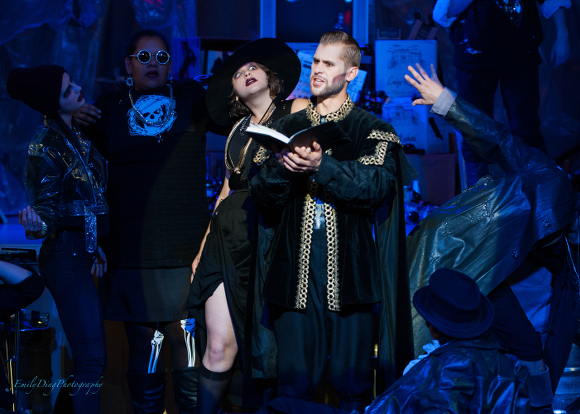
So, onto Siegfried.  Now we are in 1968 but it’s a rather laid back Danish 1968.  It doesn’t reference any of the canonical events of that momentous year though there is a bit of a youth vs experience vibe.  Holten doesn’t let us forget that Siegfried is 18 and Stig Anderson, at 60, manages to pull off the look very well.  James Johnson’s Wotan, on the other hand, is shown in decline; the elder statesman who can’t retire gracefully, like a Berlusconi or Murdoch.  Mime is an ageing nobody hunched over his typewriter and still yearning for some “success”.

1.house Continue reading

Musically satisfying Tristan from La Scala

I’ve been looking really hard for a video recording of Tristan und Isolde that I felt I could recommend because, frankly, nothing is worse than a badly executed Tristan as those who suffered through the Met HD broadcast a few years ago will know.  In the 2007 La Scala recording I have found one I feel confident about.  Is it perfect?  No.  A perfect Tristan is probably beyond mere mortals.  I’m never sure whether I find it more astonishing that anyone can sing this music or that a composer might have imagined that he could find people who could.  That said, the La Scala recording is very close to an ideal Gesamtkunstwerk.

1.ship Continue reading

The Gilded Stage

gildedstageThere have been many histories of opera. Most of them focus on the development of the genre from primarily a musicological perspective. In The Gilded Age: A Social History of Opera Daniel Snowman does something different.  He looks at opera as a social and commercial phenomenon.  Taking a broad sweep from late 16th century Florence to the Met’s “Live in HD” broadcasts, he looks at who attended the opera, how much they paid and what they expected from the experience.  He looks at the always vexed question of who subsidised the opera; for ticket sales have very rarely covered costs.  He analyses the entrepreneurs and bureaucrats who ran the opera houses.  Of course, he looks at singers; where they came from, how much power they had and how much they were paid.  It’s an intriguing and comprehensive analysis well worth slogging through over 400 pages plus apparatus.

Continue reading

Putting the cars in Carmen

Calixto Bieito has a reputation as one of opera’s “bad boys” but there is nothing particularly shocking about his production of Carmen filmed at Barcelona’s Liceu in 2011.  The action is updated to maybe the 1970s (there’s a phone box and a camera that uses film) and there are lots of cars on stage.  For Bieito, this is a story of people living on the margins where sex is a commodity that women use as a trade currency and where violence, especially toward women, is endemic. It’s enough to disturb, as this piece did its original audience, without being gratuitous.

1.micaela Continue reading

Et in Bohemia ego

It’s a curious fact that two of the three most popular operas; Verdi’s La Traviata and Puccini’s La Bohème, are about women dying from tuberculosis.  It’s also curious that they are almost always presented as frothy escapist fantasies in which Death makes his appearance only in the tear jerking finale.  It’s very curious because Death stalks the libretto of both operas, albeit usually well hidden behind brocade, champagne and Christmas decorations.  In 2005, at Salzburg, Willy Decker broke with convention and made Death an explicit actor in La Traviata creating the famous red dress production that has even been seen at that bastion of conservatism the Metropolitan Opera.  In 2012 Stefan Herheim did something similar for La Bohème in Oslo.

1.bed Continue reading

‘Tis the season

Opera/concert season is pretty much done in the big smoke though there is the Toronto Summer Music Festival (see below).  Attention moves to various more rural venues and to some seriously eclectic programming.  Out in Northumberland County there’s the Westben Festival with concerts in a barn ranging fro Irish trad to Richard Margison.  The highlight, for me, here would be a recital by Suzy Leblanc and Julius Drake featuring French mélodies, Strauss lieder and English songs by Christos Hatzis.  That one is on July 30.  Westben also has the UBC Opera Ensemble doing Carmen and, for those so inclined, a programme of Broadway tunes from the ever reliable Virginia Hatfield, Brett Polegato and James Levesque.  No word on whether Brett’s cat is also performing.

Stratford Summer Music has three concerts by the Vienna Boys Choir, one including Michael Schade.  There is also the Bicycle Opera Project and a celebration of R. Murray Schafer’s 80th birthday.

Meanwhile, back in the smoke there is the Toronto Summer Music Festival which kicks off on July 16th with the Trio Pennetier Pasquier Pidoux in an all French programme.  The highlights for me are the Gryphon Trio with Bob Pomakov on the 18th and Philippe Sly with Julius Drake on the 23rd.


Another Ulisse

William Christie and Les Arts Florissants recorded Monteverdi’s Il ritorno d’Ulisse in patria in Aix-en-Provence, five years before their Madrid recording.  The Aix production was directed by Adrian Noble and featured real life couple Kreśimir Śpicer and Marijana Mijanović as Ulisse and Penelope.

1.fragilita Continue reading

Not especially magical flute

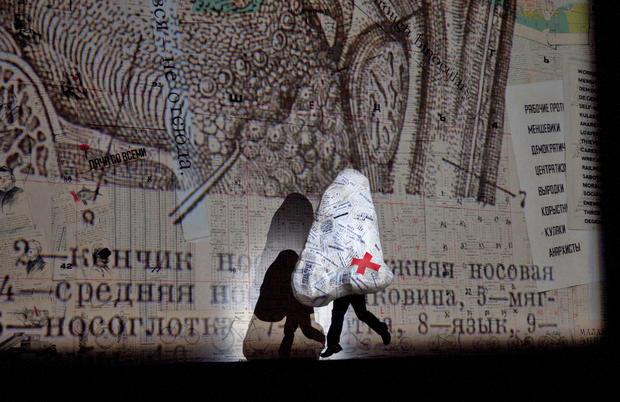
William Kentridge’s La Scala production of Die Zauberflöte is mainly notable for its use of black and white projections.  The intention, apparently, is to tell the story as seen by, or even as seen inside, a Victorian camera.  In places this works rather well but at times it’s quite hard to figure out what is actually going on.  Whether it was that hard to read in the theatre I can’t say.  Video recording projections is really hard and i have a lot of sympathy with Patrizia Carmine who video-directed here.  The film of a play of a film thing is really difficult to capture remotely faithfully.

1.Camera Continue reading