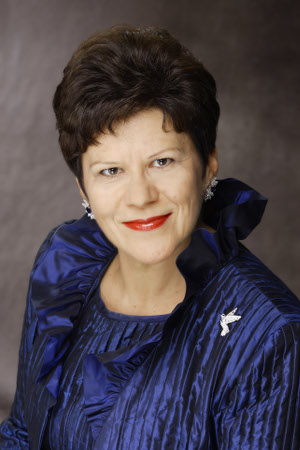
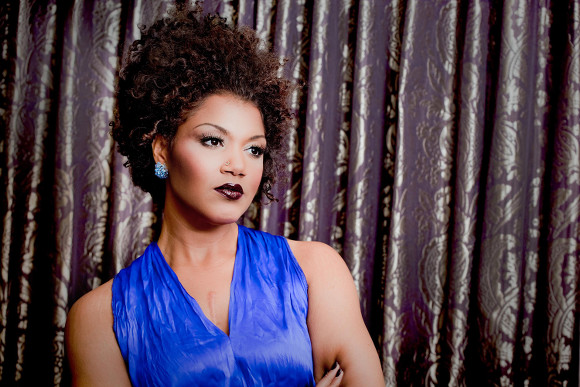
Toronto contemporary music outfit Soundstreams have announced their 2015/16 season. Highlights from an operaramblings perdpective include a chance to hear Adrianne Pieczonka sing music ranging from George Crumb to The Beatles. That one’s at Koerner Hall on September 29th and will also feature Kristina Szabó. In November there’s the previously announced run of Boesman’s Julie at the Bluma Appel. I’m eagerly awaiting casting information on that. There’s also a concert dedicated to James MacMillan, including his Seven Last Words from the Cross. That one is at Trinity St. Paul’s on March 8th next year. There’s a 80th birthday bash for Steve Reich at Massey Hall on April 14th next year and for real masochists there’s a concert featuring multiple types of squeezebox music at Trinity St.Paul’s on February 10th. Full details and ticket information can be found here.
La belle Hélène from the GGS
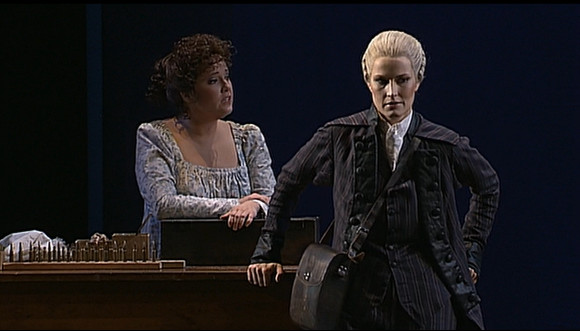
The Glenn Gould School’s production of Offenbach’s 1864 operetta La belle Hélène opened at Koerner Hall last night. Overall, it’s an enjoyable show with some strong performances though there are aspects of it that, in my view, rather missed the mark. Certainly it made me realise just what a difficult piece to really bring off really well La belle Hélène is. There are some very difficult singing roles and yet they need to sound effortless. It needs the exquisite comic timing of a bedroom farce. There’s also a difficult to define quality; very French and with a sexiness of the “I know it when I see it” variety. I think it was a shortage of this last that was largely the problem last night.
A couple of late entries
I thought I’d managed a pretty comprehensive update on the Toronto opera/choral/vocal music scene for March but there are a couple of gigs I got rather later info on.
On March 23rd at 7pm in Walter Hall, CASP have a concert of works from the more humorous end of the Canadian Art Song rep. Mary-Lou Fallis, Geoff Sirett, peter Tiefenbach and Steven Philcox are performing. Tickets are $40, $25 (senior) and $10 (student).
Then on Friday 27th Maureen Batt and Cheryl Duvall are performing a program of contemporary American and Canadian works, many of them written for Maureen, at Heliconian Hall. It’s at 8pm and tickets are $20 in advance, $25 at the door and there are $15 early bird tickets available at https://www.bemusednetwork.com/events/detail/69
And in other news Voicebox:Opera in Concert have announced a cast change for their performance of Charpentier’s Louise on the 29th. Keith Klassen replaces Adrian Kramer as the poet Julien.
I Dilettanti
I Dilettanti is an album from Catalan countertenor Xavier Sabata accompanied by members of the Greek baroque group Latinitas Rostra with Markellos Chryssicos at the harpsichord. The works on the disk are all from the late 17th and early 18th century and are by, as the title might suggest, people who aren’t primarilyknown as composers such as the singer Vincenzo Benedetti and the nobleman/adventurer Emanuele d’Astorga. The format of the pieces too is relatively unfamiliar. All but two tracks are chamber cantatas, probably intended for domestic entertainment rather than theatre or concert hall. The exceptions are two arias from Ruggieri’s Armida Abbandonata though as they are presented here, like all the other works, just basso continuo accompaniment they don’t sound obviously different.
All star Carmélites
The 2013 recording of Poulenc’s Dialogues des Carmélites from the Théâtre des Champs Elysées has a cast that reads like a roll call of famous French singers; Petitbon, Piau, Gens and Koch are all there. Throw in Rosalind Plowright and Topi Lehtipuu and one gets some idea of the star power on display.
Postcard from Morocco
Dominick Argento’s 1971 work Postcard from Morocco is unusual. It’s opera meets Ionesco meets acid rock. It’s a weird and wonderful kaleidoscope of scenes and music “about” a group of characters who seem to have nothing in common except that they have showed up at a railway station in Morocco c. 1914. Michael Cavanagh’s production for UoT Opera plays it straight veering to OTT which seems about right. This piece doesn’t need directorial “interpretation” but it does need careful organisation and lots of energy. Cavanagh’s approach provided plenty of both.
Mild und Leise… occasionally
The TSO’s program last night was too tempting to miss; Adrianne Pieczonka singing Strauss and Wagner and a Beethoven 7th plus Gianandrea Noseda conducting. So I went.
Things started off with Casella’s Italia. This is a sort of mash up of Pucciniesque bombast and Neapolitan popular tunes. I’m surprised it never featured in a Warner Bros cartoon. Perhaps it did. In any event Nosada is probably the ideal conductor for it; infusing it with a kind of manic energy. Next up were the Strauss Vier letzte lieder. Here manic energy is exactly what’s not needed and Nosada seemed to have some difficulty adjusting. Too often Adrianne Pieczonka’s beautiful singing was covered by an over loud orchestra. Roy Thomson Hall is tricky but George Benjamin showed exactly how to manage the acoustic last weekend. Nosada wasn’t so successful.
Michael Mori on Tap:Ex Tables Turned
Yesterday I met with Tapestry Opera Artistic Director Michael Mori to ask him about their upcoming how Tap:Ex Tables Turned. What follows is an attempt to distill an hour and three quarters of wide ranging conversation into something readable without, I hope, distorting what Michael actually said too much.
We started by talking about “How on Earth he came up with the idea?”. There a few key themes here. First, Tap:Ex is about exploration and experimentation with new forms of performance practice. This is rooted in Michael’s belief that “opera is inherently a popular genre” and that the task is to find a way of doing “it” that connects with a modern audience. He firmly believes that the audience for beautifully sung spectacle in a large opulent theatre is inherently limited and that we need to find ways to connect new audiences probably through different ways of presenting work (he mentioned choreography for example) and by using more intimate, less intimidating venues. He cited Philadelphia’s willingness to take risks with second stages versus the compararive lack of success of companies that had tried to experiment in a large house. He also quoted statistics that suggested that the “new audience” problem is less to do with getting people to the opera once but much more about how to get them to come back for a second and subsequent time.
On a Darkling Plain
The Talisker Players latest offering is a concert titled On a Darkling Plain. It’s an ambitious program of 20th and 21st century music interspersed, in the Talisker manner, with selected texts read (very expressively) by Stewart Arnott.
It kicks off with Samuel Barber’s 1931 setting of Matthew Arnold’s Dover Beach. It’s a dark and evocative piece for a 21 year old and was sensitively performed by baritone Joel Allison supported by violinists Michelle Ordorico and Andrew Chung, Talisker music director Mary McGeer on viola and Laura Jones on cello. Allison is very young and hasn’t been seen much in Toronto but he seems to have the hallmarks of a lieder singer. He’s expressive and attentive to the text, has an attractive voice but can summon up a surprising amount of volume when he needs it. I was impressed.
Addicted to purity and violence
In George Benjamin’s Written on Skin The Man, The Protector, is described as “addicted to purity and violence”. One could perhaps say the same about the score. Seeing it presented in a minimally staged version at Roy Thomson Hall last night perhaps emphasised those aspects compared to watching a fully staged version (review of Katie Mitchell’s production at the ROH here). Being able to see the conductor and orchestra made the combination of a traditional orchestra with older instruments; viola da gamba, glass harmonica etc (and lots of percussion) more obvious. The music can be very violent but it can also be incredibly quiet and it’s a measure of Benjamin’s skill as a conductor that through these extreme changes of dynamics he rarely, if ever, covered his singers.