This just in from frequent Operaramblings commenter and COC Adult Education Programs Manager Gianmarco Segato. The COC is launching Opera Insights, a series of free adult education events linked to the productions of the 2015/16 season. It’s a pretty broad range of programming ranging from scholarly discussions on reconstructing the score of Maometto II and the history of the ball gown to Traviata singalongs and Carmen themed dance lessons. Participants include composers Barbara Monk-Feldman and Norbert Palej, conductors Johannes Debus, Harry Bicket and Sandra Horst and singers like Christine Goerke plus, inevitably, lots of academics (we love them really we do). Looks like a lot of fun. The events are all free but are ticketed. Full details can be found here.
Lunchtime concerts
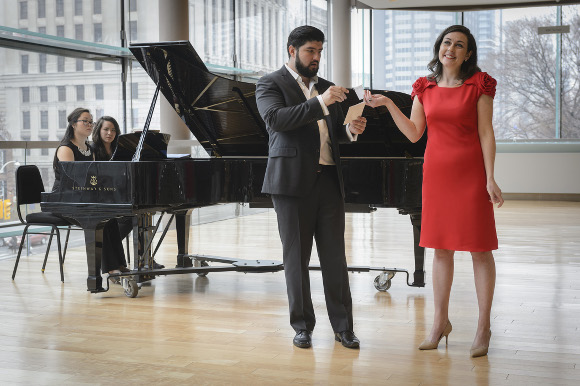
The Canadian Opera Company has just announced the 2015/16 season line up for the free lunchtime concert series in Richard Bradshaw Amphitheatre. Now under the curatorship of Claire Morley there’s the usual incredible array of chamber music, dance, piano, jazz and world music as as well as, of course, the vocal series.
Grumpy Otello
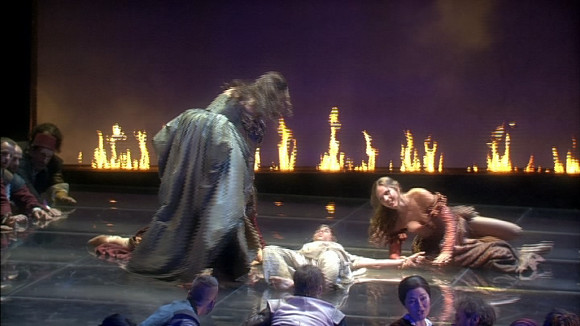
Verdi loved Shakespeare and tried to reflect the psychological depth of his characters in the operas he based on the bard. You really wouldn’t know that watching the 2008 Salzburg Festival production of Otello. There’s a lot to like in both production and performance but the emotionally monochromatic performance of the title role by Aleksandrs Antonenko, who can do every mood from fairly grumpy to furious, and the moustache twirling Jago of Carlos Álvarez rather reduce the piece to pathologically jealous nutter with anger management problem kills wife.
Habe Dank
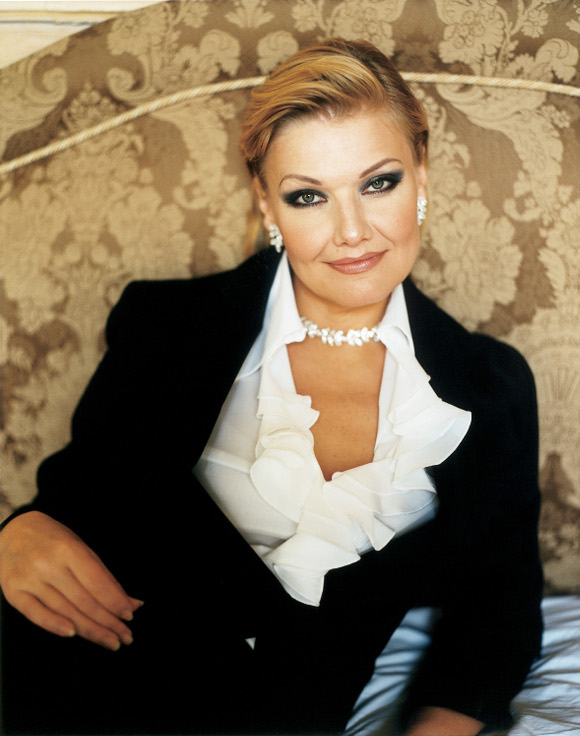
The last major concert of this year’s Toronto Summer Music Festival was a recital by Finnish soprano Karita Mattila and pianist Bryan Wagorn. Talk about ending on a high note. This was an exceptional performance by a mature artist at the height of her powers. In her mid-fifties, she is starting to transition to older roles. For example she will sing Kostelnička, rather than the title role, in her next Jenůfa. She has really acquired an ability to darken her voice which she used to great effect, especially in the set of Sallinen songs she sang after the interval but she hasn’t lost the vocal qualities that made her a star.
Oral tradition and opera
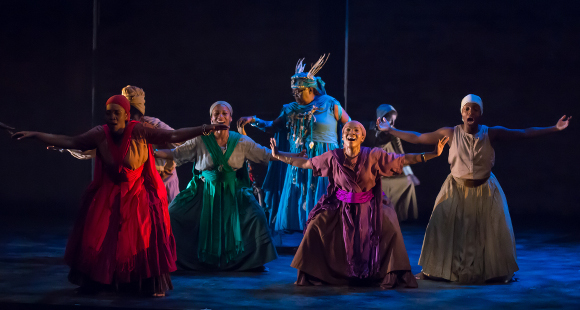
Nicole Brook’s Obeah Opera is described as a “Nicole Brooks vision” which is probably a good starting point for an opera this isn’t. It’s an a capella stage piece with an all female cast, composed and taught to the performers orally and performed with mikes. If it resembles anything it’s a musical but really it’s a unique concept. It’s also clearly rooted in the oral traditions of African-American slavery and a kind of idealisation of the world they had left behind. For example, every slave women is a powerful sorceress from a long lineage rather as every Welshman is a gentleman who can trace his ancestry from King Arthur. It’s a musically rich and powerful tradition and this forms much the most effective element in the piece, especially as it’s where Brooks’ own talents and energy are most focussed.
Heads up
Gaslight
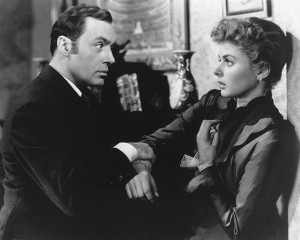
Later this month there is an Ingrid Bergman retrospective at TIFF Cinematheque to celebrate the 100th anniversary of her birth. There is one (vaguely) opera related film in the offering; Gaslight, a 1944 thriller directed by George Cukor about the niece of a murdered opera singer, Alice Alquist. The girl aspires to an operatic career too and we do see Bergman practicing an aria from Lucia di Lammermoor. However the main plot turns on the Bergman character (Paula) marrying and returning to her aunt’s house in London where she is subjected to attempts by her husband to drive her mad to get possession of the house where he hopes to find the jewels he murdered Paula’s aunt for in the first place. The denouement is precipitated by a young Scotland Yard operative who, as a small boy, was given a glove worn by Alice as Juliette and signed by Gounod. Continue reading
La Grand-Duchesse de Gérolstein
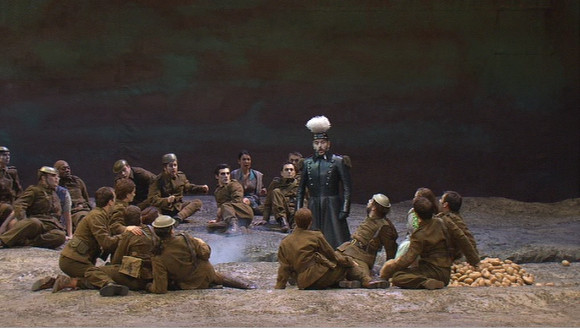
Despite a thin to non-existent plot and music that sounds like a remix of all the other Offenbach operettas, La Grande-Duchesse de Gérolstein, performed by largely French forces and recorded at the Théâtre du Châtelet in 2004 is a highly enjoyable romp. The plot centres on the susceptibility of the Grand-Duchess to fall rather hard for younger men. This makes it a perfect vehicle for Felicity Lott who rather seems to specialise in such roles; whether Strauss’ Marschallin or La Belle Hélène. She’s brilliant. She sings gorgeously except where she doesn’t want to and her comic timing is impeccable. She’s well backed up by Yann Beuron as the young soldier Fritz who she promotes from private to général-en-chef without swaying his affections for his sweetheart Wanda sung by the irrepressible and cute Sandrine Piau. The slapstick element is provided by François Le Roux, as Le Général Boum, Franck Leguérinet as Le Baron Puck and Eric Huchet as Le Prince Paul who are set on getting the Grand-Duchess to marry Paul even if it means murdering Fritz. They get lots of up tempo numbers that sound as if they are singing a Korean restaurant menu.
Guilt by dissociation
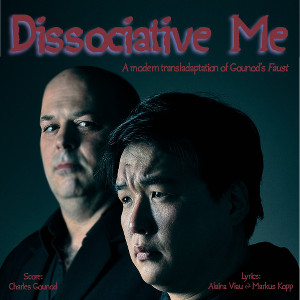
I met with Alaina Viau, Artistic Director of Loose TEA Theatre, earlier today to discuss her upcoming show Dissociative Me; a transladaptation™(*) of Gounod’s Faust. We started by exploring the reasons why one might choose transladaptation rather than either a “straight” production or simply a radical restaging à la Herheim or Tcherniakov. The starting point for Alaina, one that I completely share, is that certain works are so problematic that they can’t realistically be presented “straight” and still do the things that “art” is supposed to do; stimulate, challenge etc. If a work contains elements that have so radically changed meaning since the original composition that one must treat it as a museum piece or intellectually disengage to make a piece tolerable then, we both believe, something has to be done. I realise that there are those who can enjoy, for instance, Puccini’s Madama Butterfly; a squalid tale of paedophilia and sex tourism, at a superficial level but count me out there.
The Solti show
The recording of Richard Strauss’ Die Frau ohne Schatten made at the Salzburg Festival in 1992 is very much Sir Georg Solti’s show. The conducting is superb and the Vienna Philharmonic, of course, respond for Solti. From the opening, shattering cords through the various orchestral interludes to the final ensemble and chorus Solti is utterly convincing in his command of tempi and dynamics.