Korngold’s Silent Serenade at the Glenn Gould School

Joel Ivany

Joel Ivany

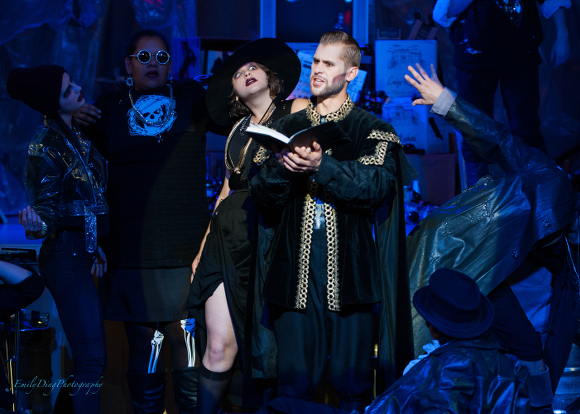
Korngold’s Silent Serenade is, to put it mildly, odd.  The plot could have been taken from Dario Fo and the only possible excuse for the schmaltzy music is that Korngold initiated many of the saccharine clichés he relies on.  Last night the students of the Glenn Gould School under the direction of Joel Ivany and the musical leadership of Pieter Tiefenbach bravely tried to rescue it from well deserved obscurity.

The plot concerns a dressmaker who is accused of breaking into the bedroom of, and trying to abduct, one of his clients; an actress who happens to be engaged to the Prime Minister.  In Naples this is a hanging offence.  Meanwhile someone has made an unsuccessful attempt to assassinate the unpopular Prime Minister with a bomb.  The king is dying and, we learn from his confessor, wishes to make a great act of mercy before he finally snuffs it.  He wishes to pardon the bomber.  Unfortunately the police don’t have a suspect.  The solution is obvious.  The dressmaker must confess to both crimes so that he can be pardoned and hanged for neither.  Unfortunately the king dies before signing the pardon and so the dressmaker must hang.  Following this so far?  Fortunately for him the unpopular Prime Minister is killed in a popular uprising and he is installed in his stead much to the annoyance of the anarchist who did plant the bomb.  They agree that the dressmaker will return to his salon and the actress, who has now fallen in love with him and is, conveniently, no longer engaged.  There’s also a subplot concerning a newspaper reporter and an aspiring actress.
Continue reading

Transfigured: Transcribed

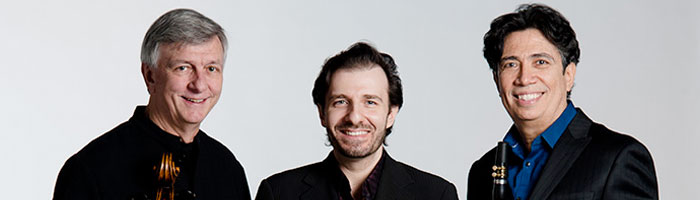
Yesterday’s Amici Ensemble concert featured four works transcribed for different combinations of instruments than the composer originally intended.  First up was Berg’s Adagio for violin, clarinet and piano.  This is from the Kammerkonzert originally scored for violin, piano and thirteen assorted wind instruments.  Unsurprisingly it doesn’t get played often in that arrangement.  It’s pretty typical second Vienna school; twelve tone but quite accessible and very pleasant to listen to.  It was expertly played by Serouj Kradjian (piano), David Hetherington (cello) and Joaquin Valdepeñas (clarinet).

amicirecordings Continue reading

In which I get a plague and miss one

Last night I was at the Arts and Letters Club for the opening night of Opera 5’s Edgar Allan Poe themed show In Pace Requiescat. I had hoped that I had kicked the thing that has been afflicting me since Wednesday but I was over optimistic.  I spent the first half of the show either in a coughing fit or trying desperately to avoid one and then had to leave at the interval thus missing Cecilia Livingston’s new piece The Masque of the Red Death.

in Pace Promo Picture 1What I did see; Daniel Pinkham’s The Cask of Amontillado and Debussy’s La Chute de la Maison Usher, was, as best I recall, pretty good.  Staging and costumes are appropriately creepy and there was some very good singing from Adrian Kramer and a brief appearance from Lucia Cesaroni that made me want to see more.  If I can shake this thing before the end of the run I’ll go back and do a proper review.  There are further performances on Wednesday and Thursday.

ARC Ensemble

c-t“Culture Days” is a weekend long festival in Toronto where various arts organisations put on free events.  This year it included a concert in Koerner Hall by the ARC Ensemble with guests Baritone Peter Barrett and cellist Se-Doo Park.  The main draw for me was Respighi’s Il tramonto; a setting for baritone and string quartet of an Italian translation of Shelley’s The Sunset.  This was indeed very well executed but was far from the most interesting part of the afternoon.

It was actually the final piece that was the revelation; Castelnuevo-Tedesco’s Piano Quintet No. 1.  It’s a really fun piece in high romantic style with tons of melodic ideas and lots of colour.  It was given a truly virtuoso performance by Erika Raum, Benjamin Bowman, Steven Dann, Se-Doo Park and Dianne Werner.  I think I’ll be looking for more examples of Castelnuevo-Terdesco’s work.

Tapestry Briefs

tapestry_quartetTapestry Briefs is the product of the Composer-Librettist Workshop run annually by Tapestry.  Four composers and four librettists come up with sixteen ideas for a new opera and work up a scene from each.  Last night twelve scenes from the most recent workshop were presented in a fully staged format with piano accompaniment in Ernest Balmer Studio and adjacent Distillery spaces.  The quartet of singers for the evening was made up of some of Toronto’s top singer/actors; Carla Huhtanen, Krisztina Szabó, Keith Klassen and Peter McGillivray.  Piano accompaniment was from Gregory Oh and Jennifer Tung.

Continue reading

La tragédie de Carmen

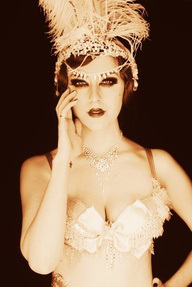
warnerLa tragédie de Carmen is a stripped down version of Bizet’s opera originally created by Peter Brook some thirty years ago.  It dispenses with the chorus and most of the minor characters to focus in on the central drama of Carmen, Micaëla, Don José and Escamillo with some support from Zuniga and Lillas Pastia.  In Loose TEA Theatre’s version the action is transferred to New York in the 1920s and given a night club/mob setting which stretches the libretto but allows the rather striking Cassandra Warner to appear in some quite stunning outfits.

The piece is very condensed.  It runs maybe 80 minutes.  Presented in a small space like Buddies in bad times it becomes almost unbearably intense, especially when presented by fine actors as it was here.  Central to the whole thing is Warner’s stunning Carmen.  She is very good looking in a rather angular 1920s sort of way.  She can act and she has a really good voice.  The tone is genuine mezzo but she seems quite comfortable well up into soprano territory.  The overall effect was extremely sexy.

Continue reading

Philippe Sly and Julius Drake at Walter Hall

Phillippe-SlyUp and coming Canadian bass-baritone Philippe Sly was joined last night by veteran collaborative pianist Julius Drake for a program of chansons and lieder at Walter Hall.  The 490 seat hall was almost full which is rather nice to see for a song recital in Toronto.  The first half was devoted to chansons by Duparc, Ropartz and Ravel.  I was struck by the restraint of Sly’s singing.  It was conversational and not operatic at all but very expressive.  I think that takes a lot of guts in a young singer.  He let the words and music do the talking and didn’t exaggerate.  This was perhaps best shown in the drinking song from the Don Quichotte songs of Ravel.  He was very funny but sounded like a drunk, not somebody overacting the idea of a drunk.  Continue reading

Gryphon Trio with Robert Pomakov

Gryphon_085v1(1)Back to Koerner Hall last night for a concert of chamber music and art song.  Anchoring the show were the Gryphon Trio.  They kicked off with the Debussy Piano Trio in G Major.  This was an enjoyable and compact piece with a very playful second movement.  Then came what was, for me, the main reason for going, Mussorgsky’s Songs and Dances of Death.  For this the Gryphons were joined by Toronto bass Robert Pomakov.  He was excellent.  Obviously completely at home singing in Russian he produced a nuanced reading of text and music.  His acting with the voice was exemplary and no extraneous physical acting was required.  His control of dynamics was exemplary.  He has a really big voice which he deployed as appropriate but he was also capable of floating a lovely pianissimo.  Accompaniment from the Gryphons was also well up to par.  There are some interesting instrumental lines including making the cello go about as low as a cello can to match the bass voice.  Continue reading

Toronto Summer Music Festival kicks off

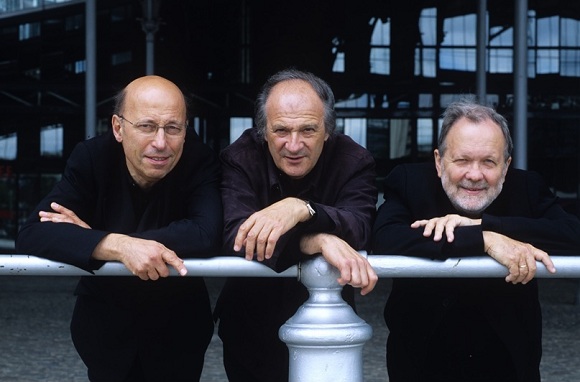
Last night saw the first concert of the Toronto Summer Music festival which runs at a variety of venues until August 3rd.  The theme for the festival is Paris La Belle Époque and this was reflected in last night’s opening concert being given by the distinguished French trio Trio Pennetier Pasquier Pidoux.  One might question though to what extent works written in 1914 and 1923 can be said to belong to the themed era.  It didn’t seem to bother a packed Koerner Hall.  The reception to all three pieces given was raucous.

Trio Pennetier Pasquier Pidoux (From left to right:  Roland Pidoux, cello; Régis Pasquier, violin; and Jean-Claude Photo credit: Guy Vivien

Trio Pennetier Pasquier Pidoux (From left to right:
Roland Pidoux, cello; Régis Pasquier, violin; and Jean-Claude
Photo credit: Guy Vivien

Continue reading

Key Characters

battLast night we attended a concert in the relatively new performance space at the Canadian Music Centre.  It’s a very pleasant room, set up for recording, and seating maybe 50.  The program consisted of four recent works by Canadian composers; three short opera scenes for soprano and piano and a piano piece.


Continue reading