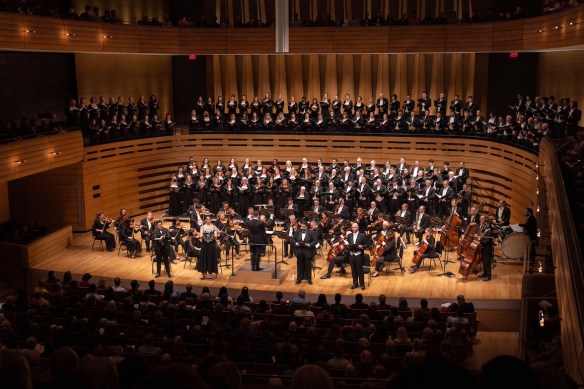
Saturday night’s concert by the Cantabile Chamber Singers, with their conductor Cheryll J. Chung, at Church of the Redeemer; entitled A Prism of Sound, was the last of their 2023/24 season and, I think, the first time I’ve seen this particular choir. It was an all Canadian programme. The first part consisted of works by various choral composers like Matthew Emery and Peter Togni and it was all tonal works for unaccompanied choir on, basically, liturgical texts. It was pleasant enough but, for me at least, after a while one Ave Verum Corpus sounds much like the rest. I surprised myself by really quite liking Emery’s Sweetest Love which was quite complex and rather overturned my previous impressions of his music. I also enjoyed Eleanor Daley’s setting of an extract from the Song of Solomon; Upon Your Heart. But maybe that’s because the text has special resonance for me. No complaints about the performance though. They are a very good choir.

Continue reading →



 Season announcements for theatre companies for 2024/25 are coming out fast and one notable thing is that a number of shows from Crow’s Theatre have been picked up by other companies. Both



 operaramblings