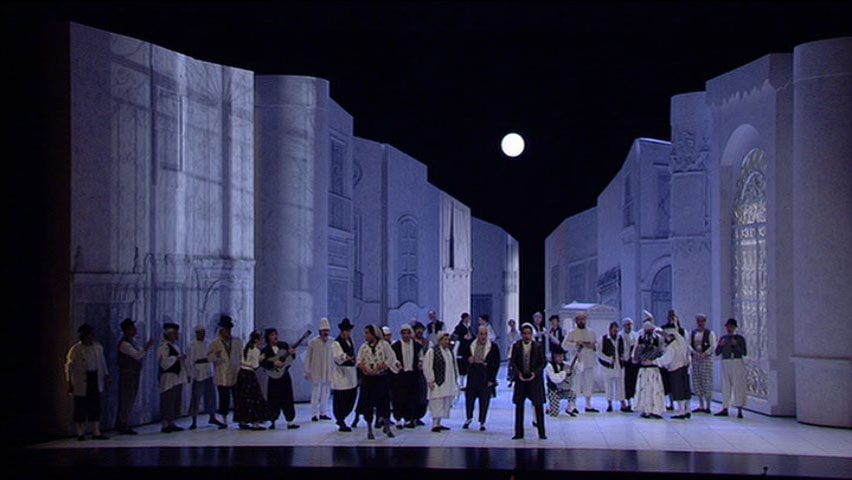
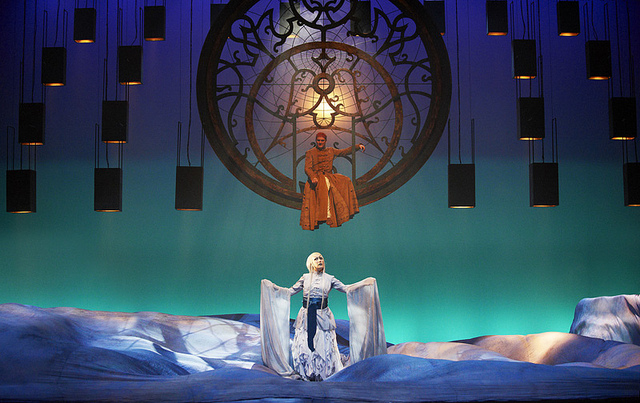
There’s a gallery of photos from last week’s Seven Deadly Sins and Holier Fare here.
Also, tickets for The Turn of the Screw are now on sale here.
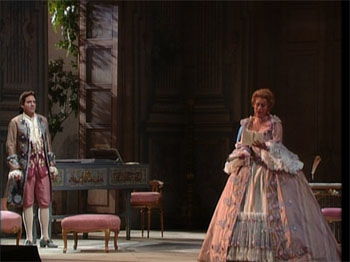
Laurent Pelly’s 2007 production of Donizetti’s La Fille du Régiment was a coproduction of the Royal Opera House, The Metropolitan Opera and the Wiener Staatsoper which one make expect to produce a stodgy snoozefest. It’s not. It’s a fast paced, energetic and funny production. There’s nothing especially cleverly conceptual about it but its well designed, well directed and well played. If one were to be hyper critical it would be that the humour in Act 2 is rather laid on with a trowel but it’s not too seriously overdone. The setting is updated from the wars of the first Napoleon to something vaguely WW1 like. In some ways this doesn’t make a whole lot of sense but it does provide a visual “Frenchness” that’s probably easier for modern audiences and, anyway, the libretto as originally written is about as historically accurate as the average piece of bel canto fluff. Best not get into serious military history buff territory and get on and enjoy the show.
Last night we headed out to that part of the formerly industrial west end much beloved by tiny arts organizations to see a thoroughly eclectic series of performances by Against the Grain Theatre. This is the company that previously brought us a genuinely Bohemian La Bohème at the Tranzac club. Last night’s show cunningly built on that success by using the undoubted crowd pleaser, Lindsay Boa-Sutherland, to headline a performance of Weill’s Die sieben Todsüngen. Since the orchestra was replaced by two superbly virtuosic pianists in Daniel Pesca and AtG music director Christopher Mokrzewski it made sense to include two fiendish pieces for two pianos; Steve Reich’s Piano Phase and John Adams’ Hallelujah Junction. The program was balanced up for “virtue” with Britten’s Abraham and Isaac. So, a thoroughly eclectic but oddly coherent line up.
I’ve watched John Adams’ Doctor Atomic three times now. The first time; a MetHD broadcast, I wasn’t impressed at all. The second time; an AVI rip of the Dutch television broadcast, I started to come around. Having now watched the Opus Arte DVD based on the Dutch TV broadcasts I’m converted. This piece is every bit as good as Nixon in China and probably surpasses it in emotional impact due to the more visceral nature of the material. The orchestral writing is classic Adams. The musical argument is swept along on a strong rhythmic pulse and overlapping waves of colour. In contrast the vocal line often seems duller though there are passages of great lyricism, notably Oppenheimer’s big Act 1 aria Batter my heart, three personed God. Kitty Oppenheimer and the native woman, Pasqualita, also get some good singing. I also found myself warming to the libretto. Some rather self conscious passages of Donne and Baudelaire aside, it lacks the poetry of Goodman’s libretti for Adams but Peter Sellars’ selection of words taken from the documentary record is, in its way, quite compelling; reflecting the mix of high and banal concerns that people under great tension express. It’s particularly interesting to see the relatively high level of respect for and confidence in the moral judgement of politicians displayed by the scientists. One doubts whether that would be the case today. In total, it’s a strong additiion to the repertoire of 21st century operas.
I admit to some surprise that a new work can make it to the stage at Covent Garden and be received with near universally dismal reviews. I’ve never been involved in creating an opera but I have been involved in any number of large complex projects and I’ve also studied the processes by which projects with a creative component can best be accomplished (I’ve done this for both R&D and advertising). Creating an opera is a project and one would think it would make sense to adopt the same sort of project management principles one would use for bringing a fighter jet to production or developing a piece of software. It’s not like there isn’t a wealth of (really boring) literature on project management. The PMBOK or PRINCE-2 manuals make great bed time reading for insomniacs. Obviously, good project management isn’t enough and I know only too well the pressures that are applied to keep projects going that should have been killed off, especially in the public sector, and I’m prepared to believe that they apply to opera; unwilingness to admit the project was ill conceived, not wanting to be the bad guy, not wanting to take bad news upstairs etc. I’ve seen project teams and their leadership flayed alive by senior management for suggesting a project was doomed (and seen the project continued at many times the estimated cost for a fraction of the benefit). That doesn’t mean one ought not to try.
Southern Television’s 1979 Glyndebourne broadcast was Beethoven’s Fidelio. The production by Peter Hall with designs by John Bury is conventional enough though tendencies to exaggerate are clearly creeping in. The chorus of prisoners is almost zombie like and Florestan looks disconcertingly like the legless sea captain from Blackadder II. Apart from that it’s a conventional 1800ish setting where the prison’s a prison, the dungeon’s a dungeon etc. It’s also very literal in that the dungeon is so dark it’s almost impossible to see anything. Continue reading
Having watched quite a few opera recordings from the 70s and 80s recently I can well see why David Hockney’s designs for Stravinsky’s The Rake’s Progress at Glyndebourne were such a big deal back in the day. They look they were designed by an artist rather than being lifted from an expensive department store furniture catalogue. And, of course, they are still in use. Beyond the design issues, this has a kind of transitional feel as a production. Occasionally some acting breaks out and quite imaginative use is made of the chorus but there is a lot of “park and bark”; perhaps somewhat inevitable on the old, small Glyndebourne stage but very noticeable. It’s hard not to feel that director John Cox could have done a lot more with a neat staging and a talented cast. Continue reading
On a bit of a hiatus here caused in part by bad luck with some library DVDs; a couple of which turned out to be pretty much unwatchable and certainly not worth a full blown review. For the record:
Le Nozze di Figaro; Glyndebourne 1973. Dates from the era before acting or stage direction made it into opera. eg: Susanna “this is the hat that I made”. Stops, grins, points to hat…
Not the Messiah (He’s a Very Naughty Boy); RAH 2009. I was searching the library catalogue for Claus Guth’s staged Messiah. Not a chance of course but I did find this. How bad could a Monty Python oratorio be I thought? That bad! How did the lovely Shannon Mercer and a trouper like Rosalind Plowright get mixed up with this pile of dreck?
Hopefully the “to watch” pile will turn up something better soon.
The London papers seem to be falling over themselves to report booing and shouts of “rubbish” at the opera and classical concerts. Is it such a big deal? I’m much less bothered about how people express their opinion than when they do. I find intrusive applause far more annoying than displeasure at the end of a piece. I know there’s a tradition of applauding individual arias in certain kinds of opera and I can live with it without actually liking it much but applauding scenery is strictly for rubes and applauding the triumphal march in Aida should be a hanging offence, especially if it’s a totally lame version like the Met’s. Similarly, shouting “rubbish” during the action is inconsiderate to others and should be eschewed as should conversation, rustling sweet papers, coughing and, as experienced at one Met in HD broadcast, fortissimo intestinal eructations. Shouting “rubbish” at the end is, as far as I am concerned, as legitimate as shouting “brava” though not perhaps to be indulged in lightly. Certainly it shows more engagement with the performers than the usual band of people scurrying to be the first to the parking lot the second the curtain comes down. Overt disapproval might even stimulate open debate about some of the more controversial productions though reviving traditions such as breaking the furniture over those one disagrees with might perhaps be too robust for today’s, typically elderly, audiences.

Photo by Danilo Ursini http://www.ursiniphotography.com
The Canadian Art Song project is an initiative of Lawrence Wiliford and Steven Philcox to encourage the composition, performance and recording of Canadian Art Song (surprise!). Part of the program is an annual commission for a Canadian composer and poet for such a work. This year’s commission formed part of today’s recital in the Richard Bradshaw Amphitheatre.