Unknown's avatar

About operaramblings

Toronto based lover of opera, art song, related music and all forms of theatre.

Toronto Summer Music 2019

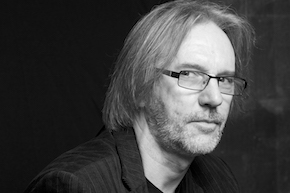
jcrowThe line up for the Toronto Summer Music Festival for this year, which runs July 11th to August 3rd, was unveiled last night by artistic director Jonathan Crow at the Arts and Letters Club.  The full details are here.  It’s impressive with high quality and lots of diversity.  so, just some personal comments and thoughts on the things I’ll be planning to see.  The art song fellow this year is Tony Dean-Griffey.  He’ll be working with Stephen Philcox on the Art of Song Academy programme.  Like last year the Academy  reGENERATION concerts will feature both chamber and vocal music and run on the three Saturdays; July 13th, 20th and 27th.  Dean-Griffey will give a recital with Warren Jones on July 16th at 7.30pm in Walter Hall.

There are five Koerner Hall concerts.  Opening night, July 11th, highlights the “Beyond Borders” theme of this year’s programme with a variety of works for assorted combinations of voice, chamber orchestra, string quartet, violin and piano including Adrienne Pieczonka singing the Strauss Vier letzte Lieder in a chamber arrangement by John Greer.  On the 17th the Dover Quartet present a Britten and Dvorák programme.  On the 25th, the Art of Time Ensemble have an eclectic looking show called From Franz Schubert to Freddie Mercury.  Not quite sure what to expect there!  The 30th sees Angela Hewitt performing Bach’s Goldberg Variations. and finally on August 1st there’s a chance to see Jonathan Crow performing Mozart’s “Turkish” concerto before Mahler’s Das Lied von der Erde (in the Schoenberg/Riehn arrangement) with Mario Bahg and Rihab Chaieb.  Gemma New conducts.
Continue reading

A couple more shows in March

Here are a couple more listings for March.  VOICEBOX are doing Kurt Weill’s Rise and Fall of the City of Mahagonny on March 30th at 8pm and March 31st at 2.30pm.  The cast includes Beste Kalender, Michael Barrett and Elizabeth DeGrazia.  It will be piano accompaniment with Narmina Afandiyeva at the keyboard.

Toronto City Opera are performing Verdi’s La Traviata at the Al Green Theatre on March 28th and 29th at 7.30pm and the 31st at 2,30pm.  Alaina Viau directs with a musical team of Ivan Jovanovic and Jennifer Tung.  The cast is headed up by Beth Hagerman, Kijong Wi and Handaya Rusli. Apparently it’s a “modern, Toronto setting”.  I’m curious to see how the ideas of “a fallen woman”, “family honour” and “arranged marriage” play out.

Arminio

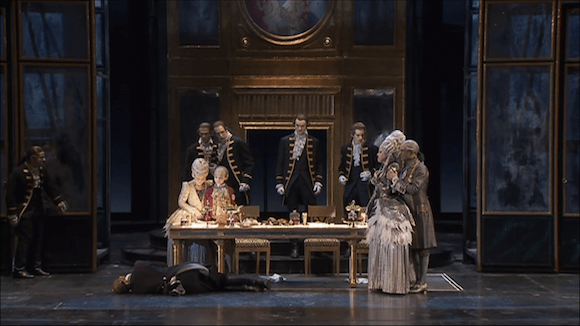
Handel’s Arminio was written for Covent Garden and while admired by the cognoscenti at the time it wasn’t a commercial success.  It’s a well worked three act opera seria with nothing much to distinguish it from others of its ilk.  For what it’s worth it’s set during Augustus’ attempt to conquer the land between the Rhine and the Elbe but its themes of death or glory and love versus duty, all with an impausible reconciliation ending, could easily be set anywhere.  Actually it almost wilfully ignores history as the libretto claims it happened in 9AD when the real Arminius (Hermann the Cherusker) decisively defeated Varo (also in the opera) in the Teutoburger Wald ending Roman hopes of extending the Empire beyond the Rhine.(*)

1.dinner

Continue reading

Perchance to Dream

Ivor Novello’s Perchance to Dream opened in London in April 1945.  It’s fluffy, romantic and nostalgic.  It has a ridiculous plot, some great tunes (A Woman’s Heart, We’ll Gather Lilacs etc) and lots of eye candy.  It’s probably exactly what people needed after nearly six years of an exceptionally weary, dreary war.  It ran for a thousand performances.  Approached in the right frame of mind it’s still a very enjoyable, escapist way of spending a couple of hours.

perchance

Continue reading

Blitzkrieg Cabaret

What better way to celebrate Kurt Weill’s birthday than listening to his songs, cabaret style, with a beer or three.  Well that’s what we did on Saturday as Blitzkrieg Cabaret opened a new run of Saturday afternoon shows at the Dakota Tavern.

We got three singers; Danie Friesen, Hilary June Hart, Jackson Welchner supported by Nick Donovan (drums), Colin Frotten (piano), and Andrew Downing (bass) with Hilary also chipping in on the accordion on occasion.  While Danie is a classically trained singer, Hilary and Jackson sound more comfortable in a jazzier idiom.  That, plus the make up of the band meant that the show tended to the “Sinatraesque” version of Weill rather than, say, the grittiness of Pabst’s Dreigroschenoper movie.  This was reflected in both choice of translation and performing style.  I think this works for some of Weill’s stuff but it doesn’t work for me so well with the Brecht lyrics.  I’ll go for Marx over McCarthy anytime!  Other people may feel differently.

blitzkrieg

Continue reading

DAM’s Le comte Ory

So, by a perhaps odd coincidence, various singers from Kathy Domoney’s stable are involved in productions of Rossini’s Le comte Ory at assorted Canadian houses in the near future; either as principals or understudies, so why not pull together some sort of performance of the work?  That happened last night at Trinity St. Paul’s in a “narrated production” by François Racine.  I had some ida what to expect as I had talked to François earlier in the week.

DAMcomte

Continue reading

OperaQ

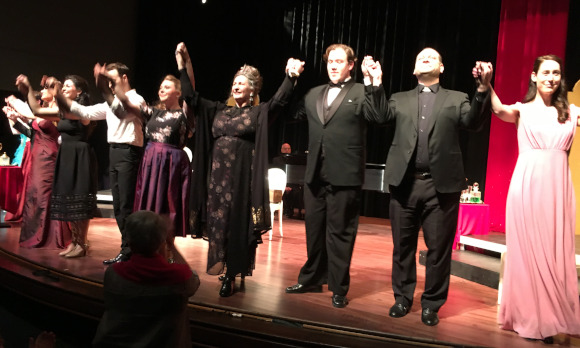
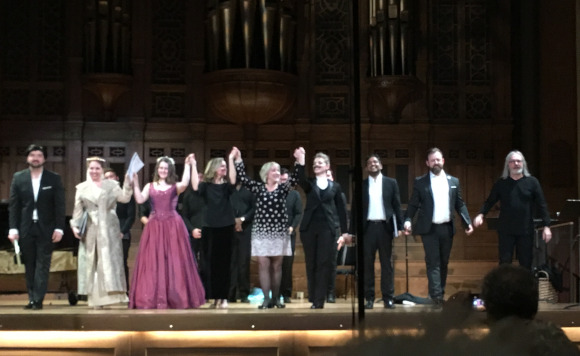
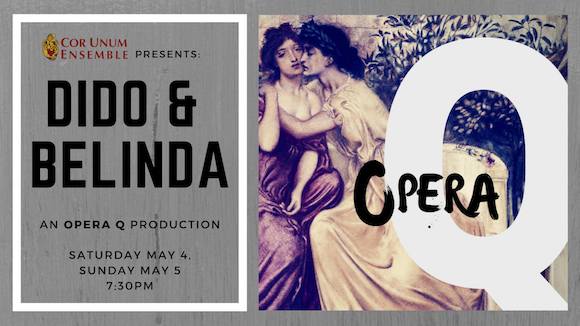
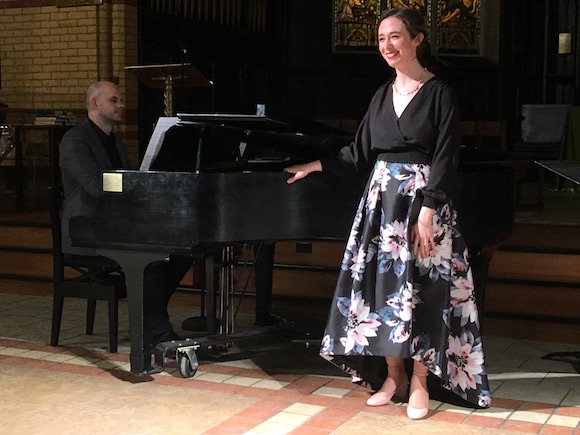
I met yesterday with Ryan McDonald and Camille Rogers to discuss their new project, OperaQ, and its upcoming show Dido and Belinda.  The driving idea is that opera needs a space for “queer people to tell queer stories to queer people”.  Now I’m sure many peopl’s initial reaction would be close to mine along the lines of “surely there’s no shortage of gay people in the opera world?”; which is ,of course, true but not really the point.  Gender presentation in opera is highly conventional, both on and off the stage.  There are strong stereotypes about “masculine” heroes.  Can an overtly gay man get cast as Otello (or even Hadrian)?  There are equally strong stereotypes about how female singers should present.  Everybody is supposed to be glamorous à la Maria Callas, an attitude that was brilliantly taken apart in Teiya Kasahara’s Queer of the Night.  Transgender issues add another layer onto this where, paradoxically perhaps, operas traditions of cross dressing confine rather than create space for transgender expression.  So, opera, lots of queers but not much queerness?

didoandbelinda

Continue reading

More from Confluence

Larry Beckwith’s innovative new series of concerts, Confluence, has just announced an addition to the season.

The first is a salon concert; Music Has No Borders: In Memory Of Walter Unger on March 4, 2019 at 7:30 pm.  It will take place at 7:30 pm on Monday March 4th in The Atrium at 21 Shaftesbury Avenue and will feature lectures and performances by Canadian composers John Beckwith and Alice Ping Hee Ho, pianist Gregory Oh, bassist Andrew Downing and clarinetist Majd Sekkar. Tickets are available at the door and at bemusednetwork.com for $25.

Continue reading

Voyage to Wien

Voyage to Wien, presented by Sara Schabas and Daniel Norman at the Church of the Redeemer last night was a nicely constructed tribute in song to that city on the Danube.  Things kicked off wittily with Bernstein’s (well he did conduct the Vienna Phil) “I hate music” followed by nicely rendered accounts of varied songs by the Mahlers and Schubert before exploiting the performers connections with the church choir to bring members of the choir in for “Ihr habt nun Traurigkeit” from Brahm’s German Requiem.

schabas-norman

Continue reading

Le comte Ory and the thorny issue of “semi-staged”

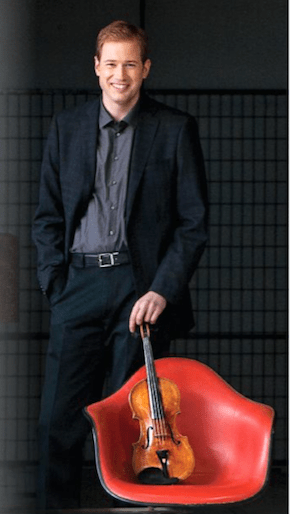
francois_racine_headshot_bwThere are lots of ways of presenting opera short of a fully staged/costumed performance with an orchestra.  In Toronto I’d say “concert” or “semi-staged” performances are probably at least as common as the full Monty; partly for reasons of cost and partly because there aren’t that many venues with a pit and a fly loft.  It’s generally pretty clear what “concert” performance means; concert wear and music stands, but what does the average punter expect when they see the words “semi-staged”?  I really don’t know what to expect.  Surtitles?  Costumes?  Props?  Blocking?  Orchestra, piano or something in between?  I’ve probably seen all possible combinations of the above described as “semi-staged” and I don’t think I detect any pattern in what works and what doesn’t.  Anyway Domoney Artists have a semi-staged version of Rossini’s Le comte Ory coming up on Saturday so I took the opportunity to ask director François Racine about his approach, which turned out to be not quite like any approach I’d come across before.

Continue reading