

 Here are a couple more shows I missed one way or another.
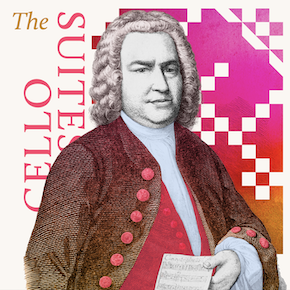
Tomorrow (October 29th) at 7pm the second of Confluence’s Bach cello suites concerts will be streamed on Youtube.
Saturday November 13th at3 pm at St. Andrew’s Church in Toronto and Friday November 19th at 7.30pm at People’s Theatre for the Performing Arts in Markham, Toronto City Opera are doing Verdi’s <em>Nabucco</em> in concert. It’s the usual formula; young local singers, volunteer choir and piano accompaniment. There will be no surtitles but the libretto will be available plus a narrator. More details here.
 As the rest of the world moves to live in-person performance Toronto is still mostly stuck in Covidland. My calendar for the month currently has two in-person shows (both courtesy of the RCM) and three streams. So:
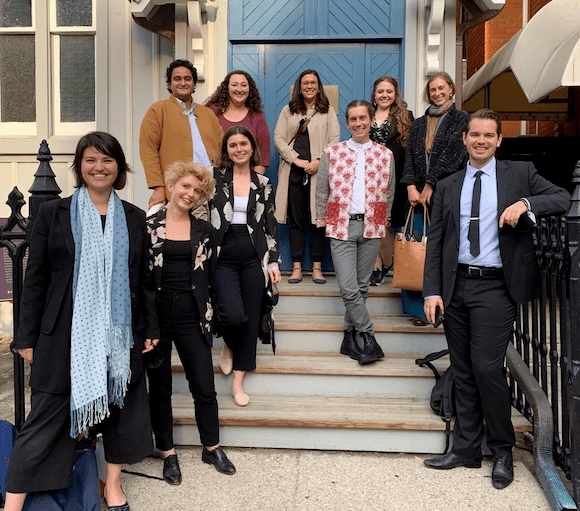
 Back to the Royal Conservatory yesterday for the first time since the plague struck. Ironically the programme, which had originally featured the Dover Quartet with Davóne Tines, had to be rearranged at less than 24 hours notice due to one of the Dovers testing positive for COVID. What we got instead was two mini concerts. In the first half the New Orford Quartet performed works by Caroline Shaw and Mendelssohn and in the second Davóne Tines, with Rachael Kerr, performed excerpts from his Recital No. 1: MASS.
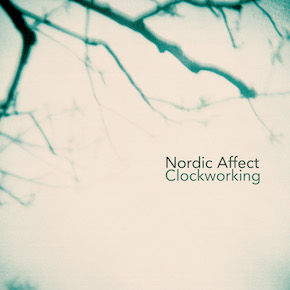 Listening to Emily D’Angelo’s new CD set me off on a search for more music by Hildur Gu∂nadóttir. This led me to Nortdic Affect; an ensemble who play contemporary music, mostly by female Iceandic composers) on baroque instruments. The older of the two albums is Clockworking, from 2015. It’s rather hypnotic. The music kind of inhabits the space between ambient sound and something more structured. Certainly the range of sounds that the musicians generate is remarkable, even when electronics aren’t involves, as they sometimes are. The
 If you follow such things you will probably have seen that the Bergen recording of Britten’s Peter Grimes won Gramophone magazine’s “Record of the Year” award. This came as no surprise as it is very, very good. My detailed review is in the Fall 2020 edition of Opera Canada. In that review, which was made using the electronic copy supplied by the distributor (16 bit, 44.1kHz stereo .wav files), I speculated that the commercial release, which is hybrid 24 bit/48kHz stereo and SACD surround, might well be “demonstration quality”. It is. I’ve now had a chance to sample the SACD version and it’s really good. There’s a really good level of detail and transparency with plenty of entirely natural sounding bass extension. That’s generally been my experience of such releases on the Chandos label and this is one of the best of them that I’ve heard. If you have gear that will play SACD you really should hear this!
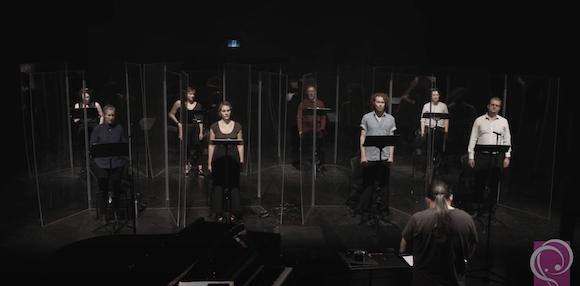
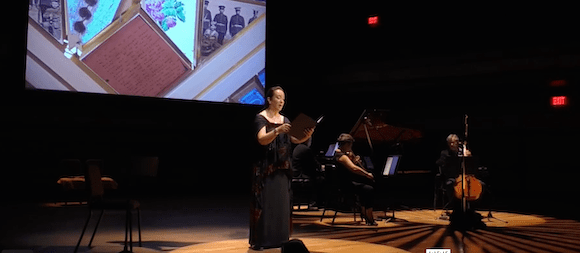

 I’ve been listening to Emily D’Angelo’s debut album elageia (find out more in the next edition of Opera Canada). It features music by Missy Mazzoli, with whom I’m a bit familiar, and by Sarah Kirkland Snider and Hildur Gudnadóttir, who are both new to me. Like Mazzoli, Snider is an exponent of that kind of cross-genre vocal music that seems to be assuming some significance in the US music scene. I’ve been listening to her song cycle Penelope which riffs off Homer’s Odyssey from a woman’s POV. Specifically the texts, by playwright Ellen McLaughlin, tell the story of a woman re-engaging with the man she was married to who has gone missing missing for 20 years and returned with PTSD.

