
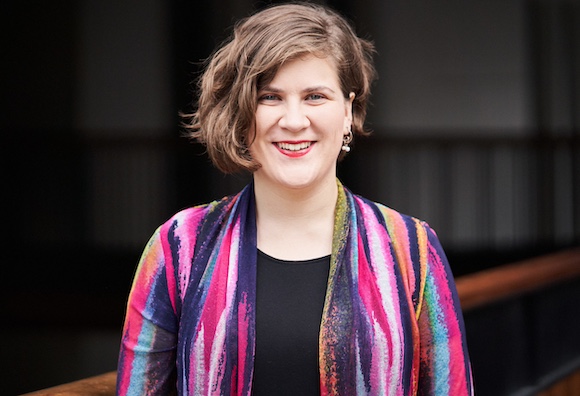
 I sat down with mezzo-soprano Ema Nikolovska this morning to talk about her upcoming show at Koerner Hall with guitarist Sean Shibe. It’s a touring show that’s being seen in multiple cities across Europe and North America and Ema was very clear that she sees it as an “experience” and “not a song recital”. So let’s take a step back and look at how it came into existence and then evolved into what we will be able to experience later this month.
Back in 2019 Sean shared with Ema the score of Detlev Glanert’s Orlando Lieder which set German translations of texts from Ariosto’s Orlando Furioso with a view to performing it together. Then stuff happened and it wasn’t until Ema’s residency at Wigmore Hall that they started to work seriously on a programme for a performance in May 2024 at that venue.
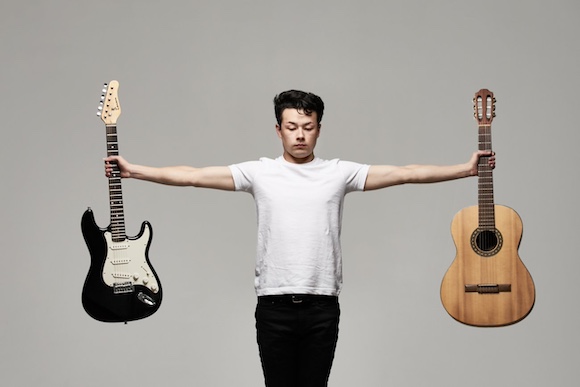 The core idea was to “create a narrative” (for some value of narrative) riffing off Orlando; Ariosto’s version, Virginia Woolf’s novel and even the earlier source material of Le chanson de Roland. So, themes of troubadours, courtly love, war, identity and time which led to the idea of incorporating modern troubadours like Bob Dylan and Laurie Anderson. The starting points were John Dowland and Detlev Glanert but Franz Schubert, Hans Abrahamsen, Pauline Viardot and Thomas Adès found there way into the initial mix. And then came a piece by Cassandra Miller based on WhatsApp messages from Ema using a mix of live performance and tape but conserving the timing and tone of the originals.
Now for this latest iteration there are commissioned works by jazz trombonist Alex Paxton, Maddie Ashton with a microtonal singer/songwriter influenced piece, Nahre Sol with a work based on fragmentation and a setting of Virginia Woolf text by Linda Caplan-Smith. There’s even a reverse engineered version of Anderson’s “O Superman” processed by Sasha Cooke.
So, the performance is a non-linear journey, perhaps even a “stream of consciousness” through music playing with time and identity and inviting the audience to find their own space, their own connections and their own contexts. To distance it further from the traditional Liederabend and help create a less intimidating atmosphere for the audience there’s a visual element; lights, projections, haze and a few other tricks. The details are still to be finalised as each hall is different and what works for a church in Paris may not work for Koerner!
So, if you plan on coming to the show on October 29th (and I hope you will!) bring curiosity and a willingness to hear what you need to hear and make the connections that work for you. It should be an interesting ride.
Photo credit: Kaupo Kikkas

