The current offering from Operavision on Youtube is the 2020 production by Opera North of Weill’s Seven Deadly Sins livestreamed from Leeds Playhouse in November 2020. It was Pay to View then but now it’s available for free until October.
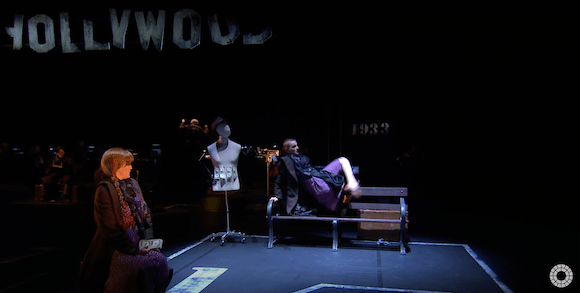


The current offering from Operavision on Youtube is the 2020 production by Opera North of Weill’s Seven Deadly Sins livestreamed from Leeds Playhouse in November 2020. It was Pay to View then but now it’s available for free until October.
Confluence Concerts returned to live performance last night at Heliconian Hall. The concert, curated by Patricia O’Callaghan, was titled A Simple Twist of Fate and featured an eclectic mix of music either on the topic of Fate or that was entwined with the fates of the performers.

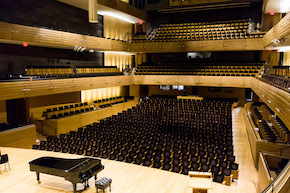 The Royal Conservatory of Music did a partial reveal of their classical and jazz programming for Koerner Hall in the 2022/3 season. It’s a pretty typical mx; heavy on piano, strings and chamber music, but there are a few interesting classical vocal concerts. Here are the highlights:
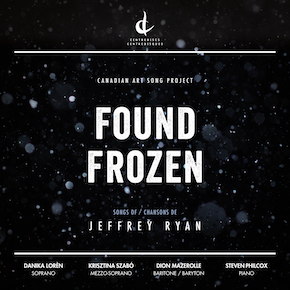 Found Frozen is a new CD from Centrediscs featuring songs by Jeffrey Ryan. The centrepiece of the disc is his Miss Carr in Seven Scenes. It’s a setting of extracts from Emily Carr’s notebooks for mezzo-soprano and piano performed here by Krisztina Szabó and Steven Philcox. I’ve heard them do the piece twice live, including the premier, and I really don’t have much to add to what I wrote then. It’s a terrific piece.
The first set on the disc though is Found Frozen. It’s a setting of three poems by Helen Hunt Jackson about Death and Remembrance. It’s scored for soprano and piano and sits quite high much of the time. The piano part is busy and somewhat minimalistic. It’s sung by Danika Lorèn with Steven Philcox again at the piano. It’s very good singing indeed. There are long sustained notes that are navigated with aplomb and her diction is excellent, even in the very high passages.
Handel’s Saul gets another “fully staged” treatment in this recording of a Claus Guth production at the Theater an der Wien in 2021. Inevitably it invites comparison with Barrie Kosky’s Glyndebourne version.. They are quite different though each is very enjoyable n its own way. Those not familiar with the piece might find the introduction to the earlier production helpful as I’m not going to repeat the outline of plot etc here.
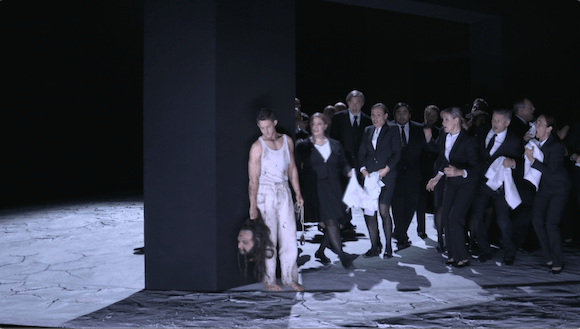
How far will people go in the effort to survive? How can they preserve some sense of self respect and dignity in that survival? I think these are the questions underlying George F. Walker’s play Orphans for the Czar which had its world premier last night at Crow’s Theatre in a production directed by Tanja Jacobs.
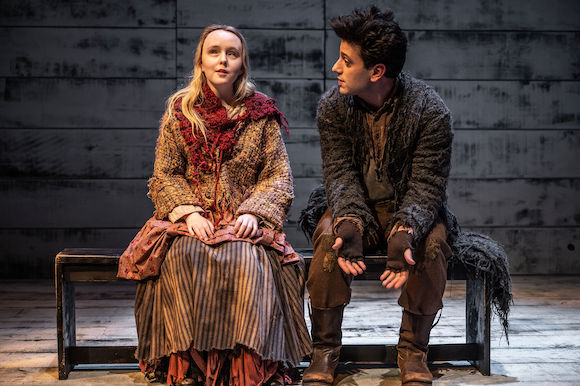
The latest commission from the Canadian Art Song Project is Another Day by Abigail Richardson-Schulte. It’s a setting of six poems by schoolchildren on the theme of refugees and human rights. It’s now available on video performed by soprano Anna-Sophie Neher with Carl Matthieu Neher at the piano.

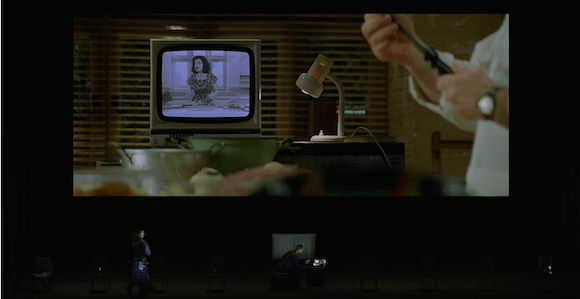
Bartok’s Duke Bluebeard’s Castle is a twisted little opera with wonderful music. Atom Egoyan’s film Felicia’s Journey is equally twisted and also derived at root from the Bluebeard material. So it makes sense to mash them up and that, essentially, is what Egoyan has done in the latest on-line presentation from the COC.
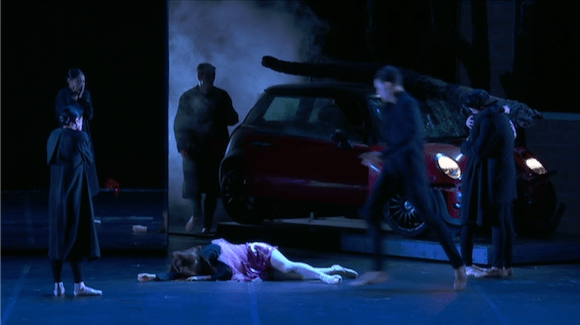
John Neumeier’s production of Gluck’s Orphée et Eurydice, recorded at Lyric Opera in Chicago (also seen in Neumeier’s home house of Staatsoper Hamburg and scheduled for this year’s Salzburg Whitsun Festival with the same principals) is quite unusual. Neumeier designed sets, costumes and lighting and served as both director and choreography. It’s very much his work. It’s also the Paris version rather than the Vienna (Italian) version more usually seen. Orphée is sung by a tenor and there’s a lot of ballet which extends the opera to three acts spread over two hours; maybe half an hour longer than an average production. Neumeier also chooses to give the story a modern frame. Orphée is a choreographer, Amour his assistant and Eurydice his prima ballerina as well as wife. The piece opens with a ballet rehearsal during the Overture. Orphée and Eurydice have a flaming row, She storms out and is hit by a car. At the end Eurydice, or her ghost, shows up during another rehearsal. The ending is in fact very unclear. As is the purpose of the frame. Is all the action supposed to be a dream or a trip? I couldn’t tell and it really didn’t seem to add anything.
My review of the Glenn Gould School’s production of Handel’s Rinaldo is now up at Opera Canada.
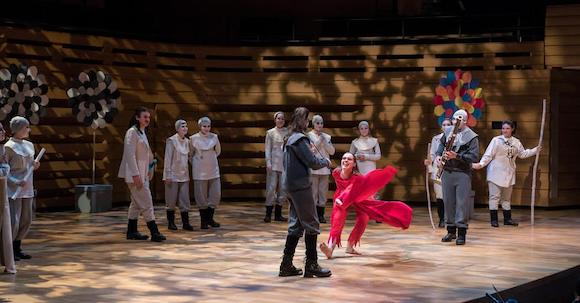
Photo: Lisa Sakulensky
 operaramblings