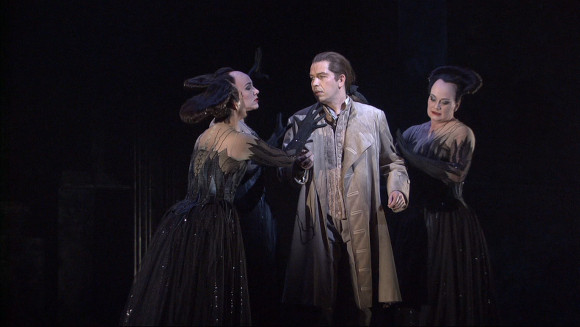
The COC’s production of Cherubini’s Medea is grand opera at its grandest

Cherubini’s Medea, in the 1909 Italian version being used by the COC, got there by a fairly circuitous route.  Euripides 5th century BCE tragedy and Seneca’s 1st century CE play inspired a French verse version of 1635 by Thomas Corneille which was turned into an opera by Marc-Antoine Charpentier in 1693.  In 1797 a version with music by Cherubini to a libretto by François-Benoît Hoffman; retaining much of Corneille’s version as spoken dialogue, premiered in Paris.  In 1909, for the Italian premiere at La Scala an Italian translation with added recitatives was used and that became, more or less, the standard version for its rare 20th century revivals (most notably in the 1950s with Maria Callas) and that’s the version being given at the COC with Sondra Radvanovsky in the title role.  Understandable really.  It’s hard enough to find a cast that can do justice to the music.  To expect them also to be expert at declaiming Alexandrines en français is probably expecting a bit too much.

23-24-06-MC-D-0760

Continue reading

McVicar’s Figaro revived

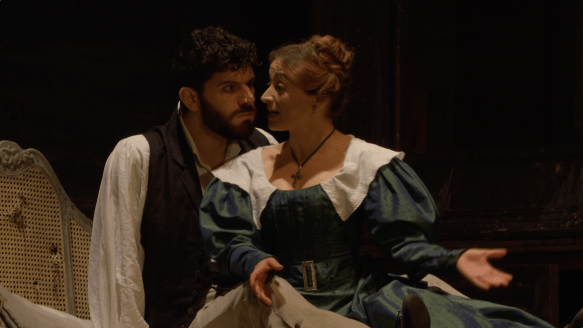
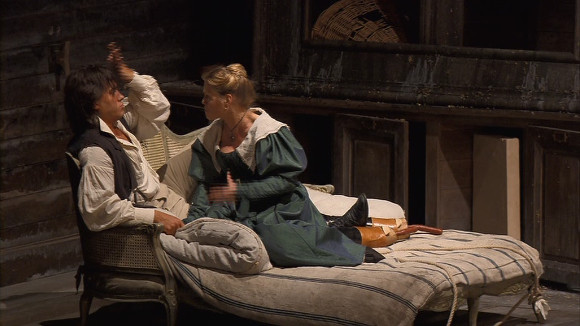
Back in 2015 I reviewed a 2006 recording from the Royal Opera House of Mozart’s Le nozze di Figaro directed by David McVicar.  It’s very good and has a super starry cast; Finley, Persson, Röschmann, Schrott, Shaham.  There’s even a cameo by Philip Langridge as Basilio.  So, when I saw that a new recording of the same production, made in 2022 with a young and less obviously starry cast, had been released I was in two minds whether to bother.  I’m glad I did.

1.figarosusanna

Continue reading

TOT’s Orpheus

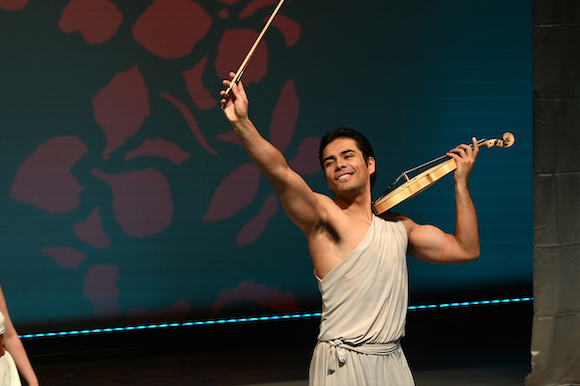
Toronto Operetta Theatre opened a run of Offenbach’s Orpheus in the Underworld at the St. Lawrence Centre last night.  Guillermo Silva-Marin gives it a pretty conventional treatment with minimal scenery, “Greek” costumes and no big surprises.  It’s sung in English which has pros and cons for while the dialogue is intelligible enough the comprehensibility of the sung part is a bit variable.

1.orpheus Continue reading

McVicar’s Faust revived

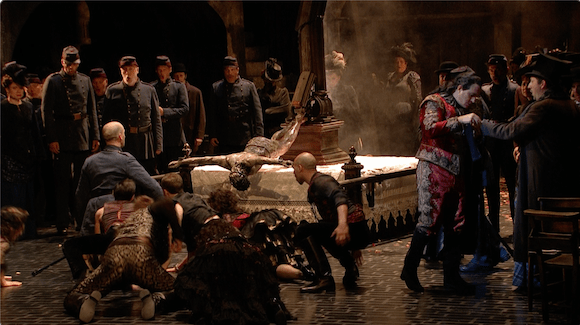
It’s quite unusual for a production to be released twice on video but that’s what has happened with David McVicar’s production of Gounod’s Faust for the Royal Opera House.  It was originally released in 2010 with a cast that included Roberto Alagna, Bryn Terfel and Angela Gheorghiu.  It’s now been released again in a revival directed by Bruno Ravella with a cast headlined by Michael Fabiano, Erwin Schrott and Irina Lungu filmed in 2019.

1.crucifix

Continue reading

McVicar’s Entführung

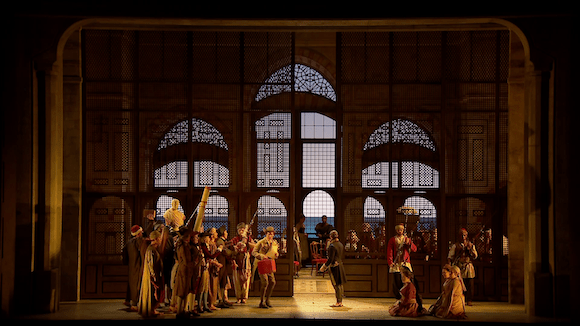
I think I’ve got used to David McVicar productions or, at least, what he’s produced in the last ten years or so.  The director’s notes will sound erudite and convey the impression that he’s gained some vital new insight into a well known work.  The actual production on stage will be almost entirely conventional with maybe the odd visual flourish but nothing to start the synapses firing.  This is very much the case with his 2015 production of Die Entführung aus dem Serail from Glyndebourne.  The “big idea” is that Bassa Selim is caught between two worlds; the ‘west” and the “east”.  Well duh!  This is as revelatory as pointing out that Mimi has TB.  This “revelation” is the reason/excuse for presenting the work with dialogues unaltered and uncut.  This is very much a mixed blessing.  Yes, it does allow some character development that’s otherwise missing but on the other hand it emphasises the fact that without some interesting new angle Entführing is basically dramatically a bit feeble.  Is she faithful?  How dare he doubt it?  Please forgive me.  Why should I?  Lather, rinse, repeat.  Enter Osmin.  Hang them.  Impale them. Daggers and poison.  Over and over.

1.baumeister

Continue reading

Next week…

440x360_normaHere’s a preview of things to see/listen to next week.  It’s Met in HD season again and the next two Saturdays have broadcasts.  On the 7th it’s Bellini’s Norma with Sondra Radvanovsky and Joyce DiDonato.  It’s a David McVicar production and no prizes for guessing what happens when you cross McVicar and druids.  On the 14th it’s Die Zauberflöte with the Resident Groundhog conducting.  It’s the Julie Taymor production but given in full in German rather than the abridged ‘for kids” version.  The best thing about the cast is René Pape’s Sarastro.
Continue reading

Patchy Andrea Chénier

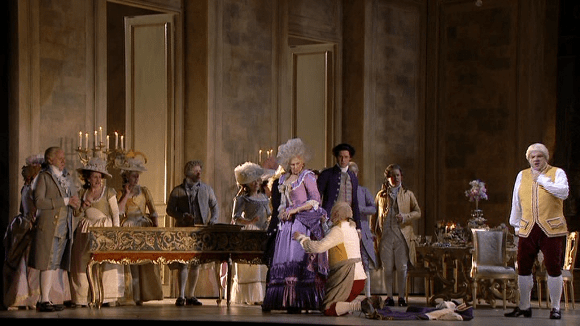
What’s become of David McVicar?  His 2015 production of Giodarno’s Andrea Chénier for the Royal Opera House seems typical of his recent work.  It looks expensive.  It features a starry cast.  He flirts with dramatic risk but in the last analysis it comes off as a bit tame and even sloppy.  Basically when the principals are at the centre of the drama it’s compelling stuff but when they are not it’s not and there are curious inconsistencies.

1.soiree

Continue reading

Hands on Figaro

In the booklet accompanying David McVicar’s production of Le nozze di Figaro, recorded at the Royal Opera house in 2006, there’s an essay by the director in which he raises all kinds of questions about the rise of the bourgeoisie, the nature of revolution and romantic conceptions of love.  He even appears to draw a parallel between Joseph II and Tony Blair. Then he declines to explain how he has embodied all these ideas on the stage and challenges us to “Watch, listen, participate”.  Well I did and I’m none the wiser.  What I see here is an essentially traditional approach; transferred cosmetically to 1830s France but so what?  It’s darker than some Figaro’s but not nearly as dark as, say, Guth.  Curiously, the main “extra” on the disks “Stage directions encoded in the music” tees this up much more clearly than the essay.

1.figarosusanna Continue reading

The Met’s Maria Stuarda on DVD

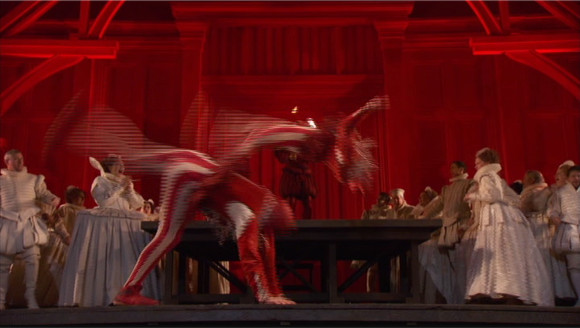
Donizetti’s Maria Stuarda featured in the MetHD series in January 2013 and has now been released on DVD.  My review of the cinema broadcast is here.  It’s always a bit different watching the DVD rather than the cinema version but in this case I think my somewhat different reaction has a lot to do with having recently seen various versions of the other Schiller/Donizetti Tudor queen operas, especially Stephen Lawless’ Roberto Devereux at the COC.

1.acrobats Continue reading

Dark but straightforward Zauberflöte

The 2003 Royal Opera House recording of Die Zauberflöte has a terrific cast and it has Sir Colin Davis conducting.  The production is by David McVicar and it’s one of those that make one wonder how he ever got a “bad boy” reputation.  It’s perfectly straightforward though rather dark (emotionally and physically) and has a vaguely 18th century vibe.  In places it seems a bit minimalist, as if the director couldn’t really be bothered with things like the Trials.  The interview material rather suggests that McVicar was a bit overawed by doing Mozart with the great Sir Colin and tried very hard to match his rather old fashioned theatrical sensibilities.

1.tamino Continue reading