
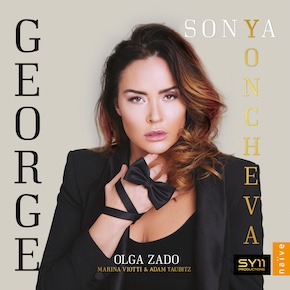
 George is a new CD from soprano Sonya Yoncheva and friends made up of music George Sand would have listened to and some readings fro her works. There’s a particular emphasis on Pauline Viardot; close friend of Sand and sister of Maria Malibran.
The music includes Chopin piano pieces played by Olga Zado, who also accompanies the songs. His Casta diva, based on the Bellini aria, is particularly interesting. There are songs by Leoncavallo, Delibes, Offenbach, Tosti and Liszt as well as piano music and songs by Viardot. On two of the songs Yoncheva is accompanied by mezzo Marina Viotti and Zado is joined by violinist Adam Taubitz for a Viardot Romance.
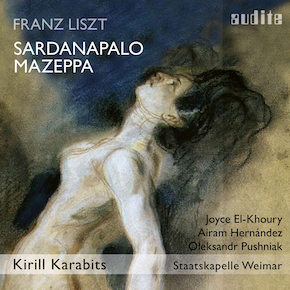 Have you ever asked yourself “What if Liszt had written an opera?”. I hadn’t either. But he did start one; Sardanapalo. It’s based on a Byron poem and tells the story of Sardanapalus, king of Assyria, who met a rather grisly end with his favourite concubine Myra after his subjects revolted, objecting to his decadent lifestyle. The libretto is by an unknown hand and it seems only Act 1 ever got written. Liszt made a start on setting that, leaving just about enough material for Cambridge scholar David Trippett to produce a performable version. This was duly performed and recorded in Weimar in 2018.
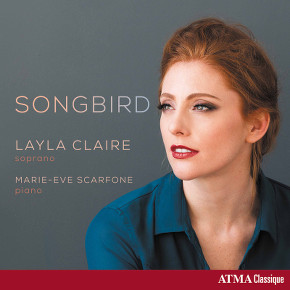 Layla Claire is one of a handful of young Canadian singers making something of a splash on both sides of the Atlantic with major roles in Glyndebourne, Zürich, Toronto and Salzburg and an upcoming Pamina at the Met. Her debut recital CD Songbird, with pianist Marie-Eve Scarfone, was recently issued on the ATMA Classique label. It’s an interesting and varied collection of songs though never straying very far from familiar recital territory. It’s tilted towards French (Gounod, Chausson, Debussy, Fauré, Bizet) and German (Wolf, Strauss, Brahms, Liszt) repertoire but there’s also Quilter, Barber, Argento and Britten (the comparatively rare Seascape which is, oddly, omitted from the CD liner).
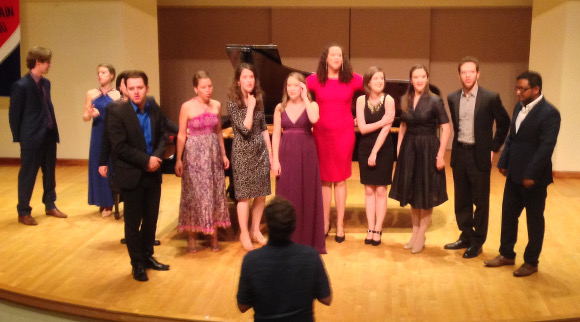
 The last Songmasters concert of the season featured a selection of works that sorta kinda had a Finnish or Hungarian connection. The first part of the prgram featured songs by Sibelius, all but one to Swedish texts, and piano pieces by Selim Palmgren, whose music sounds like a sort of cross between Debussy and Sibelius. The songs were sung Stephen Hegedus with plenty of power and quite a bit of subtlety. We had been told he was quite ill but one wouldn’t have known it. Fine, delicate work at the piano by Robert Kortgaard.
  operaramblings