
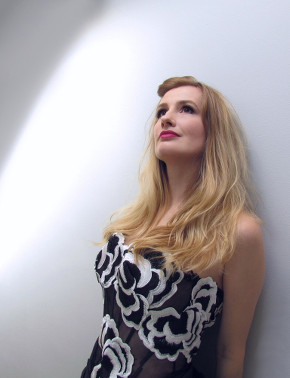
 A couple of days ago I sat down to chat with Natalya Gennadi who will sing the title role in Tapestry’s upcoming premiere of Oksana G by Aaron Gervais and Colleen Murphy. It’s a story about a Ukrainian girl who gets caught up with a sex-trafficking ring; an all too real phenomenon in Eastern and Central Europe as the Soviet system disintegrated. For Natalya it’s a very personal piece. She is Ukrainian and much the same age as Oksana would be. It’s her era and Oksana is, she feels, a similar sort of person from a similar background and there but for…
Thankfully, Natalya’ “career path” has been rather different. She didn’t set out to be a singer. In fact she trained in linguistics before applying to, and being accepted by the Moscow Conservatory though she never studied there. Instead she moved to Ottawa with her husband where she began to study music formsally. With a degree from the University of Ottawa she came to Toronto to study for her masters. Along the way she appeared in a number of student productions and since graduating has been keeping busy with roles mainly with opera companies and orchestras in the Toronto suburbs(*); most recently in the title role of Suor Angelica with Cathedral Bluffs and the countess in Le nozze di Figaro with the Brott Festival. The latter representing something of a vocal shift from Puccini and the like to lighter rep. This is something that she sees as an important (if slightly unusual) career direction. There have also been competitions and the Karina Gauvin scholarship and a “career blueprint” award from the IRCPA.
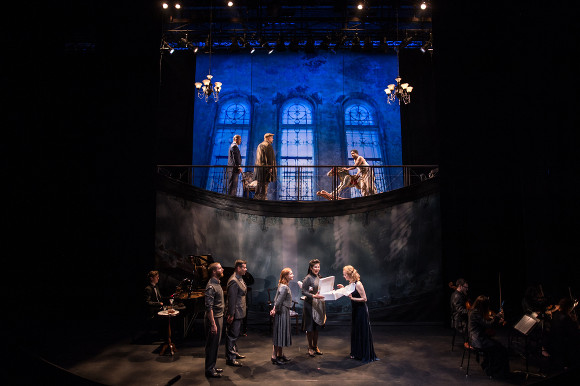
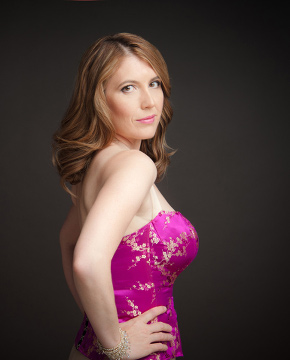 Tapestry Songbook is the culmination of New Opera 101; a week long masterclass where young singers get to work with established performers on repertoire from Tapestry’s extensive collection of recent Canadian work. This year the “masters” were Krisztina Szabó, Keith Klassen and Steven Philcox. The week culminates with a series of concerts of :scenes”; some performed by the “masters” and some by the students. As there were fourteen pieces performed and a cast of thousands I’m just going to report on my personal favourites with due apologies to anyone who got left out.
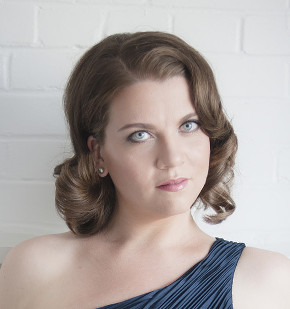 Thursday seems to be the big day next week. Ileana Montalbetti and Rachel Andrist have a lunchtime recital in the RBA. There’s Strauss and Mozart and Beethoven and more. Ileana has been a really impressive Gutrune in Götterdämmerung so I’m excited to see her in recital. That evening there’s a choice of the annual COC Ensemble Studio performance at the Four Seasons Centre where the Ensemble members will be offering staged scenes, with full orchestra, from Mozart’s La finta giardiniera, Bellini’s Norma and Handel’s Ariodante. The alternative is Tapestry Songbook VII featuring Krisztina Szabó, Keith Klassen and Stephen Philcox performing numbers from Tapestry’s extensive back catalogue. That’s at the Ernest Balmer Studio at 7.30pm. There are repeat shows on Friday at 7.30pm and 10pm. Looks like both 7.30pm shows are sold out but late night Friday is still available. Operaramblings’ extensive spy network (not Louise Mensch) suggests that patrons may also learn something to their advantage. The day before, Wednesday at 7.30pm, there’s a Don Giovanni in concert at Royal St. George’s Chapel. Actually seeing as how dancer Bill Coleman is involved it may not be entirely straight “in concert”. The cast includes Alexander Dobson in the title role, Katherine Whyte, Colin Ainsworth, Taiya Kasahara, Vania Chan and Matthew Li plus a “special guest”. Tickets at
 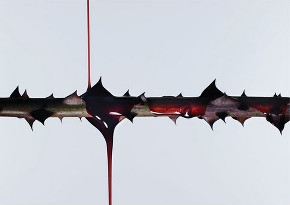 The Killing Flower is an opera by Salvatore Sciarrino. Both Italian and English versions exist and it was the latter that was given, in semistaged form, at Walter Hall as part of the Toronto New Music Festival last night. It’s a very distinctive work and not easy to form a full appreciation of on a single hearing. The plot is straightforward enough. There’s a duke and duchess. She falls in love with a guest. They are betrayed by a servant. He kills the guest and then her. But all this happens in a highly abstracted way (made even more abstract by not being fully staged). As the composer puts it: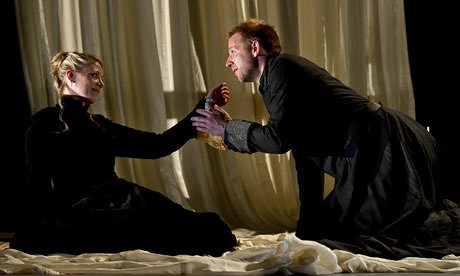




 operaramblings