Orphée as love triangle

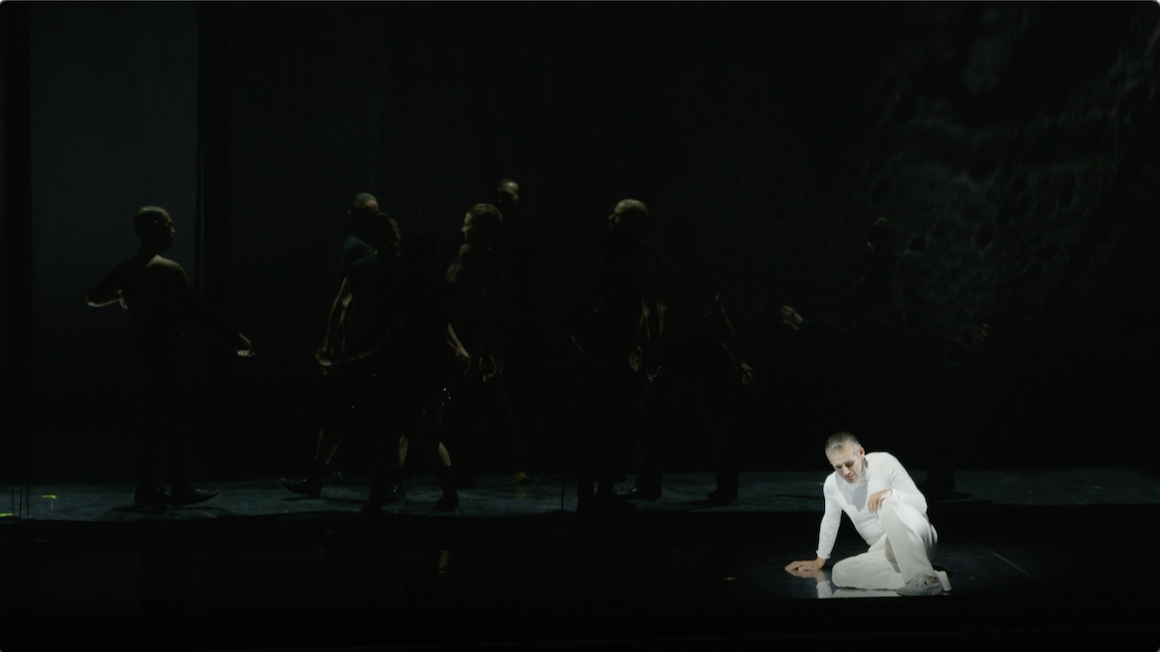
Gluck’s Orpheus opera; in either Italian or French guise, is usually presented as a short and cheery “love conquers all” with an uncomplicated happy ending.  Pierre Audi in his production of the 1774 Paris version of Orphée et Euridice, recorded at the Maggio Musicale Fiorentino in 2022 takes a different tack.  Here Amour, who is on stage 100% of the time, forms a love triangle with Orphée and Euridice and while she’s happy to work to reunite the lovers Orphée gets in a snit in the last act when he realises that her interest isn’t entirely altruistic and comes close to violence when the two girls show more interest in each other than in him!

Continue reading

Samuel Mariño at the opera

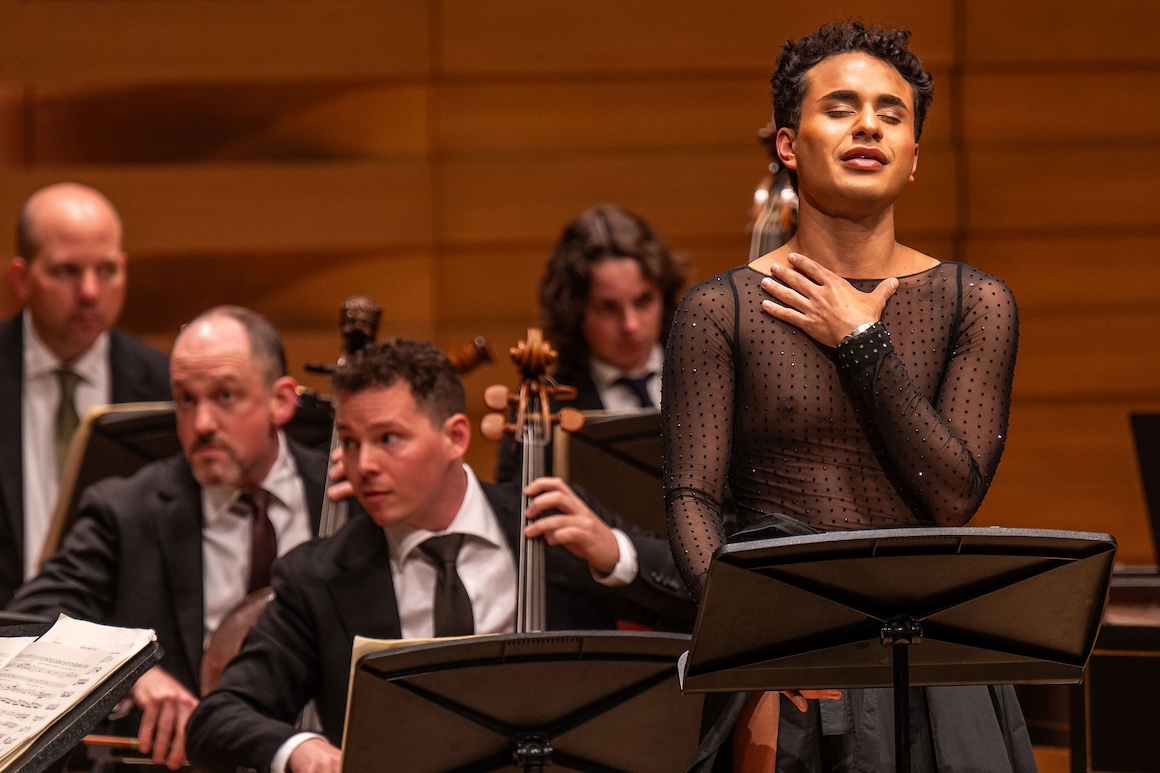
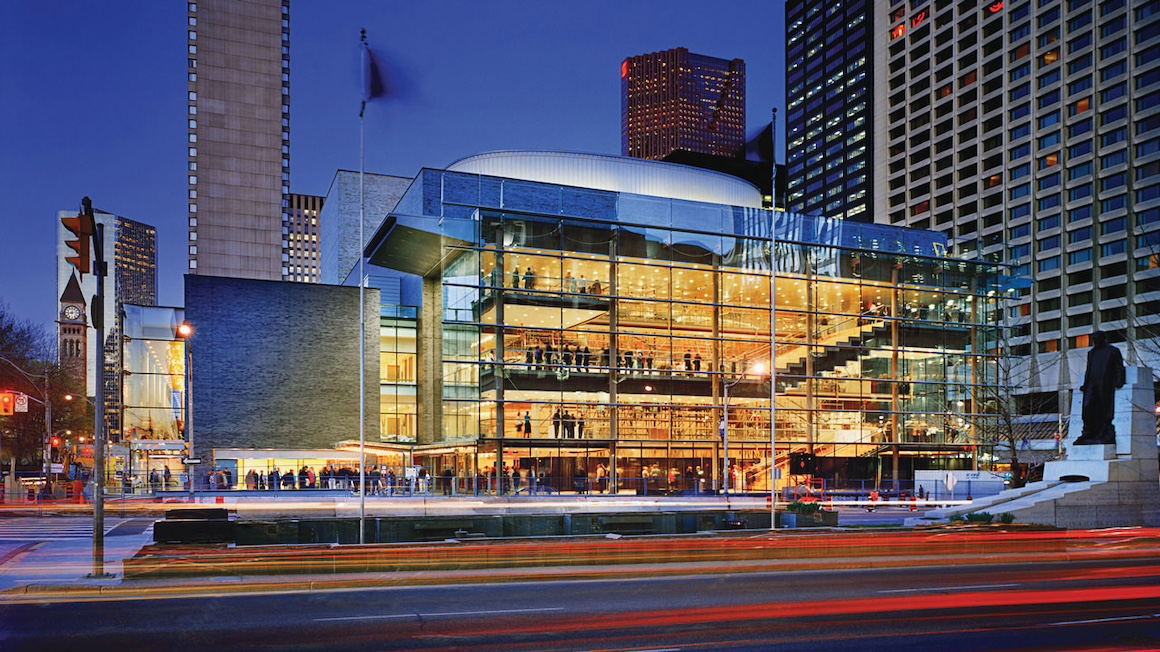
Male soprano Samuel Mariño was back in town for another concert with Tafelmusik; this time at Koerner Hall.  There were three concerts and I caught the last one on Sunday afternoon.  The repertoire consisted of opera recitatives and arias from the 18th century interspersed with related instrumental numbers.

Continue reading

COC announces 2025/26 season

Without notice or fanfare the COC season announcement landed in my email inbox at 11.30 this morning.  I kind of miss the old 10am press conference which at least offered an opportunity to ask about the rationale of some of the decisions.  I guess though that the number of people writing about opera in Toronto these days would fit in a phone box so maybe it’s too much to hope for.  There are some mildly surprising aspects to the announcement.  There’s no Mozart or Puccini nor, more consequential, any sign of the various new opera projects that COC has/had under development which do have a bit of a habit of disappearing without trace.  There’s also no “second stage” production.  I guess that experiment is done.  So it’s six main stage productions in the traditional three pairs. Continue reading

Alceste in concert

Lauren Margison as AlcesteSunday afternoon saw VOICEBOX:Opera in Concert’s first performance in their new home; Trinity St. Paul’s.  The offering was Gluck’s Alceste in the French language 1776 Paris version.  Lauren Margison sang the title role with Colin Ainsworth as Admète.  Guillermo Silva-Marin directed.

Trinity St. Paul’s has advantages and (perhaps) disadvantages over the Jane Mallett.  It’s significantly better acoustically but much harder to do much in the way of staging.  It’s a church and it looks like one with lots of carved wood and stained glass!  I’m not sure that this is a disadvantage though.  Rudimentary blocking with entrances and exits for the principals and concert wear is fine with me given that in either venue full staging wasn’t/isn’t very practical.  The value proposition is more around getting to hear operas live that no-one else in Toronto is likely to do.  I’m fine with that. Continue reading

TSO and VOICEBOX 2024/25

annaprohaskaThe Toronto Symphony’s 2024/25 season is the usual mix of mainstream symphony/concerto rep, Pops, film music, kids’ concerts etc.  My sense is that it has got more “popular” since the pandemic and that therefore there’s been less that’s caught my eye.  That’s my story anyway!

There are some concerts of interest to me though in the 2024/24 season though; curiously mostly in November.  The four that caught my eye were the following: Continue reading

Restrained Orphée

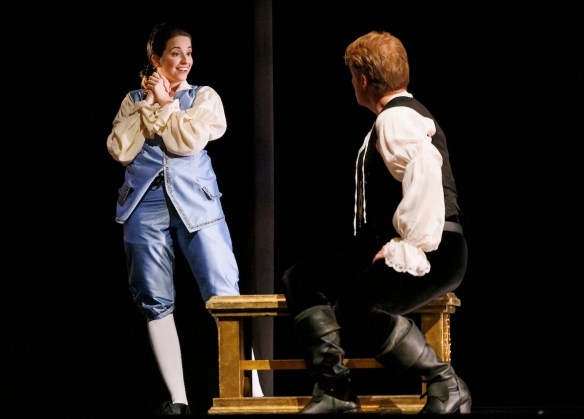
There’s quite a lot to like in Opera Atelier’s current production of Gluck’s Orphée et Euridice currently running at the Elgin Theatre.  It’s elegant and refined with some pretty good singing but maybe it’s a bit too refined.  It’s at its best in things like “The Dance of the Blessed Spirits” where there’s an effective pas de deux danced in pointe shoes though I’m not sure it was really necessary to use enough “smoke” to fill the entire auditorium!  Unfortunately, the production doesn’t make much of the potentially more dramatic moments.  Orphée’s confrontation with the Guardians of Hell is pretty low key.  The demons are just dancers in slightly stripey body stockings and there’s no sense of menace.  It’s all a bit Robert Wilson.  Until the ending, which suddenly switches aesthetic with glitter and streamers and dancers with a Scrabble set.

Anna-Julia David as Amour, Colin Ainsworth as Orpheus. Photo by Bruce Zinger

Continue reading

Homage to Viardot

Yesterday the Ensemble Studio put on a really nicely curated tribute to Pauline Viardot.  Viardot was a singer, pianist, composer and muse who was enormously influential in music circles in paris in the middle years of the 19th century.  She came from a famous musical family and was the younger sister of Maria Malibran. Her own work is little performed today although the Royal Conservatory did her Cendrillon in 2016.

midori

Continue reading

Neumeier’s Orphée et Eurydice

John Neumeier’s production of Gluck’s Orphée et Eurydice, recorded at Lyric Opera in Chicago (also seen in Neumeier’s home house of Staatsoper Hamburg and scheduled for this year’s Salzburg Whitsun Festival with the same principals) is quite unusual. Neumeier designed sets, costumes and lighting and served as both director and choreography. It’s very much his work. It’s also the Paris version rather than the Vienna (Italian) version more usually seen. Orphée is sung by a tenor and there’s a lot of ballet which extends the opera to three acts spread over two hours; maybe half an hour longer than an average production. Neumeier also chooses to give the story a modern frame. Orphée is a choreographer, Amour his assistant and Eurydice his prima ballerina as well as wife. The piece opens with a ballet rehearsal during the Overture. Orphée and Eurydice have a flaming row, She storms out and is hit by a car. At the end Eurydice, or her ghost, shows up during another rehearsal. The ending is in fact very unclear. As is the purpose of the frame. Is all the action supposed to be a dream or a trip? I couldn’t tell and it really didn’t seem to add anything.
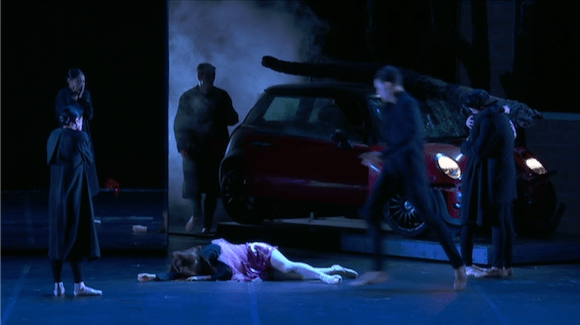
1.crash

Continue reading

Alceste in Munich

I really wonder why Gluck’s Alceste gets as many productions as it does.  The plot is essentially dull (summarised in this review) and I really can’t see an angle that could be used to make it interesting and relevant to today’s audience in the way that one can with such classical stories as Antigone,  Medea or Idomeneo.  The music, bar a handful of numbers, is not very exciting either.

1.people

Continue reading