Porgy and Bess at SFO

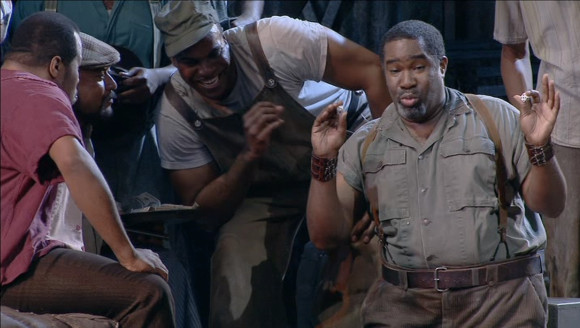
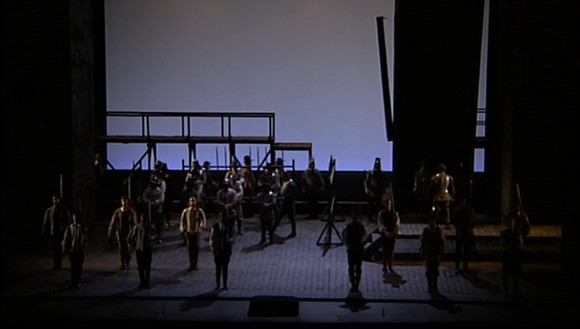
Gershwin’s Porgy and Bess has a really interesting history.  It was always intended as a “grand opera”; pretty much the first American one.  It was written for the Metropolitan Opera but not performed there until 1985 and between it’s Boston debut in 1935 and a production in Houston in 1976 it was virtually always performed in a much cut edition designed for Broadway.  In fact by the time of the Houston production it was being done much at all; being seen as dated and dealing with issues of race that were particularly highly charged in Civil Rights Era America.  It took a bold, young Deneral Manager, David Gockley, and a Gershwin enthusiast, John DeMain, to recreate an opera rather than a musical.  It’s been following them round ever since and so, not very surprisingly, Gockley, now in charge in San Francisco, chose to stage it there last year in a new production by Francesca Zambello with DeMain conducting.

1.porgy Continue reading

Don Tom

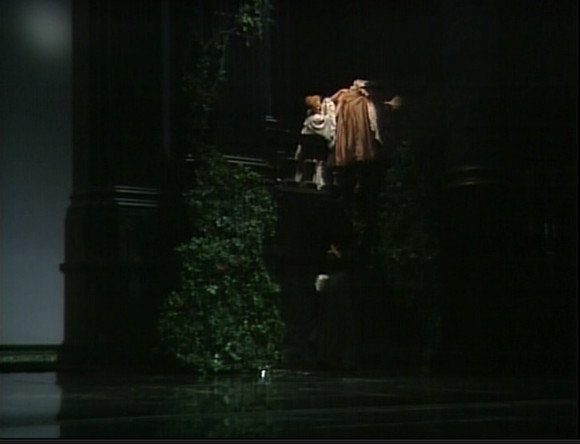
There are over 40 video recordings of Don Giovanni in the catalogue, dating back to 1954, and Thomas Allen sings the title role in quite a few of them.  This one was recorded at La Scala in 1987 and features a very strong cast in a careful, traditional staging.  It’s also pretty decent technical quality for the era.  The director was Giorgio Strehler in a comparatively rare opera outing.  His sets and costumes are of some vague aristocratic past with liveried footmen, big hats and twirling capes.  It’s quite handsome but not in any way revelatory.  Nor is any aspect of the production really.  We are clearly in an aristocratic milieu.  Tom Allen’s Don Giovanni is arrogant and proud with plenty of swagger.  There’s no hint of ambiguity about  Edita Gruberova’s Donna Anna or Ann Murray’s Donna Elvira and Francisco Araiza is a properly dutiful chump of a Don Ottavio.  It’s all quite serious with comic relief only in the most obvious places.  Having said that, there are some very effective scenes; especially the ending which has a an interesting lighting plot and manages not to be anti-climactic.

1.balcony Continue reading

The Perfect American

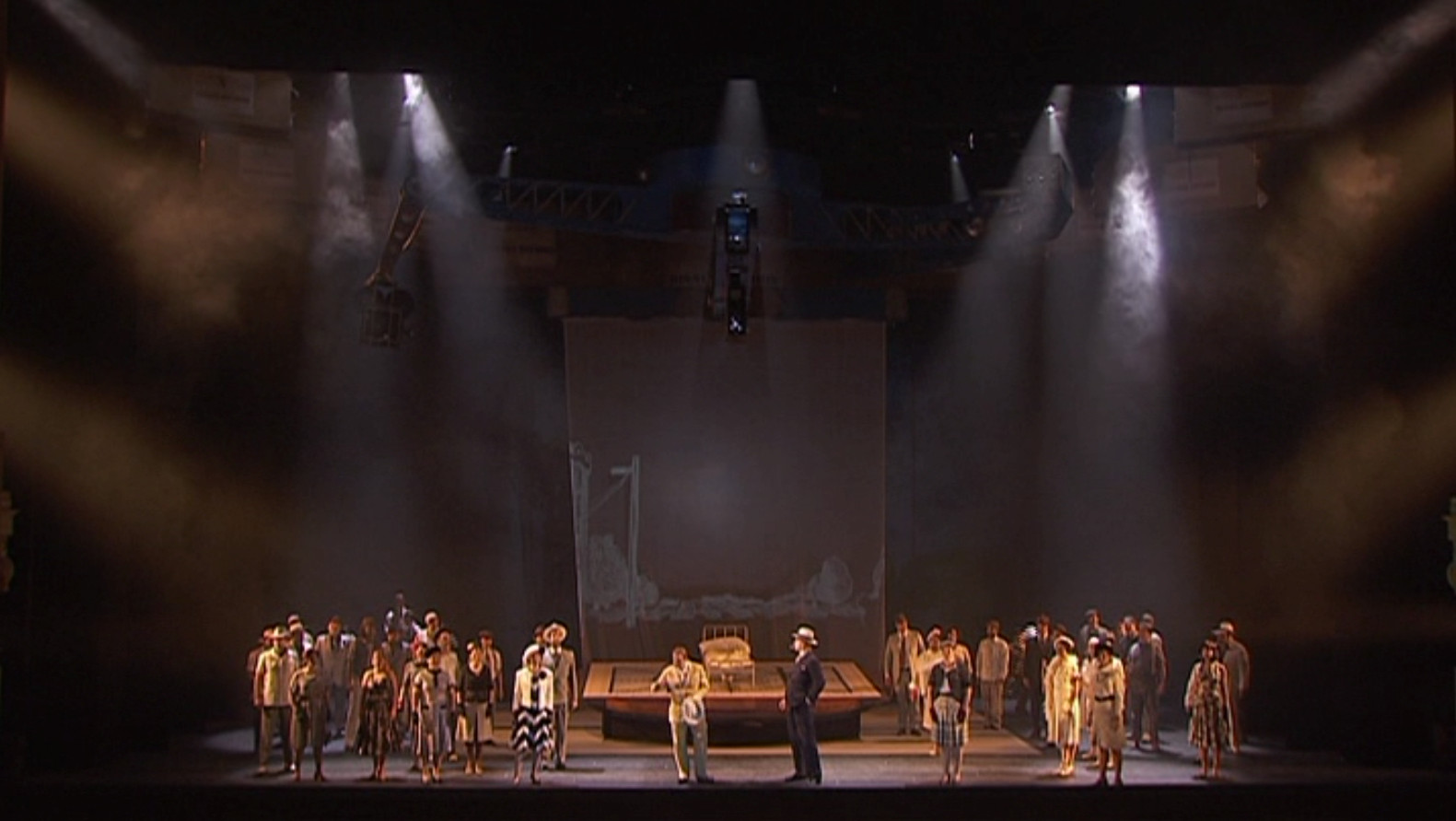
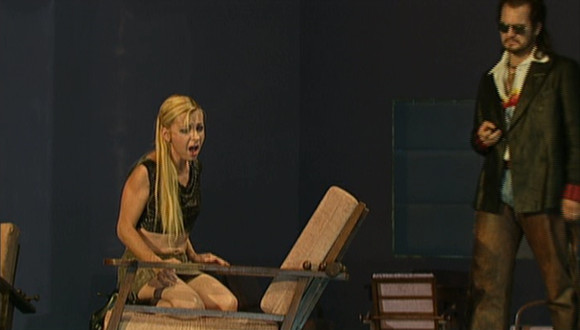
The Perfect American is the ironic title of Philip Glass’ latest opera which premiered in Madrid last year.  It’s about Walt Disney and set at the end of his life looking back at his life and forward to his death.  It’s a not very flattering portrait.  It depicts Disney as blinkered, racist, virulently anti-Communist and, in fact, only comfortable with a sort of Leave it to Beaver America; though passionate about that.

1.marcelline Continue reading

Are you my mother?

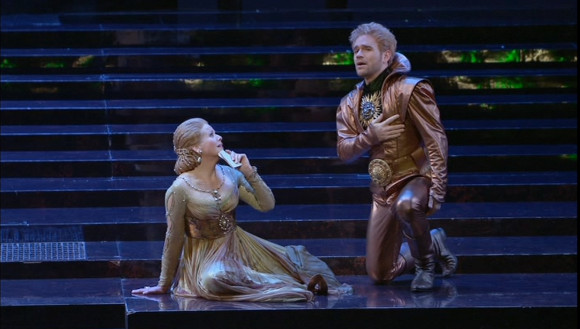
Donizetti’s Lucrezia Borgia is based on one short episode in the storied life of the famous female pharmacist.  In it she twice poisons her son; once at the insistence of her husband, the second time by accident.  The second time her son refuses the antidote preferring to die with his equally poisoned buddies but learns in his dying breath that Lucrezia is indeed his mother.  It’s pretty unusual for a bel canto opera in that the leading female role (a) has agency, (b) doesn’t go mad and (c) doesn’t die.

1.mumson Continue reading

With tender pity swells

Here’s another fine example of how well Handel’s oratorios can work when staged.  It’s a recording of Hercules made at Paris’ Palais Garnier in 2004.  The staging is by Luc Bondy and William Christie and Les Arts Florissants are joined by a youngish cast of extremely good singers.  It’s compelling stuff.  I think what, for me, makes the oratorios much more interesting than most of Handel’s opera seria is structural.  The operas tend to alternate recit and da capo aria with maybe a duet or chorus to close an act but they are pretty predictable.  In the oratorios Handel makes much more use of ensembles and the chorus and, for me, that’s vastly preferable.

1. Lichas_Dejanira Continue reading

Historic Ariadne

Opera videos of performances before 1980 are quite rare and are mostly films.  Recordings of live performances are extremely uncommon and often quite interesting.  A couple have just been rereleased on DVD.  The one reviewed here is an Ariadne auf Naxos from the 1965 Salzburg Festival (the other is a recording, in German, of Don Giovanni with Fischer-Dieskau – watch this space).  It’s an old ORF TV broadcast with a grainy 4:3 black and white picture and less than stellar mono sound but it does provide an idea of what audiences saw and heard fifty years ago.

1.haushofmeister Continue reading

Abstraction from the Seraglio

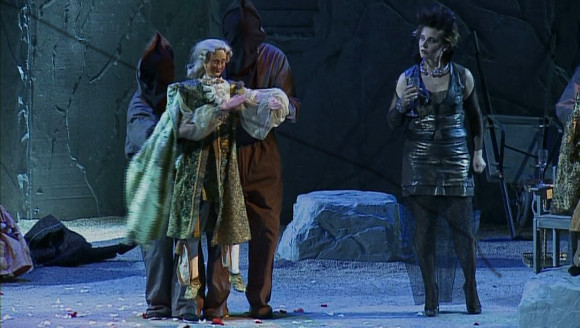
Mozart’s Die Entführung aus dem Serail is a problematic opera.  It’s got some great music but the libretto is pretty weak and its depiction of Turks is pretty unflattering.  Maybe it seemed edgy less than a hundred years after the Ottomans besieged Vienna but today it just seems mildly embarrassing.  Fortunately it’s a singspiel with dialogue rather than opera with recitatives so it’s fairly easy to play with the story line.  For his 1998 production Stuttgart at the Staatsoper Stuttgart, Hans Neuenfels goes much further.  He double each of the singers with an actor and pretty much rewrites the dialogue.  He also introduces an element of metatheatre.  This is a performance and everyone knows it.  For example when Pedrillo is asked how he’s going to get hold of a ladder for the escape scene he replies that he’ll use the one they always use in this opera.

1.osmins Continue reading

The other Plymouth pilgrims

I suppose in some ways Bellini’s I Puritani is the perfect bel canto opera.  It has lots of great tunes, a wicked coloratura soprano part and an utterly ridiculous plot (my comments on the plot can be found in my review of the Met/Netrebko recording) and, of course, a mad scene.  In this recording from Barcelona’s Liceu the soprano role of Elvira is taken by Edita Gruberova, surely one of the greatest ever in this genre.  At 54 she doesn’t look ideal for the young bride to be but she can act and she gives a master class in bel canto style. What she has to yield to Netrebko in terms of looks and physical commitment she makes up for in sheer technical prowess.

1.soldiers Continue reading

Natalie Dessay showcase

Le miracle d’une voix is a compilation of scenes from various recordings in which Natalie Dessay featured made between 1993 and 2003.  It’s especially interesting in that a couple of pieces feature more than once.  There are three Les oiseaux dans les charmilles; Olymia’s aria from Les contes d’Hoffmann and two Grossmächtigen Prinzessin from Ariadne auf Naxos.  Thrse demonstarte what I have always believed to be Dessay’s greatest strength; her ability to recreate a character to fit in a particular production.  The two Zerbunetta arias illustrate this perfectly.  In the first, a Salzburg production from 2001, Zerbinetta is a depressed, heavy drinking, prostitute who celebrates a kind of deeply sad sisterhood with Ariadne before being dragged off by a very sleazy Russell Braun.  In the second, from the Palais Garnier in 2003, she’s a bubble headed tourist in bikini and wrap who pesters poor Ariadne all around what looks like a Mediterranean building site.  They are completely different characterisations but both highly effective.  The same is true of the three Olympias who range from very conventional doll to inmate in some sort of asylum or home.

1.zerbinetta Continue reading

Pergolesi double bill

Pergolesi’s relatively popular comedy La serva padrona was originally intended to be performed as an intermezzo for his opera seria Il prigionier superbo.  It’s therefore fitting that recordings by substantially the same forces, though recorded two years apart, should be released as a package.  The recordings were made at the Teatro G.B. Pergolesi in Jesi in 2009 and 2011 respectively.  Both performances were directed by Henning Brockhaus and feature the Accademia Barocca di I Virtuosi Italiani conducted by Corrado Rovaris.  The works are presented on separate disks rather than the having the two halves of the intermezzo inserted in the intervals of the more serious work as they would originally have been performed.

1.metalce Continue reading