Joel Ivany’s much anticipated “semi-staged” version of Mozart’s Requiem K. 626 finally saw the light yesterday evening at Roy Thomson Hall. There were some interesting ideas but, ultimately, I didn’t think I came away with any new insight into the piece or life or death or anything really(*). I’ll go into the reasons but first I should describe how it was performed. The mass is prefaced by the slow movement from the Clarinet Quintet. The lights go down. The five players enter via the aisles in the audience lower level and take their seats (sadly to applause which we had been asked to refrain from). As the quintet is played (and it was very beautiful) the players are joined by the rest of the orchestra, the choirs, conductor and soloists enter through the audience and from the wings and deposited slips of paper (I think) on two benches at front of stage left and right. Names of the dead? Probably and that’s a nice touch though scarcely original. The quintet concludes. More unwanted applause. At this point the orchestra are seated , more or less conventionally, around the conductor with the choirs around them. There are lots of fancy chairs. The soloists are more or less in conventional position in front of the audience. Everyone, except the mezzo and the soprano, are in black. The very crowded stage is quite dimly lit in bluish tones. As the mass progresses, the soloists interact in various ways. The choirs gesture in rather obvious ways; the text says “king” so we pump our fists, the text talks of “writing” so we make scribbly gestures. At some point the soloists start to rearrange the pieces of paper with the names of the dead in a sort of game of Dearly Departed Patience. The soloists exit through the orchestra. The lights go down. The End.

Continue reading →

 FAWN Chamber Creative’s latest project is an opera called The Harvester. The libretto is adapted by Paul van Dyck from his own play of the same name and the music is by Aaron Gervais. The genesis (and we’ll come back to that) of the piece lies in the mind of soprano Stacie Dunlop who wanted a reduced orchestration version of Schoenberg’s Erwartung and a one acter that could be performed with the same band to form a double bill with it. Van Dyck’s play seemed to have the right stuff and Aaron was up for both parts of the project. Co-opting Kevin Mallon and his Aradia Ensemble and Amanda Smith to direct rounded out the project.
 I’ve spent a fair chunk of time this week following Barbara Hannigan’s stint as Stratton Visiting Artist in Music at the University of Toronto. I went to a lecture on Tuesday, a masterclass on Thursday and a concert yesterday. Twice already I have sat at the keyboard to try and document my impressions and failed miserably. It’s rare that I’m lost for words but Ms. Hannigan is really hard to describe. This time I shall apply myself with the sort of iron will that she exudes.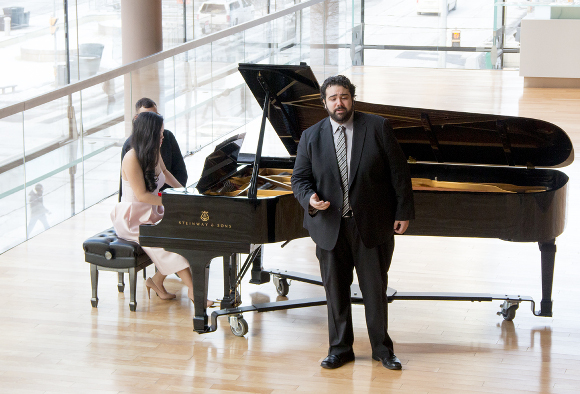
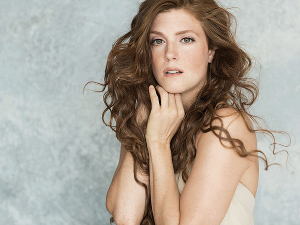 GGS and Ensemble Studio graduate Wallis Giunta will be returning to Toronto in early February for Tapestry Opera’s New Opera 101 program and the two concerts of Tapestry Songbook VI. Basically, she will be working with Jordan de Souza and a group of emerging artists on a three day series of workshops in contemporary opera which will include two concerts open to the public on February 5th and 6th. I spoke to her via Skype yesterday at her current digs in Leipzig.
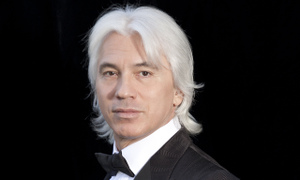 The program for Dmitri Hvorostovsky’s February 21 recital at Koerner Hall has been released. It is: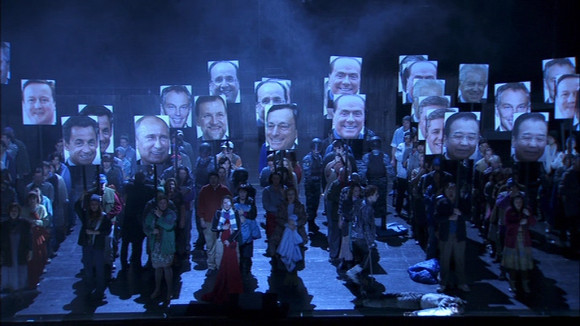
 Next week things get rather busy. There’s all the Hannigan shenanigans at UoT ; lecturing, masterclassing, concerting, walking on water, details
 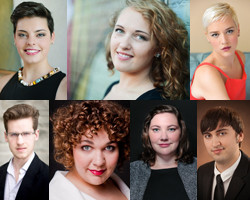 The COC will add six singers and a pianist to the Ensemble Studio for the 16/17 season. Unsurprisingly the three prize winners from
