I suppose it’s a bit odd to go out to a symphony concert on a cold night out of interest in one twenty minute piece on the program but that’s what I did last night. The item of interest was Henri Dutilleux’ Correspondances and the attraction was that the soloist was Barbara Hannigan. It’s an unusual piece. The five texts include, conventionally enough, three poems; two by Rilke and one by Prithwindra Mukherjee. The two longer texts are letters; one from Solzhenitsyn to the Rostropoviches and one from Vincent Van Gogh to his brother. The music is atmospheric and covers a wide range of moods from ecstatic to despairing. It’s heavy on percussion and makes considerable demands on the vocal soloist. Parts of it lie very high and it really needs the exquisite attention to each syllable of the text that is Hannigan’s trademark. Little shifts in the vowels, the occasional drop into something approaching Sprechstimme and so on. I thought the TSO and Peter Oundjian were really quite impressive here too. The piece got the clarity and transparency it needs. That said, it’s one of those pieces that few people, I think, will fully appreciate on one hearing. Fortunately there is a very good recording of Hannigan singing it with the Orchestre Philharmonique de Radio France and Esa-Pekka Salonen.

The piece was bookended by Sibelius’ Swan of Tuonela and Berlioz’ Symphonie Fantastique. The Sibelius was extremely well played with some lovely playing in particular from the cor anglais. The Berlioz isn’t a piece I much care for and both of us were a bit under the weather so we skipped out after the Dutilleux. If you missed last night’s performance it’s on again tonight at 8pm.
Photo credit: Malcolm Cook.


 The Glenn Gould School Vocal Showcase at Mazzoleni Hall last night was a chance to see twenty of the school’s singers in action. It was a curious mix actually; one bass, one baritone, a handful of tenors and mezzos and a lot of sopranos. There was a huge range of age and experience too from 18 year old first years to quite seasoned post-grads. As usual with these things I’m not going to attempt to be comprehensive but instead focus on the highlights as I saw them.
 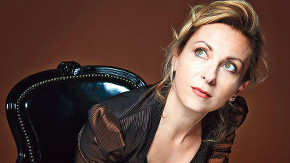 The Royal Conservatory is the latest to announce its 2016/17 season, or at least the Koerner Hall component. There’s the usual eclectic mix of orchestral, instrumental, chamber, vocal, jazz and world music. The vocal highlights are recitals by Deb Voigt and Nathalie Dessay and the annual Christmas visit by the King’s Singers.
 The line up for this year’s 21C is out. It’s a bit difficult for a genre based blog like this to know what to say about a genre busting event like 21C so I will point out the things that look even remotely relevant. I think the vocal highlight is the concert at Koerner Hall on May 25 featuring the Kronos Quartet and the amazing Tanya Tagaq in a fascinating looking program. There’s also the after hours concert at 10.30pm on May 27 which will feature new works by John Oswald for piano, instruments and choir in total darkness. full details on the festival can be found
  Opera Atelier has announced its 2016/17 season. The fall production will be Purcell’s Dido and Aeneas. It isn’t clear whether this is a new production or a revival. The company has done the piece before; at the MacMillan Theatre in 1989 and 1994, in 2005 at the Elgin and in sundry tour venues. It’s not paired with anything so it’s either a very short show or there is a lot of interpolated dance. Wallis Giunta and Chris Enns play the lovers with a supporting cast that includes Meghan Lindsay, Laura Pudwell, Ellen McAteer, Karine White and Cory Knight. Nice to see Karine getting a chance on a professional stage. There are six shows at the Elgin between October 20 and 29, 2016.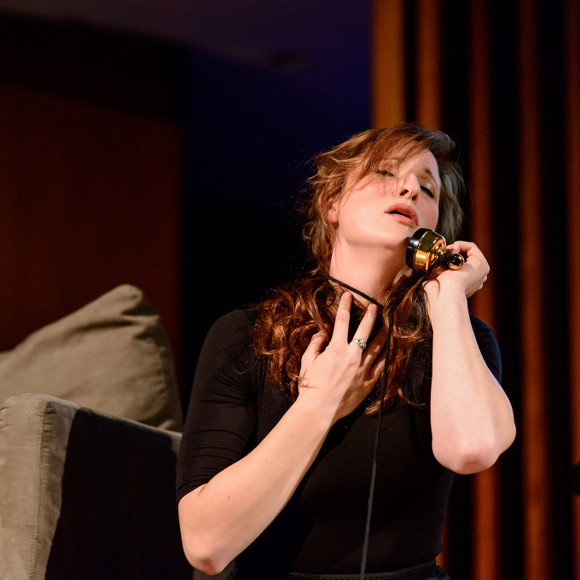
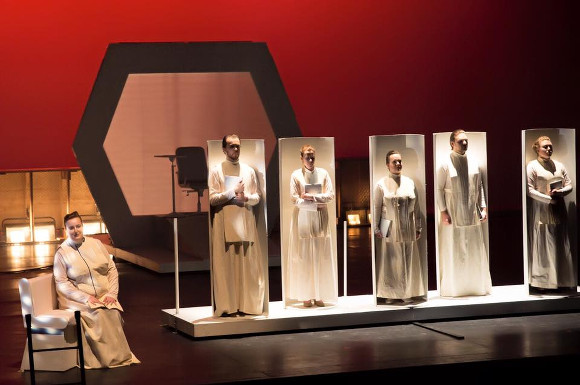
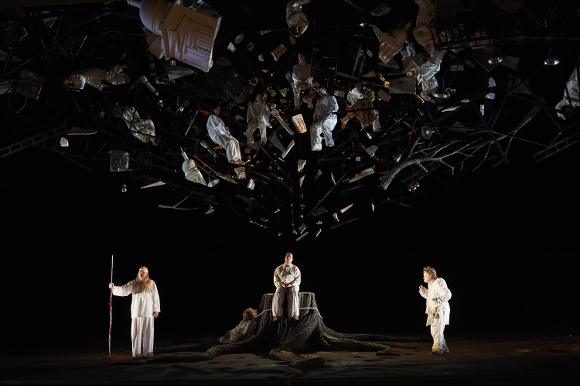
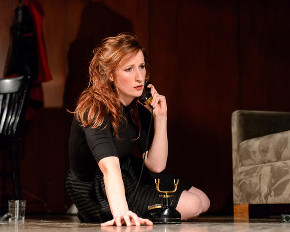 It’s another pretty busy week. There are two student shows today, both free. At 2.30pm in the MacMillan Theatre there’s a performance of a new opera based on EM Forster’s The Machine Stops. It’s by Patrick McGraw, Robert Taylor and Steven Webb. Sandra Horst conducts and Michael Albano directs. Then at 8pm in Mazzoleni Hall, Christina Campsall is performing Poulenc’s La Voix Humaine with Brahm Goldhammer providing piano accompaniment.
