
 I took a quick look at the Metropolitan Opera’s recently announced 2016/17 and while for the most part it’s business as usual there’s maybe one surprise. There are 26 productions; 6 new, 20 revivals for a total of 225 performances. The first thing that struck me was how little Puccini there is. Only two Puccini works (La Bohème and Manon Lescaut) are being performed for a total of 23 shows (10.2%). There’s nothing pre Mozart and only one opera written post WW1; L’Amour de Loin which gets 8 performances (ETA: Apparently Cyrano dates from 1936 though you wouldn’t guess that to hear it. Still only 4 performances so it doesn’t affect the stats much). There are only two other works which could, at a stretch, be called “modern” stylistically; Salome and Jenůfa, but they were written in 1905 and 1903 respectively, and get only 6 performances each. Then there’ Rusalka (1901) and Rosenkavalier (1911) which are 20th century but not by any stretch “modern”. So, even on generous definitions of “modernity”, over 85% of the Met’s output is, essentially, 19th century.
And on stage at the Met 2016/17
12
 The Met has announced it’s 2016/17 cinema season. There are again ten productions with what seems now to be a settled mix of a smattering of the Met’s new productions and a bunch of war horses that have already been broadcast. For myself, I’ve pretty much had it with watching opera this way. There aren’t that many productions in the program that I have any interest in and the combination of far too common technical problems, cheesey scripted and rehearsed “interviews” and over long intervals make it all rather tedious. For the operas I want to see I’ll wait for the DVD release. Still for those who are still interested, here’s the line up.
 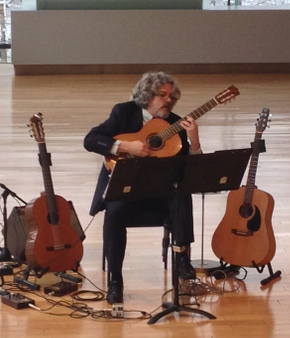 A vocalist accompanying himself on the guitar (or one of it’s predecessors) is one of the oldest and most prevalent tropes in western music. From Blondel to Billy Bragg it’s always been with us but it’s quite rare in the world of modern art music where the roles of singer and accompanist are trades as rigidly delineated as anything in a Clydeside shipyard. Doug MacNaughton breaks the rules by playing a variety of kinds of guitar and singing in a range of styles. For that question of style is vital too. The mechanics of doing two jobs simultaneously affect singing style and centuries of performance history offer a bewildering range of stylistic choices. It’s an issue I examined once before when reviewing a Bud Roach CD for Opera Canada.
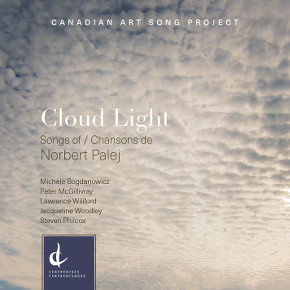 Canadian Art Song Project has just issued its second CD; Cloud Light. It’s a collection of four contrasting works by Polish-Canadian composer Norbert Palej. The first, Three Norwegian Songs (2011) was composed for baritone Peter McGillivray, who sings them here. The settings are of English translations of Norwegian texts. Maybe it’s because the texts are translations or maybe because this seems the most American/Broadway inflected piece on the disk I found it the least effective but, as we shall see, it has serious competition. In any event Peter sings it very well even when it goes cruelly high.
  Not so much on this week. Tuesday COC chorus member and guitarist Doug MacNaughton, currently appearing as Antonio in Marriage of Figaro, has a noon hour concert on Tuesday in the RBA featuring a new piece by Dean Burry and other works ranging from John Rutter to Donald Swann. Then on Friday CASP have an evening recital at the Enoch Turner Schoolhouse featuring Philip Addis and Emily Hamper.
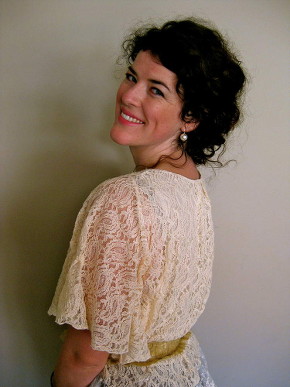 So, my second DMA recital of the week. This time that fine collaborative pianist Lara Dodds-Eden. Walter Hall was alive with sound before the recital proper started with Ben McCarthy’s electronic piece menagerie playing over the speakers; birdsong, rainforest and crackly vinyl. The first piece on the program proper was Fauré’s La chanson d’Ève sung by Danika Lorèn. These songs are a good showcase for Danika’s many excellent qualities. It was all there. The diction, the easy upward extension, the beautiful and varied colours. Nice! And a good start for Lara showing her sympathetic qualities in classical artsong.
 News just in that Jordan de Souza, currently with the COC, National Ballet of Canada and Tapestry, will be moving to Berlin later this year to take up the position of Studienleiter (Head of Music) at the
 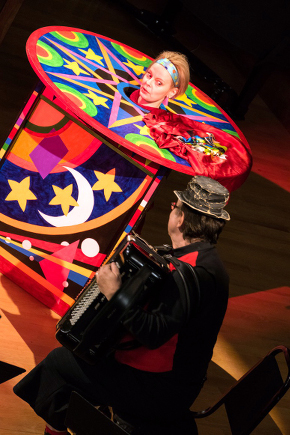 A concert of contemporary works for accordion? Why not! Well it was more of a concert of contemporary works for fixed reed instruments with, ironically, Trinity St. Paul’s most impressive fixed reed instrument forming an unused but imposing backdrop to the proceedings. Things started off conventionally enough with Soundstreams’ Artistic Director Lawrence Cherney on stage with three players of different instruments describing their histories and properties and then mild Hell broke loose as a curiously clad Joseph Macerollo burst into the auditorium, ejected Lawrence and friends and launched into R. Murray Schafer’s performance piece La Testa d’Adriane; the tale of a head mystically preserved between life and death. At this point the purpose of the rather bizarre contraption on stage was unclear but soon enough the cloth was pulled back to reveal Carla Huhtanen, or her head at least. More accordion and speech from Macerollo and a bizarre collection of grunts, squeaks, shrieks and gurning from Carla followed. Madness or genius? It’s Schafer. The question is unanswerable.
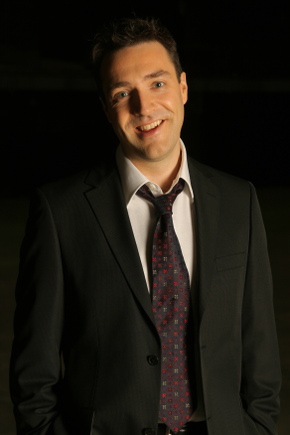 Most people in the Toronto opera world know Dean Burry principally as a composer of operas for children. He’s written several and a couple have been mainstays of COC school tours. It’s perhaps understandable then if his music is seen as approachable and maybe, even (sotto voce), a little unsophisticated. Last night, a recital of Dean’s works in Victoria College Chapel; part of his DMA program at UoT, provided a chance to hear a number of works in a much broader range of styles.
