Last night’s concert at Koerner Hall was a celebration of the life and work of Armenian composer and song collector Komitas on the occasion of his 150th birthday. Unsurprisingly Koerner was packed with members of Toronto’s Armenian community. Sometimes I feel uncomfortable at events like this; unable to really appreciate what the music means in its home culture, but last night what I felt was joy and inclusion. It was an extremely well curated concert of rather beautiful music extremely well performed.
 Purcell’s King Arthur is a problematic work. It was originally written as a sort of praise poem for Charles II showing the inevitable ascent to glory of the Stuarts from earliest days. Unfortunately Charles died and his brother lost his job before the piece could be given. The staunchly Protestant court of William and Mary wasn’t much in favour of a celebration of crypto-Catholic Charles by openly Catholic Dryden and it wasn’t until Dryden and Purcell needed a new commercial project that it reemerged with various cuts, insertions and reworkings to get it past the censorship. No reliable record exists of what was actually performed in that first commercial run so for their new CD release Paul McCreesh and the Gabrieli Consort have used a mixture of considerable erudition plus impressive musical nous to reconstruct something that is plausibly like what audiences in the 1690s might have heard.
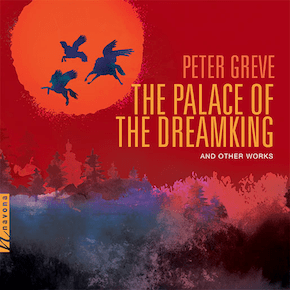 Peter Greve is a Dutch composer of works for various forces all of which could, I suppose, be considered tone poems as they all have thematic/storyline elements. The “stories” for the pieces on the CD can be found