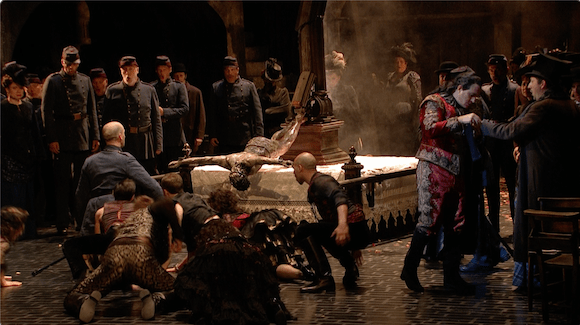
Robert Carsen’s productions of the classic pairing of Leoncavallo’s Pagliacci and Mascagni’s Cavalleria Rusticana, filmed at Dutch National Opera in 2019, are an attempt to extend the meta-theatricality of the former to the latter. To this end he reverses the normal order which allows the prologue of Pagliacci to apply to both works and elements of the Pagliacci to be extended in Cavalleria Rusticana.

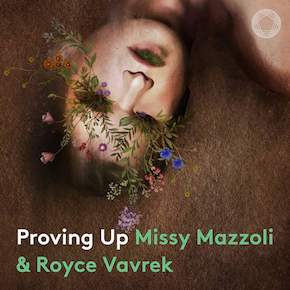 Missy Mazzoli’s Proving Up is an 80 minute opera consisting of a prologue, six scenes and an epilogue. The libretto is by Royce Vavrek after a short story by Karen Russell. It was recorded after a production at Opera Omaha in 2018. One might perhaps expect an opera about homesteading in Nebraska to be a worthy piece of uplifting Americana but nothing could be further from the truth here. The Prologue, it’s true, is based on a 19th century popular song Uncle Sam’s Farm which appears to offer the American Dream to all comers but after that we get a surrealistic tale of drought, despair, drinking and death all based on the search for an elusive glass window that will allow the Zegner family to “prove up” and gain title to their land under the 1862 Homestead Act. What then, of the American Dream?

 It’s that time of year again. The IRCPA is looking for young professional singers for their annual Encounter which offers ten singers free coaching, career advice and a concert; Ten Singing Stars – New Generation.. This year’s mentor is Canadian baritone Theodore Baerg. The encounter session will happen on May 21st in downtown Toronto and the concert will be on June 4th or 11th at a location tbd depending on the public health situation prevailing. There’s a link to the application process at