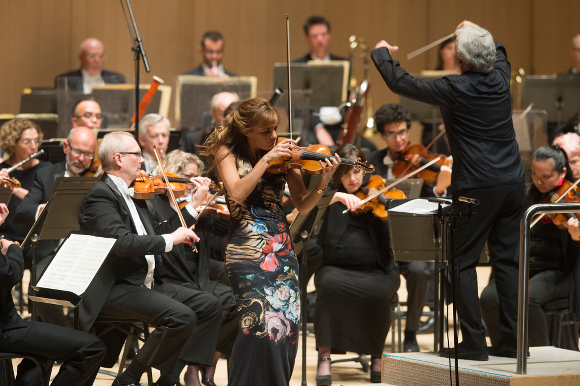
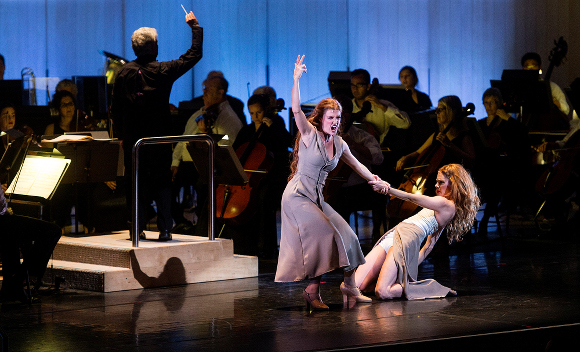
Vaughan Williams at the TSO

I went to Roy Thomson Hall last night to hear an all Vaughan Williams program conducted by Peter Oundjian.  It’s not really my thing but there was a fine quartet of soloists lined up for the Serenade to Music.
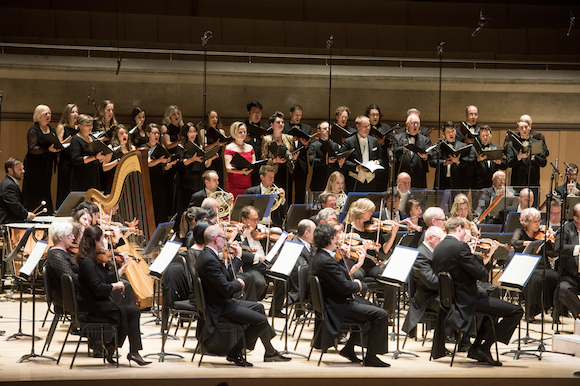
EIS, Huhtanen, DAngelo, Wiliford, Duncan (@Jag Gundu-TSO)

Things got going with the Fantasia on “Greensleeves” which was perfectly OK if a bit hackneyed.  There was a decent account of the Concerto for Oboe and Strings with Sarah Jeffrey as the soloist.  Then there was the Serenade.  For some reason the soloists were lined up with the choir (the Elmer Iseler singers) behind the orchestra.  The result was sonic mush and textual porridge.  I caught exactly one word of the text; “stratagems” for what it’s worth.  The rest was not recognisable as English, let alone understandable.  And, of course, it was too dark to read the supplied text.  This despite soloists; Carla Huhtanen, Emily D’Angelo, Lawrence Wiliford and Tyler Duncan, who are consistently excellent with text. This is becoming very annoying.  As often as not when I go to see the TSO do vocal works the soloists are either inaudible or incomprehensible.  I know the hall is difficult but the performance of the Ryan Requiem last week showed that it is possible to showcase singers.  I think it’s really unfair to audiences and singers alike.  Anyway, I was so fed up that I left at the interval.

Photo credit: Jag Gundu
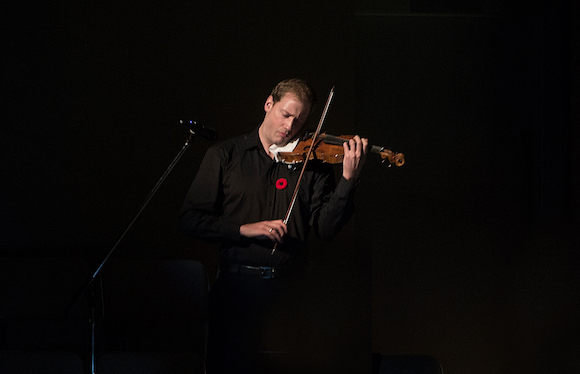
Afghanistan: Requiem for a Generation

Last night’s TSO program started off with a sort of Remembrance Day pot pourri; pipes, bugles, a bit of poetry, an excerpt of Vaughan Williams in between and finally a rather beautiful account of The Lark Ascending with Jonathan Crow playing the solo from high up in the Gallery.  Once upon a time the TSO would do Remembrance Day by performing an appropriate work or works, Britten’s War Requiem for example.  I think that might actually be a more effective way of remembering.

Jonathan Crow_The Lark Ascending (@Jag Gundu)

Continue reading

A Tribute to Maureen Forrester

Last night’s TSO concert was billed as a Tribute to Maureen Forrester with Ben Heppner MCing.  Inevitably the main even was Mahler’s Das Lied von der Erde but first there was a sesquie and the premiere of a new piece; L’Aube, for mezzo and orchestra by Howard Shore (he of Lord of the Rings etc).  This was a setting of five poems by Elizabeth Cotnoir. It was retro, lush, tonal and, in a sense, well crafted but with very little variation between the movements, all of which were very slow.  Susan Platts rich mezzo added to the rather soporific effect. Call me an unreformed modernist if you like but I’m really not sure what a piece like this adds to the symphonic repertoire.

Susan Platts, Peter Oundjian (@Jag Gundu)

Continue reading

Adizokan

Adizokan is a collaboration between indigenous production company Red Sky and the TSO.  The program last night kicked off with a “sesquie”.  This time it was Blood Echo by Carmen Braden.  It was about as memorable as most of the sesquies have been.  This was followed by Fara Palmer singing her own composition My Roots about the residential school system and cultural survival.  It’s in a pop idiom with native drumming and while musically it’s not my thing it had to be there.

Adizokan_TSO 2 (@Jag Gundu)


Continue reading

A German Requiem

It was an unusual double bill at the TSO last night; the premiere of Alexina Louie’s Triple Violin Concerto and Brahms’ A German Requiem.  The concerto is an interesting piece.  It’s got a layered, shimmery quality that sounds quite modern without going off into territory that would frighten the punters.  It also makes excellent use of the three virtuoso soloists for whom it was written; Jonathon Crow, Yosuke Kawasaki and Andrew Wan; concertmasters respectively of the the TSO, the NAC Orchestra and l’Orchestre Symphonique de Montréal.  It clever plays the combinations of having soloist dialogue with soloist and soloists dialoguing individually and collectively with the orchestra.  Very enjoyable.

Jonathan Crow, Yosuke Kawasaki, Andrew Wan, Peter Oundjian (@Jag Gundu)

Continue reading

Carmina Burana

Last night the TSO gave the last concert of the Decades Project.  Starting, inevitably, with a sesqui, the first half continued with a fine performance of Szymanowski’s Violin Concerto No. 2 with Nicola Benedetti as soloist.  In some ways it’s an odd piece to use to characterise the 1930s (but then so is Carmina Burana!).  It’s high romantic in tone and style.  Lush even.  It’s also extremely well crafted with a rather luscious part for the soloist played quite beautifully by Ms. Benedetti.

Nicola Benedetti, Peter Oundjian @Jag Gundu

Continue reading

Seven Sins at the Symphony

Last night’s Decades series concert featured three works from the 1930s plus a sesqui.  The sesqui, Andrew Balfour’s Kiwetin-acahkos; Fanfare for the Peoples of the North was definitely one of the more interesting of these short pieces.  There were elements of minimalism combined with a nod to Cree/Métis fiddle music.  Quite complex and enjoyable.  It was followed by Barber’s rather bleak Adagio for Strings and the Bartók Music for Strings, Percussion and Celesta.  It’s familiar enough fare and was well played by the orchestra under Peter Oundjian.  I particularly enjoyed some of the weird percussion/celesta effects in the third movement of the Bartók.  But really I was there for the second half of the program.

sds3

Continue reading

Decades – the 1930s

The TSO’s Decades project has now reached the 1930s; very much home ground for me musically.  Last night’s program explored different aspects of the music making of the period, including serialism, in a varied show of why this is not “music to be scared of”.  It was also Sir Andrew Davis’ first appearance in his role of interim music director and supreme leader for life of the TSO.

Continue reading

A rather odd night at the symphony

BoulezI went to see the TSO last night because there was a Boulez piece programmed that I wanted to hear.  It was a rather odd evening.  It kicked off with Morawetz’ Carnival Overture Op.2.  This was I suppose the designated Canadiana.  It’s a roughly five minute piece that sounds like the Brahms of the Academic Festival Overture crossed with Dvořák.  Too much brass and cymbals for my taste.  Then came about ten minutes of faffing about reorganising the stage for the Boulez followed by Peter Oundjian coming out and making one of those cringingly apologetic speeches for programming something “difficult”.  I hate this.  If an orchestra, opera house or chamber ensemble is going to program atonal, serialist or what you will music (and they should) by all means explain how it works in a program note but don’t patronise the audience and, above all, don’t apologise.  If it needs an apology why are you programming it?
Continue reading

Tanya Tagaq at the TSO

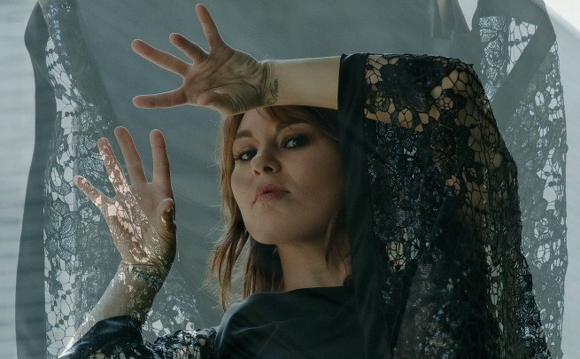
Last night saw the opening concert of the TSO’s New Creations Festival.  It opened with a sesquie by Andrew Staniland; Reflections on “O Canada” After Truth and Reconciliation.  Sesquies are two minute “fanfares” composed to commemorate Canada’s 150th.  Staniland’s version was a bold attempt to deal with the immensely complex subject of reconciliation between Canada and its native peoples and, of course, one can’t do that in two minutes in any medium.  Reflections was an interesting stab though.  It was structured as a very quiet canon for high strings in a minor key using the principal theme of O Canada and ending with an overblown fanfare in the winds.  You can apply your own political interpretation.

tanya-tagaq

Continue reading