Starvation, drugs and child abuse? It must be Christmas

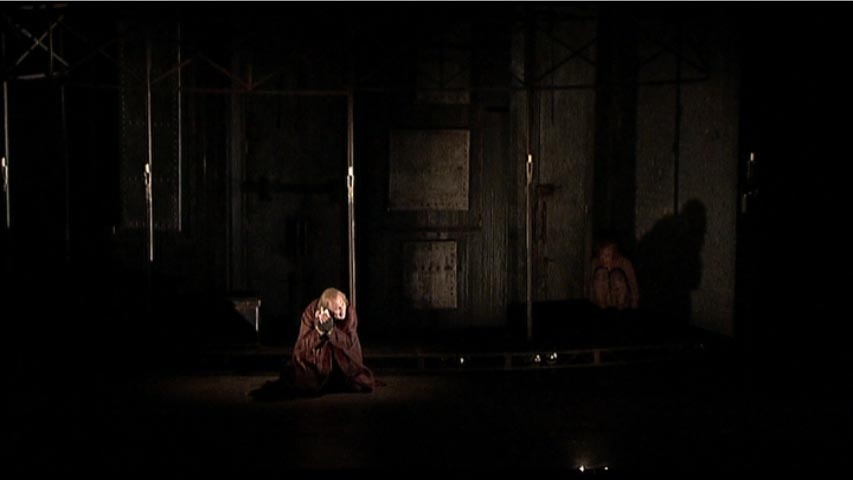
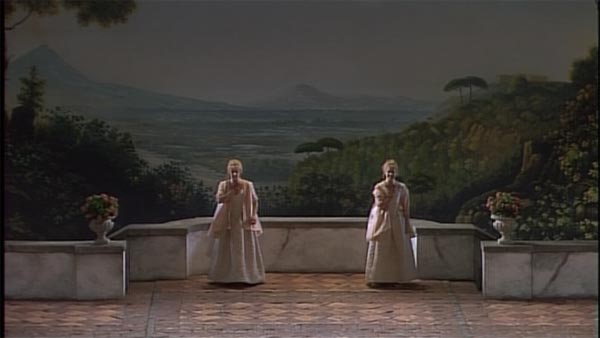
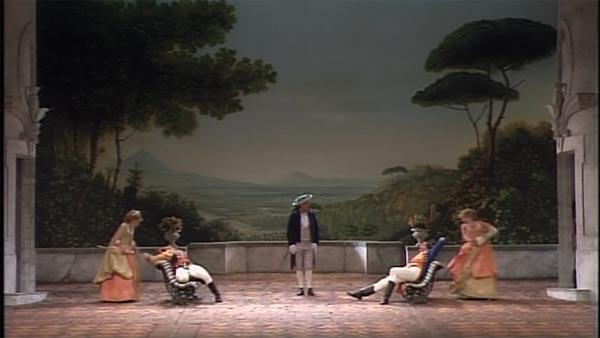
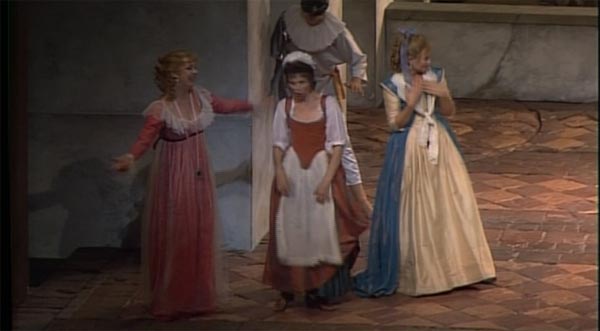
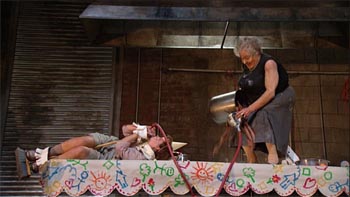
Humperdinck’s Hansel and Gretel was one of the earlier “Live in HD” broadcasts from the Metropolitan Opera and has been out on DVD for some time. The newness of the concept is immediately apparent in Renée Fleming’s almost awed tone as she introduces the work. She certainly sounds more blasé these days. Hansel and Gretel, given here in David Pountney’s English translation is an odd work. The libretto is much more than a Disney fairy tale. There is poverty, hunger, drunkenness, threats of beatings and murder. There is also a layer of religious sentimentality so thick it could only be 19th century and German. The score is astonishingly heavyweight given the subject matter. Humperdinck worked with Wagner and that is very, very apparent in this piece.

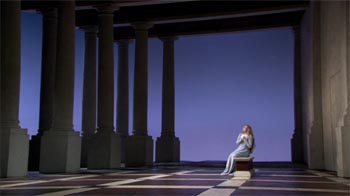
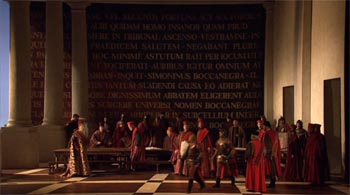
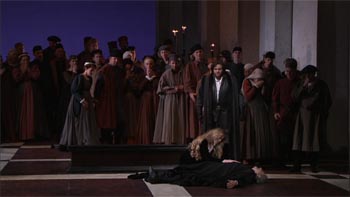
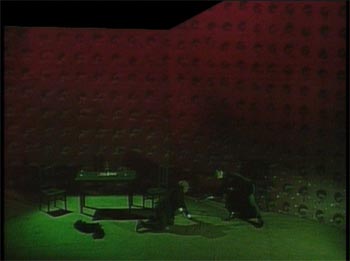
Unsurprisingly, modern directors have tended to emphasize the darker side of the work and Richard Jones is no exception. Hunger is the driving force here and each act is set in a kitchen. A poor peasant cottage in Act 1, a dream like banquetting facility in Act 2 and the Witch’s nightmarish cake factory cum kitchen in Act 3. Much food is thrown around and smeared over people. It’s pretty succesful as a concept if a bit one dimensional.

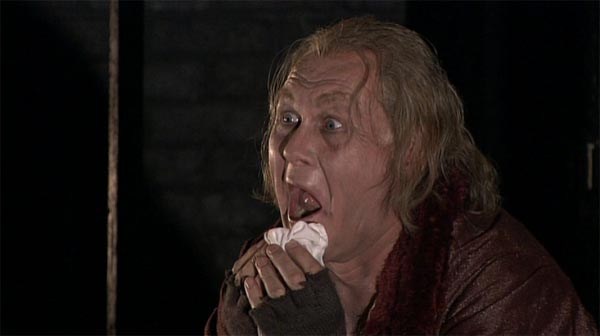
The performances are spectacular and based on some serious luxury casting. Alice Coote and Christine Schäfer as Hansel and Gretel are terrific, especially Schäfer. It’s a wonder to me that a beautiful and elegant woman like her can do grubby so well but she nails it every time (Cherubino in Salzburg, Lulu at Glyndebourne) and this is no exception. Alan Held is a booming father; as big in voice as he is in stature. Rosalind Plowright doesn’t sing prettily but she is utterly convincing as the depressed, shrewish, drug addled mother. Then there is the much missed Philip Langridge camping it up as the Witch. He’s like an incredibly messy Julia Child on speed. He’s hilarious. Sasha Cooke plays the Sandman and Lisette Oropesa plays the Dew Fairy complete with washing up joke. Vladimir Jurowski conducts the Metropolitan Opera Orchestra as if he was conducting The Ring and they play beautifully for him. The very well drilled Met Children’s Chorus also get a look in in the final scenes. Overall, the performance has a high degree of integrity and very high musical values. It’s a good bet for this work which I still can’t really bring myself to like.

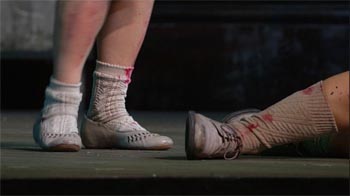
Technically this is what you would expect from a Met “Live in HD”. No video director is credited (so far as I can tell) but it’s got about the usual quota of super close ups, including a completely gratuitous foot shot, which is actually a bit odd as the sets for Acts 1 and 2 are basically confined to a thirty foot cube so it would be easy to encompass the whole picture. The picture quality is good, not stunning, DVD standard. The DTS 5.1 soundtrack is excellent and is particularly good at bringing out the very precise orchestral playing. There is also LPCM stereo. It has the usual HD Broadcast extras. There are English, French, German, Spanish and Italian subtitles. The documentation (English only) includes track listings, a synopsis and a short essay. There is additional information in English, French and German in a PDF on the disc itself.

David Alden’s Ariodante

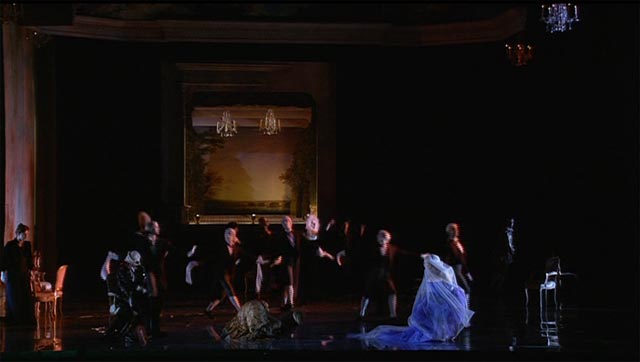
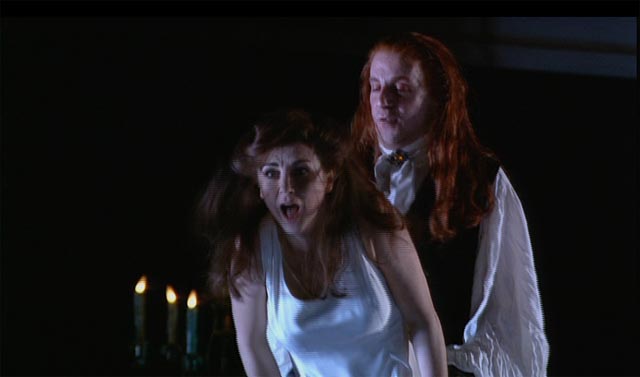
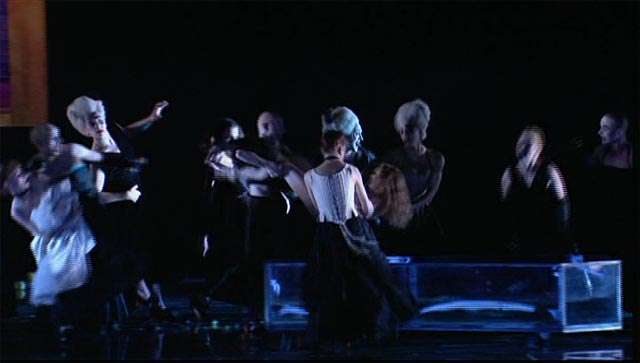
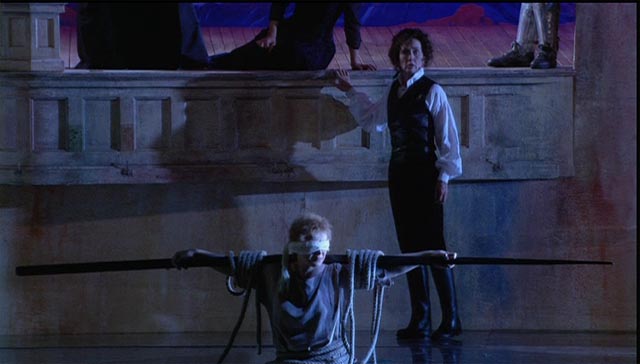
Handel’s Ariodante has, broadly, the same plot as Much Ado About Nothing. The King of Scotland’s daughter is framed as “unfaithful” by the bad guy’s disguised accomplice. Her fiancé goes off the deep end. The bad guy betrays his accomplice. She rats on him. He gets killed. All is revealed. Everybody but the bad guy lives happily ever after. In this 1996 production for English National Opera, David Alden seems to be turning it into a very dark plot with madness, intense and perverse sexual desire, hints of anal rape and a nude drowned in a tank. All in all, a pretty run of the mill Regie approach. Flippancy aside, it actually works quite well. It’s a bit of a slow starter. Act 1 is mostly scene setting and it’s not easy to see what Alden is driving at. Ariodante (Ann Murray) in particular seems to be prey to emotions that have, as yet, no obvious origin. To be honest I was quite puzzled at the end of Act 1 though there appeared to be much that was visually striking going on. At least, that’s what I’m guessing because video director Kriss Rusmanis does his level best to hide most of the stage most of the time.

It picks up in Act 2 where we get more extreme emotion but it’s clearer why. In Act 1 Polinesso (Christopher Robson) is obviously the bad guy but his real nastiness emerges in his treatment of his accomplice/lover, Dalinda (Lesley Garrett). Among other indignities, anal rape appears to be suggested before he drags her off to have his henchmen finish her off. To be fair, Dalinda’s attitude to her treatment is quite equivocal so we can add this to a long list of opera productions with sado-masochistic sub texts. Act 3, in which all is revealed is also dramatically strong besides having some of the best music.  All three acts have fairly lengthy ballets. These are strikingly choreographed by Michael Keenan-Dolan. At least the bits we can see on the DVD are. There’s a particularly effective “nightmare” sequence in Act 2 where the princess Ginevra (Joan Rodgers) is trying to make sense of what has happened to her. The sets are quite painterly with effective use of an upstage window which is used to frame subtextual elements while the main action goes on in front. So, all in all, it works pretty well though it would hardly be David Alden if nothing seemed gratuitous!

Like the drama, this got better musically as time went on. In Act 1 I was really questioning the decision to cast a mezzo in the alto castrato role and a traditional countertenor in what was originally a breeches mezzo role. It does work out. Ann Murray sings brilliantly and muscularly throughout and makes, in the end, a completely convincing Ariodante. Christopher Robson’s Polinesso doesn’t totally convince me. That voice type just doesn’t make for a particularly convincing villain but it does make more sense as his sheer nastiness comes out in his excellent acting. Joan Rodger’s Ginevra definitely gets better as things progress. I think she sounds strained in her upper register in the first act. The notes are there but it isn’t a very beautiful sound. In Acts 2 and 3 she sounds much more at ease despite having to sing while being put through not far short of torture(1).

Lesley Garrett’s Dalinda was a pleasure from first to last. The King of Scotland is Gwynn Howell. It’s the sort of bluff, thankless role that Howell seems to play rather often. He sings perfectly well and is bluff. Paul Nilon sings Lurcanio, Ariodante’s brother. he doesn’t have a lot to do but he does have one glorious duet with Dalinda in Act 3. This is closely followed by another lovely duet between Ginevra and Ariodante. I wish there were more duets and ensembles in Handel operas. They happen rarely but when they do they are usually wonderful. Ivor Bolton conducts the ENO orchestra and they sound OK for a modern band (not my first choice for Handel!). Tempi seem on the slow side. The rival DVD version of this opera comes in 20 minutes shorter. Whether that’s due to cuts or tempi though I can’t say. The ENO chorus doesn’t sound great but this may be the recording, see below.

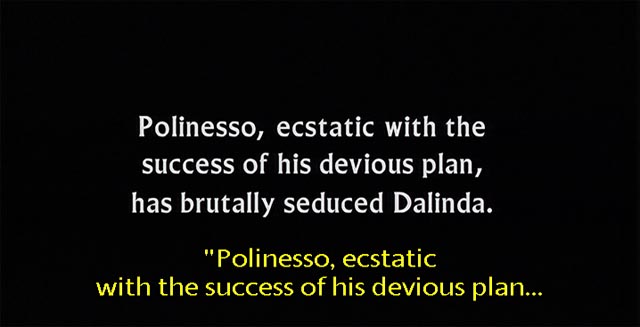
Musically and dramatically I think this is a recommendable performance. Unfortunately, as a DVD, it’s very hard to find good things to say about it. It was recorded for broadcast on the BBC and is given a treatment I’ve not seen before. I assume it’s taken from a live performance but there is no applause and no curtain calls. What we do get are silent film like “story boards” at key points like the beginning of each act.

For example “Polinesso takes advantage of Dalinda’s blind devotion to further his ambition”. Weirdly, the subtitles repeat the message. I don’t particularly like this approach but it’s not fatal. What is is the failure to show us enough of the stage to figure out the director’s intentions. I ranted about this yesterday so I won’t labour the point but it pretty much wrecks this disc. Technically it’s not so hot either. The picture is OK 16:9, no more. There are two sound tracks; Dolby 5.1 and Dolby 2.0. The surround sound version is about the worst sound I’ve ever encountered on an opera DVD. It’s mixed so that the subwoofer booms out the bass line in a most unmusical fashion. It’s horrible. The stereo track is OK though it gets a bit odd in parts of Act 3, especially the final chorus. Either that or the ENO Chorus really is having a bad night. The only sub-titles are English and there is no documentation beyond a chapter list. (This is the North American release on Image. It wouldn’t be unprecedented for the European version to have more acceptable sound).

It’s a bit of a shame. I would really like to have a proper look at this production.

Puzzling but well sung Don Giovanni

I looked at the cast list for the 1999 Wiener Staatsoper Don Giovanni and almost drooled. Carlos Alvarez, Franz-Josef Selig, Ildebrando d’Arcangelo, Adrianne Pieczonka, Anna Catarina Antonacci, Michael Schade, Angelika Kirchschlager and Lorenzo Regazzo. Add to that Riccardo Muti in the pit and musically it’s going to be hard to miss. So, unsurprisingly it turns out musically excellent across the board. I particularly enjoyed Michael Schade’s Don Ottavio. His supremely stylish singing and excellent acting added up to perhaps the best interpretation I’ve seen of perhaps opera’s dullest character. One might have reservations about Pieczonka’s Donna Anna but I think it’s a matter of taste. She can sing very prettily as she shows in her final duet with Schade but when she ups the volume she has great power but significantly less beauty of tone. It really boils down to one’s personal feelings about casting a genuine dramatic soprano in the role. I guess casting a mezzo as Zerlina is a bit unusual too but Kirchschlager is very good indeed. All in all it’s as well sung a Don Giovanni as I have heard.

So, what about Roberto de Simon’s production and, supporting it, the acting? First, this production was performed at the Theater an der Wien so space on stage is tight and there’s a tendency for the singers to migrate to front centre stage for their big numbers giving a bit of a “park and bark” feeling. This is reinforced on the DVD by excessive use of close ups. If there is anything else going on we mostly don’t see it. This is a problem because there are some potentially interesting ideas in the production that don’t seem to be fully developed and that may be because the DVD viewer doesn’t see them develop. The first “big idea” is that as the piece progresses the costumes get more modern. Characters update roughly a hundred years on each appearance starting in the 16th century and going up to around 1900. The progression though is uneven and even my resident costume historian had trouble decoding some of the statements. It has to be said too that the early costumes in particular are sometimes bizarrely stylized. Don Giovanni gets visibly younger as the action progresses too. Add to that that there are two statues of the Commendatore; a 16th century one and a 19th century one. The former accepts Don Giovanni’s dinner invitation but the latter shows up. What are we to read into these elements and are they connected? To say that the characters are “timeless archetypes” seems to be a total “so what?” but I don’t have a deeper explanation. The second element is a flirtation with commedia. It’s never full on but we see glimpses of Harlequin in Leporello. In the opening scene he’s wearing what looks like a Harlequin costume that’s been desaturated in Photoshop as well as clown face. Don Giovanni’s acting too has some commedia elements. In particular there’s heavy use of the right-hand-shielding-left-side-of-the-face gesture in the opening scene with Donna Anna and it recurs in the final scene with the statue of the Commendatore. It gives Don Giovanni a sort of cheeky chappy quality at two of the most serious moments of the opera. Why? I don’t know. There are other, more or less isolated, visual references to the commedia sprinkled through the piece.

The final element of commedia is that Masetto is played as a complete clod. He’s the stock dim peasant rather than someone who recognizes Don Giovanni for what he is, the class enemy, from the get go. This is then set against an even more knowing than usual Zerlina.  Certainly in “Batti, batti” she appears to be offering far more than poor old Masetto can begin to grasp. Whatever it’s all supposed to mean, the cast give it their all and are clearly acting their hearts out and at least it’s never dull.

The biggest problem with the disc though is the video direction. Once again it’s Brian “close up” Large. With such a small stage it ought to be quite easy to show us what is happening but instead we get super close up on super close up. I particularly hate it when several people are singing and the director is just showing us a headshot of one of them. It interferes with my ability to hear the rest apart from anything else. Besides I don’t have a tonsil fetish. This comes to a final utterly annoying climax in the confrontation between the Commendatore and Don Giovanni. Large keeps cutting back and forth between full screen head shots of the pair of them. Ugh!

Technically it’s OK for a 1999 DVD recording. The picture is decent 16:9 and the LPCM stereo soundtrack is OK but not stunning. There are English, French, German, Italian and Spanish subtitles. There are no extras which is no surprise as it’s all squashed onto one DVD9 disc.

All in all, definitely worth a look but if you figure out what the director is driving at please let me know!

The eternal enemy of righteousness

Michael Grandage’s lack lustre Don Giovanni at the Metropolitan Opera made me very curious to see his very well reviewed 2010 production of Britten’s Billy Budd for Glyndebourne. It is now available on DVD and Blu-ray so I did just that. It’s as good as the Don Giovanni wasn’t.

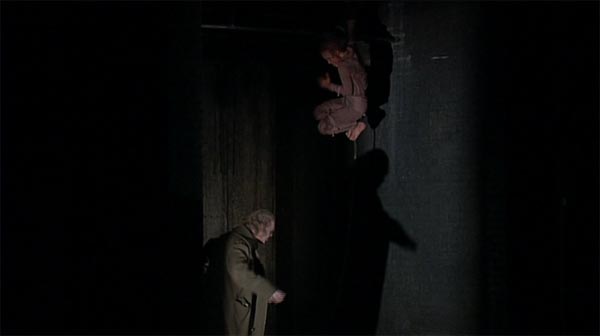
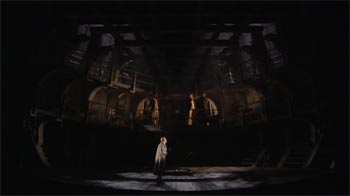
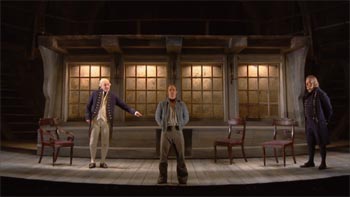
The set design suggests the interior of a warship of the period (1797) which gives scope for galleries around and behind the main stage area. By changing the lighting and sliding panels into place, it easily becomes anywhere desired on the ship. It’s very much an ‘interior’ setting which is appropriate as the sea is as absent in Billy Budd as it is present in Peter Grimes. Having created a working stage arrangement, Grandage focuses on the Personenregie. What’s striking about this production is how the director works the relationship between the characters and the development of the characters as individuals. Claggart is chilling. Vere lacks, in the last analysis, moral courage but his distaste for Claggart and his manifestations is palpable. Billy radiates simplicity and innocence. The lesser parts too are fully developed, not just filler. Dansker really foreshadows what is to come.

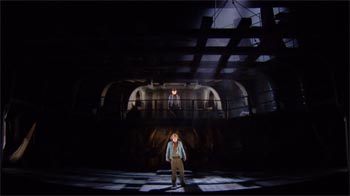
Along with this Grandage contrives some truly striking images. In the prologue “old” Vere appears almost disembodied until the ship materialises around him and the action proper starts. Towards the end of Act1 there”s a striking picture of Billy and Claggart in the centre of the picture; Billy on deck,

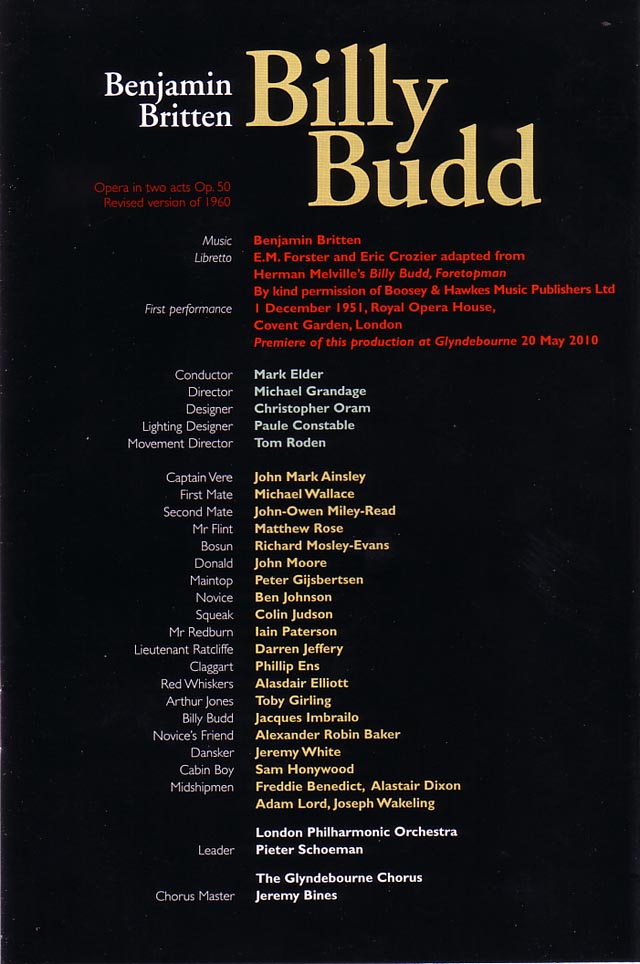
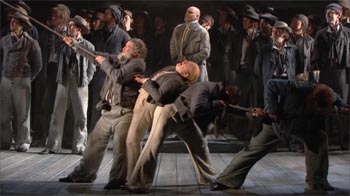
Claggart above him at the quarter deck rail. In the final scene the men hauling on Billy’s rope could be straight out of Rodin. Needless to say it takes considerable acting skill across the company to pull all this off. Grandage gets this from a solid cast of anglophone singers led by John Mark Ainsley as Vere, Jacques Imbrailo as Billy and Phillip Ens as Claggart. There are lots of quite important supporting roles so here’s the full cast:

Musically too, this is a treat. The real stars here are the London Philharmonic and conductor Mark Elder. The orchestral playing is taut and incisive and shows off a really good score to fine advantage. The singing is glorious too. Clearly this is a work where the needs of the drama trump pretty singing but in the places where beauty is possible we get it. In the prologue one could easily mistake Ainsley for Pears as he floats the high notes. Imbrailo has a gorgeous voice and there’s some fine singing from many others.

The technical team for this production is essentially the same as for The Fairy Queen and the results are equally good. François Roussillon lets us see the stage and only goes close up where it makes sense. This time I watched the DVD rather than the Blu-ray presentation (two DVD9 discs). It’s not quite as good as Blu-ray. The 16:9 anamorphic picture is very good but even on my less than state of the art TV it’s not quite as good as the 1080i Blu-ray. The sound difference is even more marked. The DVD sound is DTS 5.1 and is clear and well balanced but it comes up short on spatial depth compared to DTS-HD Master Audio. (There’s also LPCM stereo). There are English, French, German and Spanish subtitles, decent documentation and a few short extras on the first disc.

I recommended this unreservedly for both die hard Britten fans and those willing to explore but get the Blu-ray version if you can.

Exemplary Blu-ray transfer for Glyndebourne’s Fairy Queen

I’ve reviewed two DVDs of Purcell’s semi-opera King Arthur on this blog. One was excellent and one was terrible and between them they went a long way to showing how difficult these semi-operas are to stage well but how rewarding when they succeed.

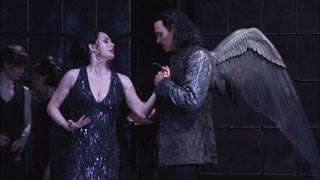
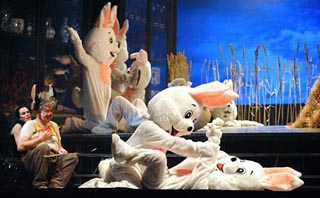
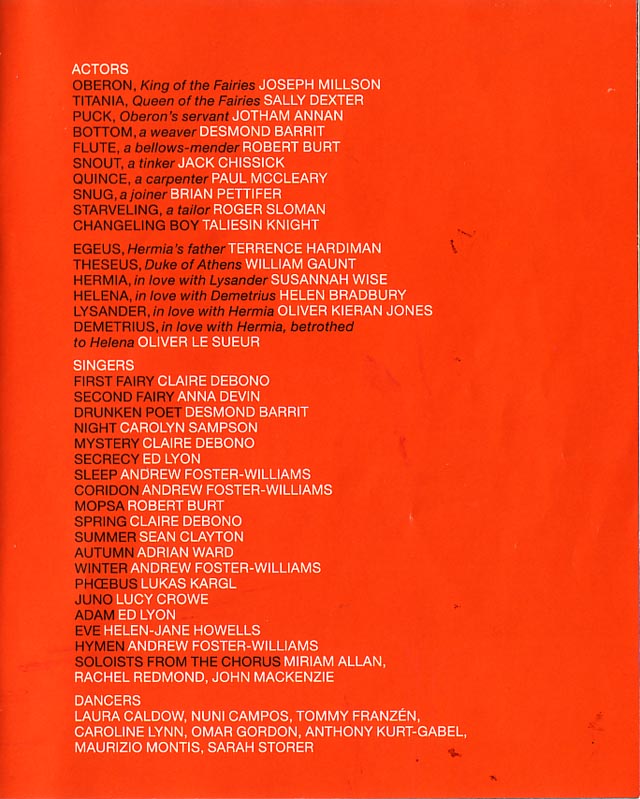
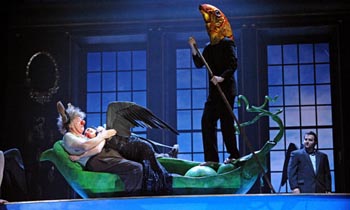
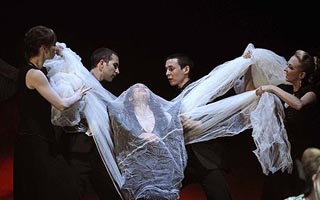
In 2009 Jonathan Kent and William Christie combined to produce a version of The Fairy Queen for Glyndebourne. It’s quite different in style from the successful Salzburg King Arthur but it works splendidly on its own terms. The Fairy Queen combines a libretto based on A Midsummer Night’s Dream with songs, masques and dances of a largely allegorical nature. Like the play itself they range from high flown allegory with classical elements to bawdy humour. It is very English. It almost epitomises what separates the English baroque from the French. Kent and Christie tackle this with a robust English sensibility, There are some changes to the dialogue and to the order of the numbers but it all makes sense (so far as this piece can). The allegorical elements are gorgeously and wittily staged making good use of a large circular lift at centre stage that allows fully formed tableaux to rise into our sight. The bawdy elements are tackled head on with a robustly TV Mopsa (Robert Burt) in the “Dialogue of Corydon and Mopsa” and the, by now, notorious bonking bunnies in the “Dance for the Haymakers”. The audience is totally engaged and one hears plenty of that commodity, rather rare in the opera house, uninhibited laughter. The team of designer Paul Brown and lighting designer Mark Henderson make all of this look quite spectacular. The dramatic action is played out in fairly long segments and the parts are taken by actors rather than singers. The fairies are appropriately sinister with wings that look inspired by contemporary prints of fallen angels. The Rude Mechanicals are rude and not too mechanical.  The “humans” are credibly 17th century in manner though dress gets less formal as the action proceeds.  The disparate elements are integrated very well.  There’s plenty of dance and it’s choreographed by Kim Brandstrup in a style that is robustly muscular but solidly in the classical ballet tradition.

The cast of actors, singers and dancers is huge and consistently excellent.

I was particularly impressed with Sally Dexter’s Titania and Desmond Barrit’s Welsh accented Bottom among the actors.  Barrit even got to do some singing with a not too over the top version of the “Song of the Drunken Poet”.  The singing stars were the wonderful, sweet toned Lucy Crowe; her “if love’s a sweet passion” was a delight, and the robust bass-baritone Andrew Foster-Williams who, among other sings, sang a truly chilling Winter.  Singling out individual performances isn’t the point though.  This is very much an ensemble performance.  Christie directs the Orchestra of the Age of Enlightenment from the harpsichord and is as idiomatic as one could possibly hope for.

So, how well does the stage production transfer to disc?  Extremely well!  The video director is François Roussillon.  Unlike most of his peers he appears to have realised that opera lovers are not, for the most part, watching on tiny screens anymore.  He makes sure we can see what the designer and director intended.  Sure, there are close ups but never at the expense of the bigger picture.  The technical quality is of a very high order.  There are two formats available; a two DVD set and Blu-Ray.  I watched the latter but I doubt most people would see a huge difference.  It was filmed in 1080i HD and the picture is clearly better than my first generation HD TV can fully do justice to.  The sound is incredibly good.  On Blu-Ray it’s DTS-HD Master Audio (DTS 5.1 on DVD).  The quality is apparent even as Christie is walking to the pit.  The applause simply sounds as if one is in the house rather than the usual muffled fluttering noise.  The balance, clarity and spatial depth are exemplary throughout.  Both formats also have LPCM stereo.  There are English, French, German and Spanish subtitles.  There are useful extras.  The disc includes interviews with Kent and Christie which are well worth watching and the booklet includes an informative essay by Kent as well as a track listing and synopsis.

All in all this is an excellent production given an exemplary transfer to disc.  Here’s the official trailer, unfortunately in less than exemplary Youtube quality:

A girl called Maria

Maria Ewing has always been a bit of an enigma to me. It’s the range of roles I’ve heard her in; Salome, Dido, Carmen, Rosina. Soprano to mezzo and bel canto to dramatic.  In the recording under consideration here she sings Rosina in Rossini’s Il Barbiere di Siviglia. It was recorded at Glyndebourne in 1982 when she was 32. Her performance is typical Ewing. She acts really well, looks great (if her unusual looks work for you – they do for me!)  and sings really well without ever really sounding beautiful and occasionally giving one the feeling one gets watching somebody corner a little too fast on a large motorbike. I find watching her fascinating.

The production is as traditional as one could get and makes the small, old Glyndebourne stage look even smaller. Costumes too are absolutely generic 19th century comic opera. Blocking is basic. Mostly it’s very straightforward “park and bark”. All in all it’s the sort of thing you simply wouldn’t see in a modern opera house (except maybe the Met) and I’m sure it would please the investment banker’s wife in the Salzburg King Arthur. The singing and acting, Ewing aside, backs the production up.

John Rawnsley is a very broad Figaro with winks and big gestures and little mincing footsteps. He sings very well indeed but he has a voice that seems two sizes too loud for the production and tends to dominate ensembles. Max-René Cosotti is the Count. He has an old fashioned Italian tenor voice that works really well in this context. The rest of the cast is perfectly OK too and there’s a bit of a bonus in that Basilio is sung by a 33 year old newcomer called Ferrucio Furlanetto. We are a million miles away from Phillip II here! The London Philharmonic are in the pit under Sylvain Cambreling. They are balanced well back from the voices but seem OK to me. All in all, this is musically quite fine, if rather old fashioned, but dramatically it’s rather like watching superior panto for adults.

Technically this disc is about what one might expect. It’s taken from an ITV broadcast and is very much video directed for small screen. The picture is barely DVD quality 4:3 and the sound is Dolby 2.0. It isn’t particularly good either being slightly muffled and with quite unrealistic balance. Subtitles are available in English, French, German and Spanish. There are no extras and minimal documentation. All in all I think one has to treat this like a dodgy mono sound recording from the 1950s. It’s worth having if one wants a record of these singers but otherwise one is better off looking for something more recent. Certainly Dario Fo’s Amsterdam production is much more fun to watch.

Don Carlos

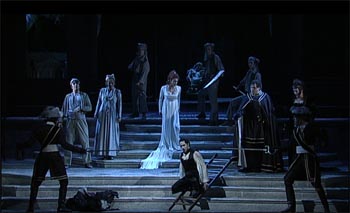
There aren’t too many examples of the French version of Verdi’s Don Carlos on DVD. The one reviewed here is a 1996 Luc Bondy production from the Théâtre du Châtelet in Paris. It’s billed as the original 1867 five act version but I think some of the 1883 cuts are made. There’s no useful documenation so I can’t be sure. It features a very strong cast. Robert Alagna sings the title role, Thomas Hampson is Posa, Karita Mattila (looking very young!) is Elisabeth de Valois, José van Dam is Philip, Eric Halfvarson sings the Grand Inquisitor and, rather unexpectedly, Waltraud Meier is Eboli. Anthony Pappano conducts the Orchestre de Paris.

The set designs (Gilles Aillaud) are slightly stylized but essentially literal, simple and easy on the eye. Costumes (Moidele Bickel) are a sort of historical eclectic. There are nods to the 16th century but the women’s gowns could be any period or none, the Flemish deputies wear the sort of collar the vet puts on your pet after surgery and Alagna looks like he’s stepped out of Pirates of the Caribbean. That sounds negative but it’s actually just undistracting. There’s no high concept here so the whole thing turns on the Personenregie and, of course, the music. Bondy gets pretty impressive performances out of his players, creates some interesting stage pictures in the crowd scenes and doesn’t over egg the auto da fe. It’s not fancy but it works.

Musically this is a really good performance. All of the singers (except Halfvarson) tend to the light but beautiful end of the spectrum for their voice type and it all makes for an experience that seems especially apt for the french text. The revelation for me was Mattila. I’ve seen her only in heavier roles and I really had no idea she could sing so beautifully too. She is especially ravishing in the final scene where “Toi qui sus le néant” brought the house down. The chemistry between Hampson and Alagna is excellent and their voices blend well. Halfvarson is a stentorian and truly creepy Inquisitor. Meier seems a bit mannered at times but she pulls off the big moments fairly spectacularly. Pappano gets lovely playing from the orchestra but the voices are balanced quite a long way forward so we don’t get the full effect. All in all, it’s pretty compelling to watch.

Yves André Hubert is the video director. He does a good job. There isn’t a lot going on on stage other than the interaction between the principals most of the time so close ups there are fine and he does pull back when there’s something to pull back for. Picture quality (16:9) anamorphic is OK but not HD by any means. There are two sound options. I started with the Dolby 5.1 which I found lacks clarity and depth. The Dolby 2.0 alternative, while not of the highest quality, is much better. The whole 210 minutes with two soundtracks is crammed into 7.4 GB on a single DVD9 so top quality is hardly to be expected. There are English, French, Spanish and Japanese subtitles and documentation is minimal. Extras are limited to a cast list and synopsis.

All in all this is well worth seeing.

Bieito’s Wozzeck is beautifully presented by Opus Arte

After what seems like an interminable series of reviews of DVDs that don’t do full justice to the product on stage I finally got to look at one that presented the production almost as if one had been in the theatre. It’s an Opus Arte disc of Calixto Bieito’s production of Berg’s Wozzeck staged in Barcelona in 2007. Bieito is seen by many as the epitome of Regietheater directors and many people will write off any of his productions without further ado. Not me. I found this Wozzeck by turns powerful, compelling, revolting and sometimes puzzling but never dull or disrespectful.

Continue reading

Worthwhile Peter Grimes marred by poor DVD production

Britten’s Peter Grimes is pretty well served on DVD. Peter Pears’ performance was captured in a BBC broadcast in 1969 and John Vicker’s radical interpretation was captured on video in 1981. More recently Christopher Ventris and Tony Dean Griffey have also made it onto video disc. There is also Philip Langridge in Tim Albery’s 1994 ENO production which is the focus of this review.

Discussions of interpreting Grimes tend to fall into a Pears vs. Vickers dichotomy. Vickers offers a rather brutal portrayal which is consistent with the libretto but tends to downplay the subtlety of the music while Pears is almost lyrical and dreamy. Notoriously the composer greatly preferred Pears’ version and had little good to say about Vickers. Langridge doesn’t really fit either of these models. His reading is intense, veers on madness from the beginning and is totally convincing in the “mad scene” in Act 3 Scene 2. What’s harder to reconcile with this reading is the violence that can’t be avoided. Langridge’s Peter just doesn’t come across as the sort of man who would suddenly strike a woman in the face. That said, it’s a fascinating and compelling reading. It’s also beautifully sung. Parts of the role lie cruelly high (certainly too high for Vickers) but Langridge copes with ease and beauty of tone. It’s a performance to stand alongside any of the others. He’s very well backed up by Alan Opie as Balstrode who is as good as anyone else who has taken on the role (and that’s an exalted list) Janice Cairns is a pretty good Ellen Orford. She starts a bit slow but by the second act she’s singing and acting beautifully. The rest of the cast is also pretty good. Unfortunately the orchestra (conducted by the usually excellent David Atherton) and chorus aren’t up to the standard one might hope for. They are certainly not in the same league as the Metropolitan Opera forces on the DVD recorded as part of the “Live in HD” series and they just don’t have either the punch in the gut impact in the final scene that one would like or the shimmering beauty that Runnicles finds in the Sea Interludes. Some of this may be the recording (see below) but some I think is intrinsic to the performance.

Tim Albery’s production is interesting. On one level it’s quite conventional with somewhat stylized but essentially naturalistic sets; fishing boats, nets, a tavern etc. Costumes too are in the same vein; set perhaps a few decades later than originally but not jarringly so. On another it’s less obvious. He makes use of video projections in the interludes. They are black and white and switch from grainy, almost posterized, sea scenes (including some rather odd fish) to projections of Peter and his apprentice later on. They also make an appearance during the storm scene in the pub. They look a bit clunky to me. Whether that’s deliberate or the best that 1994 technology could manage I’m not sure. The detailed stage direction, both of principals and chorus, is at times very good indeed. I suspect that it’s actually even better than the DVD allows us to see. The Act 1 scene between Balstrode and Grimes made me realize that Peter Grimes really is a tragedy. The protagonist has choices but his pride forces him towards his nemesis. I’ve never previously seen that so well brought out. The menace in the crowd scenes is palpable too. Where I’m less convinced is in Albery’s focus on the apprentice. We see visuals of him all the time and the opera closes on a projection of his corpse. He’s also portrayed as utterly terrified all the time. It’s somewhat at odds with the portrayal of Grimes and makes it quite hard to see why Ellen and Balstrode don’t smell a rat. Also, the focus on the relation between Peter and the boy downplay the role of the sea as a player in the drama. For me, the inexorability of the sea is a constant chorus element in this opera but it doesn’t come out in this production.

Now for the disappointing bit. The DVD sucks. I so wish I had seen this live! The video direction was very clearly for small screen (its from a BBC broadcast) and odd angles and super close-ups abound. One has to work quite hard to mentally reconstruct what Albery was aiming for. The sound too is poor. The only option is Dolby 2.0 and it lacks clarity. The chorus at times sounds pretty awful and I’m sure a big part of that is the recording. To cap it off there are no subtitles. That might not matter if the recording were super clean but it isn’t. The only documentation is a chapter listing. Now I was watching the North American release on the notorious Kultur label (when I hear the word “Kultur” I reach for my Browning). In Europe it was released on Euroarts and based on past experience and reviews that might well be a different story.

If the best you can do is a copy of the Kultur pressing I’d say this is definitely worth a look, if only for Langridge’s performance, but it’s by no means the best recording out there.

This recording was rebroadcast in HD by the BBC on June 1st 2025.  My revised thoughts based on that broadcast are here.

A fistful of tenors

I put Rossini’s comedies in the category of “guilty pleasures”. They are silly, trivial, lack real human emotion and are musically pretty trite but they are frothy and fun and sometimes even funny. Rossini’s tragedies on the other hand are just that, tragedies. Ermione is no exception. The plot is emotionally beyond credibility, despite being (or perhaps because of) being based on Racine without managing to descend into the unintended humour of, say, Armida. The music is more suited to a comedy and so all that’s left is visual spectacle, vocal virtuosity and a lot of opportunities for the leading lady to chew the scenery. That, ultimately, is probably what it’s about. It was written for Isabella Gilbran. Presumably she coerced Rossini into providing a vehicle for her to display her talents as a tragedienne. Otherwise the whole thing is inexplicable.

The production given at Glyndebourne in 1995 has a lot going for it. Anna Catarina Antonacci sings the title role, the majestic Diana Montague sings Andromache and Andrew Davis is in the pit. There are also four tenors, which is plenty though not quite in the Armida class. They all seem to be less than about five foot six tall which given that the bass role is sung by the lofty Gwynne Howells looks decidedly odd. Director Graham Vick sets the work in an opera house in the mid 19th century but for reasons obscure everything is tilted at odd angles. It looks like a wedding cake gone badly wrong. Blocking is all very basic, partly at least because Antonacci’s gowns have enough train to seriously inhibit movement. It’s basically park and bark with the odd swoon.

As a musical performance I can’t fault it. Antonacci, Montague, Howells, Jorge Lopez-Yanez (who plays King Pyrrhus) are all near perfect. Antonacci in particular runs through the whole arsenal of Rossinian fireworks with consummate ease. The other roles are never less than competent. Andrew Davis does his level best to breathe some life into the score but there’s really not much he can do about the jolly little tunes that keep popping out of the woodwinds at the least opportune moments.

Humphrey Burton video directs. It was originally filmed for Channel 4 and opens with the obligatory Glyndebourne sheep shots. It is very much a 1995 production for the small screen so lots and lots of close close ups. So many of these are of Antonacci’s cleavage that one wonders whether a dedicated boob cam was employed. Given the original motivation for the opera this may be a case of Historically Informed Videography. The disc package is typically basic Kultur label; 4:3 barely DVD standard picture, Dolby 2.0 sound, no extras. There are subtitles in English, French, German, Italian, Spanish and (oddly) Portuguese. The only documentation is a chapter listing.

One for the Rossini completist only.