The Vickers Grimes

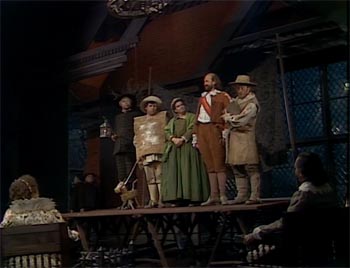
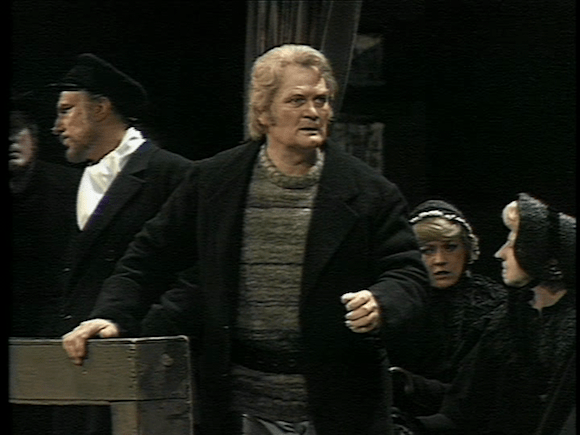
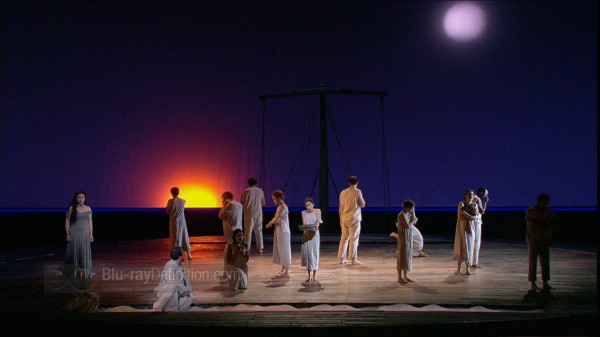
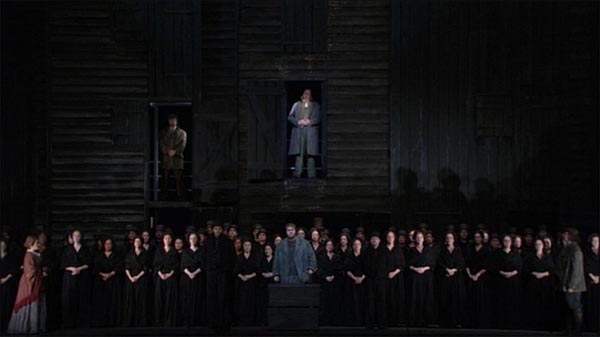
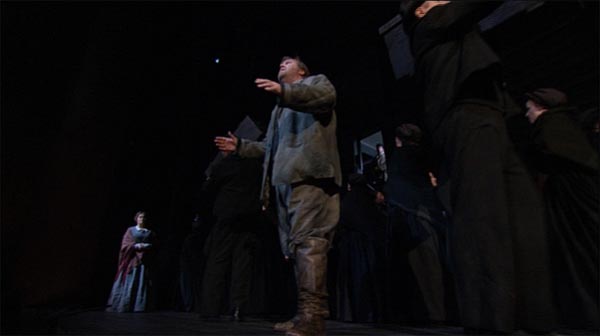
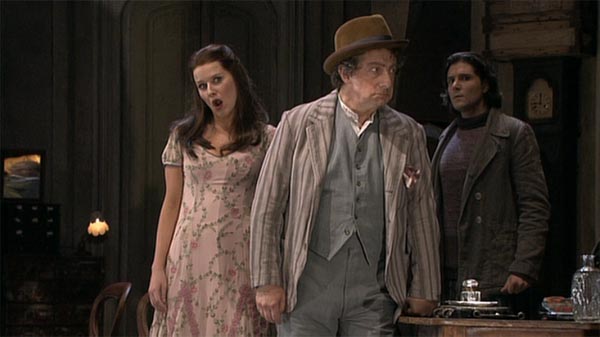
When the Royal Opera House mounted a new production of Britten’s Peter Grimes in 1975 with Canadian heldentenor Jon Vickers in the title role it was controversial. Whatever else one could say about it Vickers’ interpretation of Grimes was very different from that of Peter Pears for whom the part was written. Britten, it was said, hated it. I saw it that summer and was pretty impressed but then seventeen year olds impress easily. I certainly never expected that the young baritone singing Ned Keene would end up as a knight and Chancellor of the university where I began my degree a few weeks later. When the production was revived in 1981 there were some significant cast changes. Norman Bailey had replaced the retired Geraint Evans as Balstrode, Philip Gelling was in for Thomas Allen as Ned Keene and one John Tomlinson had taken over as Hobson the carter. The incomparable Heather Harper remained as Ellen Orford. It’s the revival cast that was recorded and broadcast by the BBC and which is available on DVD from Kultur in the Americas and Warner Video elsewhere.

1.grimes

Continue reading

Ewing’s Salome twenty years on

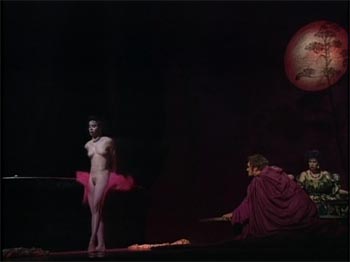
Sir Peter Hall’s production of Strauss’ Salome caused a bit of a sensation when it was first seen at the Royal Opera House and when it was broadcast on Channel 4 because Lady Hall, Maria Ewing, finishes up naked at the end of the Dance of the Seven Veils. How well does it wear after twenty years? First a couple of caveats. My DVD copy is the Kultur release of a few years ago. It now seems to be available from Opus Arte and it’s possible, indeed likely that some of the sound issues have been fixed in that release. If anybody has seen the Opus Arte version please let me know in comments. Anyway, the Kultur release has rather muffled sound with the voices balanced well back from the orchestra and no real solidity to the sound stage which is a pity in this particular work and obviously affects my view.

The production is really pretty conventional. There are lots of greens, greys and blue. It’s quite dark and the set is stagey and conventional. Almost all the visual interest revolves around Ewing’s Salome though Michael Devlin’s scantily clad and palely made up Jochanaan is quite arresting too. Narraboth (Robin Legate) is an unremarkable actor and Herod (Kenneth Riegel) and Herodias (Gillian Knight) look uncomfortably like a couple of drag queens. The latter though does manage a pretty effective hissy fit. For the sound reasons mentioned above it’s hard to be sure whether the rather insipid vocal performances by Devlin and Leggate are really their faults. There’s also no change in acoustic when Jochanaan is singing from the cistern which is odd. Riegel and Knight do better at projecting themselves beyond the orchestra and turn in OK performances.

All that said, one feels from beginning to end that this was set up to be the Maria Ewing show. One really can’t fault her acting which is quite compelling and manages by turns to be chilling, hypnotic, seductive, perverse, frenzied and orgasmic. The choreographer (Elizabeth Keen) does a pretty good job of creating credible dance moves for someone who clearly isn’t a great dancer though there’s no doubting her commitment to what she does. Vocally she gets away with a voice that’s really not big enough for the role. Somehow she manages a lot of projection from not so much volume and her vocal acting is good. It’s an extreme case of Ewing pretty much making things work when really they ought not to. The orchestra under Edward Downes sounds OK but also suffers from the recording.

The recording, directed by Derek Bailey, is about what one would expect from a 1992 TV broadcast. The picture quality is acceptable but not great 4:3 with hard coded English subtitles. Sound, as mentioned, is barely adequate. There are no extras and no documentation.

This is probably worth having a look at as a record of an iconic performance by Ewing but I can’t imagine anyone would choose it as the definitive Salome.

And just for fun, here’s a non-operatic bonus; a set of pictures of my copy of the 1938 edition of Wilde’s Salomé with pochoir illustrations by André Derain.

That little red dress

I’ve been wondering about whether to bother with the Decker production of La Traviata when it gets its MetHD broadcast in April since I own the Blu-ray of the original Salzburg 2005 production. So, it seemed like a good time to take another look at the disc.

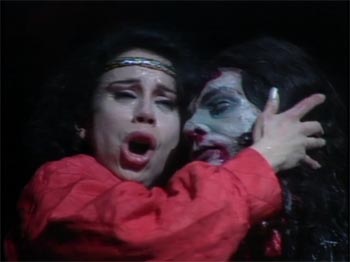
I like this production more every time I see it. The overall concept of a Violetta who knows she is dying and is pretty consciously counting off the days works really well. The set is basically a curved wall with a clock and some sofas. There’s a lot of empty space and that’s entirely deliberate and serves effectively to reinforce Violetta’s alienation. The use of the chorus is interesting too. This is no jolly band of party goers. Rather, the chorus comes across as quite feral; a pack of wild dogs in evening dress. The character of the doctor does double duty too. He haunts the set almost throughout and from the very beginning. It’s hard not to think of him as Death though I don’t think Decker ever came clean on whether it’s supposed to be that explicit. When Violetta sings of “sterile pleasure” it’s quite clear what she means.

In Act 2, the country idyll is symbolised by flowery drapes over the sofas and, crucially, the clock. It’s the only time the clock is hidden. Violetta and Alfredo romp in flowery dressing gowns and underwear. The Germont senior arrives and as Violetta’s hopes dissolve she rips the flowery drapes away revealing both the clock and herself. The countdown has begun again. Back in Paris, the chorus is more cruel than ever playing out a vicious pantomime of Violetta before becoming a crowd of leering onlookers as Alfredo stuffs money into Violetta’s dress and mouth. The entry of Germont senior parallels actions of the doctor/Death earlier in the piece. There’s no break at the end of Act 2. The doctor very slowly forces the chorus off stage taking the clock and the pantomime Violetta with them to leave the stage completely bare. The rest of the action plays out with the characters widely spaced across this vast empty space.

It’s all very well thought through and consistent. There are many, many deft directorial touches (probably far more than we see on disc – see below) and the overall effect is very powerful.

It’s pretty much a dream cast. Netrebko in 2005 was just about perfect in every way for Violetta and she throws herself into the role with abandon. She’s not at all afraid to take physical risks and she sings really well. Her voice has power and brightness and her coloratura is spot on. She can also be lyrical and affecting when needed. Her interpretation is absolutely at one with Decker’s. Her “sempre libera” is quite chilling and there is real intensity in “Addio del passata”. Rolando Villazon’s Alfredo is a very good match. Salzburg caught him, too, at his very best and he doesn’t put a foot wrong. I’d go on at more length but this really is the Netrebko show! Thomas Hampson as Germont senior is a bit more of a conumdrum. Is he sincere or is his whole persona an elaborate bourgeois facade? Hampson doesn’t really tell us though he sings with his customary refinement and intelligence. Luigi Roni as the doctor deserves a special mention too. He only has a few lines to sing but his overall presence is huge. Carlo Rizzi conducts a polished performance from the Wiener Philharmoniker.

So where’s the fly in the ointment? Surprise! It’s the video direction of Brian Large. Emptiness and space are central to this production and Large can’t bear to give us space. We do get just enough framing shots to allow us, with a bit of imagination, to figure out what the director is doing but mostly it’s relentless close ups. He produces a particularly pointless example of switching back and forth between close ups in “Che e cio?” when he seems to think he’s filming Wimbledon. It doesn’t help that the framing shots we do get are, unaccountably, taken from high stage left. So grrr (and not the word I have written on my notepad because my mother may read this).

Technically the disc is very good. The picture is 1080i HD (maybe just a hint of ghosting on low light level shots) and the sound is very vivid DTS HD Master Audio 5.1 (LPCM stereo optional). Subtitles are IT, FR, EN, ES, DE, IT and CH. The documentation is a bit more generous than usual with a track listing and a synopsis in EN, FR and DE. There’s a useful and entertaining “making of” documentary which suggests that directing Villazon and Netrebko is easier and a lot more fun than directing Hampson! (Some people are perhaps just too smart).

So after all that how do I feel about seeing the Met production? If I could see it live I’d be there in a moment. Can I bear to see it butchered by another inept video director? I don’t know. It should be a good vehicle for Natalie Dessay though.

Pretty much all of this production is available on YouTube if that’s your thing. Here’s an excerpt.

The gods look down and laugh

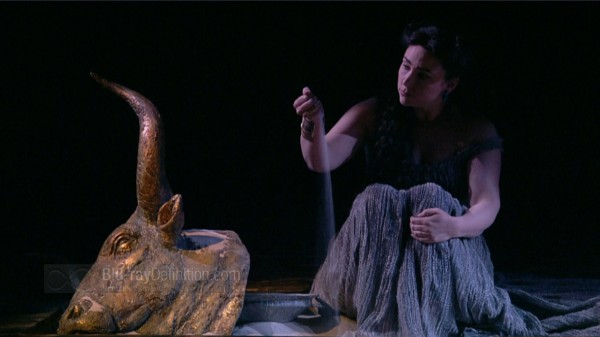
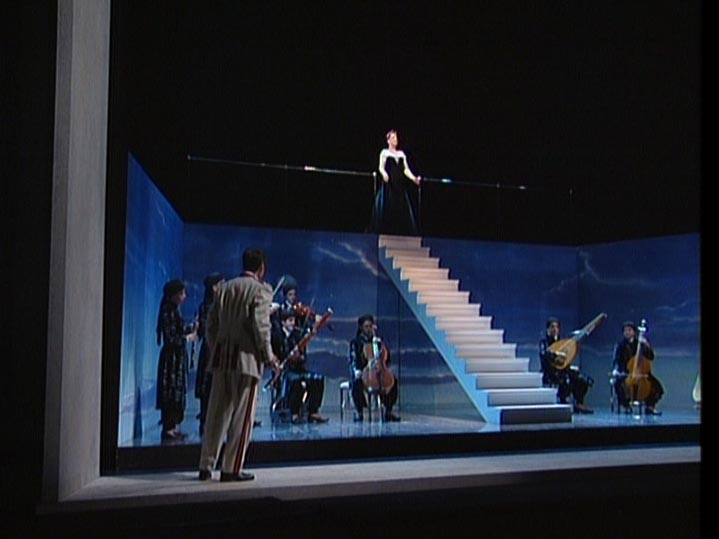
Harrison Birtwistle’s The Minotaur premiered at the Royal Opera House in 2008 and got a DVD and Blu-ray release on Opus Arte not long after. It’s the sort of work I’m susceptible to. It’s a truly integrated music drama based on a classical, indeed universal, theme carried off without any kowtowing to current ideas of trendiness. I’ve watched it a few times now and like most modern works of substance it reveals more with a bit of time and effort.

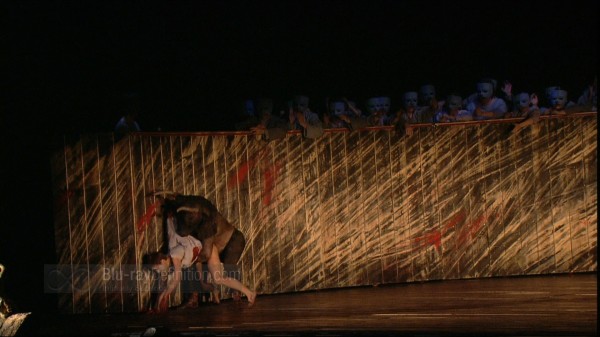
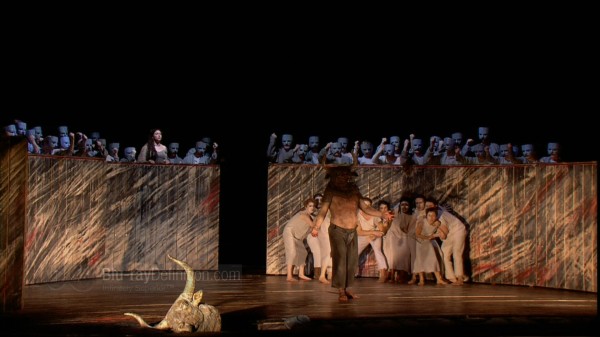
Librettist David Harsent’s take on the Minotaur myth is not at odds with versions many people will be familiar with (though whether in this day and age I’m not at all sure it’s safe to assume, as Harsent does, that “people are going in with a basic knowledge of the story”) but it does add some interesting ideas. His Minotaur, Asterios in this story, is articulate as a human only in his dreams and his dying moments. At these times he sings in English. As the awake monster in the Labyrinth he is restricted to inarticulate grunts. Also original is Harsent’s take on the relationship between Theseus and Ariadne. He sees this as a thoroughly corrupt relationship based on mutual need but riddles with disgust rather than love and so looking forward to the abandonment on Naxos. It works rather well. With those concepts in place we get a pretty straightforward account of the standard myth with some thoroughly brutal scenes of Asterios killing (and in one case raping) the Innocents in the Labyrinth to the blood curdling encouragement of a masked chorus of spectators. Another non-canonical addition at this point is the introduction of the truly horrific Keres who appear to feast on the bodies and the souls of the victims. It all leads up naturally to the death of Asterios at the hands of Theseus.

Birtwistle’s score is dense, multilayered and uncompromising. It’s clearly Birtwistle and makes no concessions to the current trend to try and make opera sound like a Broadway show. It’s not an easy listen but it repays a bit of effort and contains many interesting and deft ideas. For example Ariadne is paired throughout with the alto saxophone. Sometimes it takes up her singing line and carries it forward, sometimes it doubles her line and so on but nowhere does the saxophone interact with any other character. There’s a similar relationship between Theseus and the more conventional woodwind elements of the orchestra.

The design and direction; Alison Chitty and Stephen Langridge respectively, are very well integrated and are brilliantly supported by the lighting design of Paul Pyant. The result is some quite striking stage imagery that supports the changing moods of the piece really well. They also give us the mask that Asterios wears. It’s a framework affair so depending on the lighting Asterios can be fully beast or his human face under the mask can be made more present. It’s subtle and effective.

The performances are pretty much flawless. John Tomlinson, as Asterios, excels in a piece created for him. Christine Rice as Ariadne manages some really difficult music and a really long sing (she’s on stage nearly all the time) equally well. Johan Reuter (Theseus) has slightly off English intonation but sings powerfully and acts well. There are some excellent performances in the minor roles. For my money the best of these is the First Innocent of Rebecca Bottone who manages to look incredibly fragile but totally convincing during what is perhaps the most visceral scene of all where she is raped and killed by Asterios. There are very good cameos too from Amanda Echalaz as Ker and Philip Langridge as Hiereus. Antonio Pappano conducts and gets the necessary out of both orchestra and chorus.

The video direction is very good indeed. It appears to be a joint effort by Leo Warner and Mark Grimmer. The balance of setting shots and close ups is judicious and the close ups aren’t too close. They eschew silly camera angles. The picture on Blu-ray is 16:9 1080i and very good indeed. Sound is DTS 5.0 HD Master Audio and presents a vivid sound picture with good depth and breadth (PCM stereo also available). There are English, French, German, Spanish and Italian subtitles. The documentation includes a useful essay on the music and the disk has a 32 minute “Making of” documentary that is more informative than most of its kind.

All in all, this is a very impressive work, beautifully realised on stage and well presented on disk.

For the record the Opus Arte trailer and the whole piece are available on YouTube but the AV quality is appalling.

Old fashioned fun

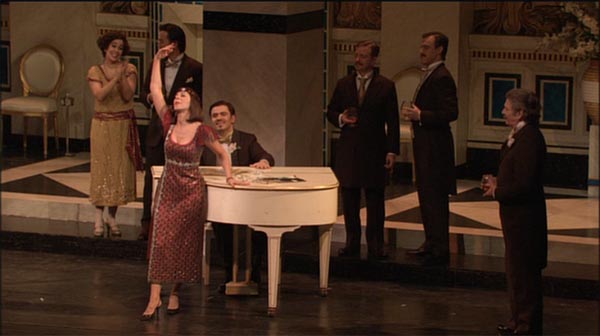
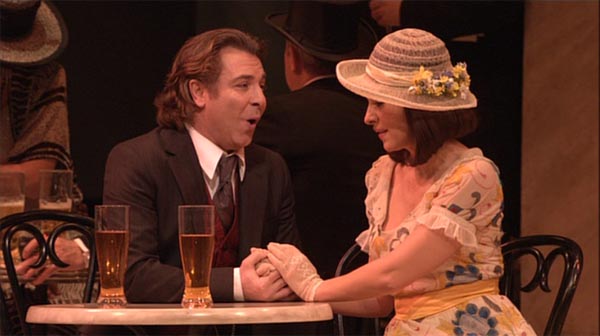
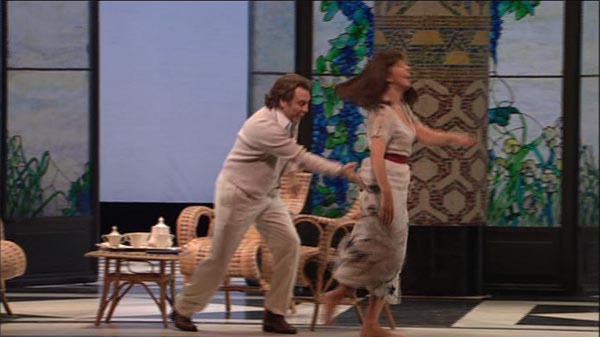
Puccini’s La Rondine has a plot that’s lightweight even by opera standards but it also has some really good tunes and plenty of opportunities for a star tenor and soprano to show off. In 2009 the Metropolitan Opera presented it as a vehicle for on again, off again couple Roberto Alagna and Angela Gheorghiu. Judging by the body language on and off stage this was definitely an “on again” phase. The production (Nicolas Joël), staging (Stephen Barlow) and design (Ezio Frigerio) don’t have a single thing in them that would cause concern to the most conservative of opera goers. The whole thing oozes old fashioned opulence. It’s the first time I’ve heard an audience applaud the sets! (Baldrick, you’ld laugh at a Shakespeare comedy). So no Regie here!

What we get is a beautifully sung and played performance. Gheorghiu sings gorgeously throughout and Alagna is not far behind. Their acting hows off some real sexual chemistry and if Gheorghiu tends to play the dive, well it’s that sort of role and that sort of production. They get well supported by Marius Brenciu, as the poet Prunier, and Lisette Oropesa, as the maid Lisette. These two basically provide the comic relief to the slightly cloying romantic main plot. Monica Yunus, Alyson Cambridge, Liz DeShong and Samuel Ramey take the other important roles and all are perfectly competent and true to character. The only aspect of the staging that doesn’t quite come off is the bar scene in Act 2. It’s all a bit too busy and there is some not very well thought through “drunk” choreography. Otherwise it’s basically a drawing room drama so not too, too hard to pull off. The orchestral playing is unsurprisingly good with the kind of music the Met orchestra excels in and Marco Armiliato conducting.

The video direction by Brian Large is OK. Given how much of the piece is two people talking, snogging or groping close ups seem a perfectly reasonable choice much of the time. The approach doesn’t work so well in Act 2 where a little more distance would have helped. Technically the DVD is an absolutely standard EMI treatment of a MetHD broadcast. The picture is very good 16:9 and the DTS 5.1 soundtrack is clear and spacious (LPCM stereo available too). English, French, German, Spanish and Italian subtitles and rather basic documentation in English with French and German PDF versions on the disk. Renée Fleming does the interval interviews which are about as revealing as usual (not at all).

All in all, it’s a lightweight piece but enjoyable and it would be hard to imagine a much better performance.

The Met’s Peter Grimes

I liked the 2008 MetHD broadcast of Britten’s Peter Grimes enough to buy the DVD as soon as it came out. After something of a hiatus I just watched it again.

It’s an odd production. The director (Tony award winning – run for the hills) John Doyle, was the first to use, I think, what has now become a Met cliché; a wall with windows running the whole width and height of the set. In this case it can be moved forward and back but mostly it’s forward compressing the depth of the stage. The idea is to convey the claustrophobic nature of the Borough which is fair enough but mostly what it does it confine the enormous chorus to a space it barely fits in meaning there are few options but to have it face straight forward in serried ranks and sing. To be fair, there are scenes where it’s very effective; the opening inquest scene for example and “Peter, we’ve come to take you home” in Act 3. It’s much less successful in, for example, the pub scene. The production is also very dark. This always bothers me because despite eating vast quantities of carrots my night vision isn’t great. I don’t really get it.

Dark as a metaphor is pretty blatant and comes at a heavy cost in terms of the production’s ability to convey anything else. Only at the end, in the final chorus, is the wall removed and the stage lit less funereally. The sea interludes are played out in front of a blank wall. No effort is made to give them visual accompaniment. The “wall” and the naked Interludes both tend to banish the sea from the production. There’s really no sense that the Borough is a fishing village and therefore the whole role that the sea plays in the psyche of people who make their living from it is lost.

The video director, Gary Halvorson, appears either to hate the production or think that the cinema/DVD audience is too thick to get it because he relentlessly undermines it. Unable to present the dark, stark stage that Doyle has called for he gives us a compilation of super closeups and really weird camera angles; pointing up from the side of the pit, pointing down from what looks like the cheapest seats at the outermost edge of Ring 4 and so on. He also can’t accept that the director doesn’t want to distract from the music during the Interludes so we get a succession of close ups on audio members and, more especially, on conductor Donald Runnicles. This is particularly unfortunate as Runnicles conducts like a hyperactive and self regarding pterodactyl.

The above got over with there’s much to like in this DVD set. The performances are generally very good. Tony Dean Griffey is a highly effective Peter Grimes as well as singing very well. He’s close to Peter Pears in his almost dreamy interpretation. He lacks the intensity of Langridge or the brutality of Vickers but its a valid and compelling portrayal. Anthony Michaels-Moore almost steals the show as Balstrode. This is surely the best take on the role since Geraint Evans. The sense that he’s the one man who really wants to help Grimes but knows when enough is enough is overwhelming. There are good performances in the other male roles especially from Teddy Tahu Rhodes as Ned Keene. The women are more of a mixed bag. I still can’t really get into Patricia Racette’s Ellen Orford. She acts well and is sometimes very lyrical but at other times she seems shrill and her vibrato too much for my taste. The Auntie of Jill Groves though is really good. Even toned and with a suitably cynical but not unkind persona she nails the role. The Mrs. Sedley of the timeless(1) Felicity Palmer is also quite excellent. She’s acid without being unmusical and not at all caricature like. Donald Runnicles takes things at a generally rather leisurely pace which makes the first act in particular drag a bit but the tension does build and there’s no disputing the beauty of the orchestral playing. The chorus is excellent throughout.

Technically it’s a typical DVD transfer of a MetHD broadcast. The picture quality is very good and the DTS 5.1 sound is excellent (LPCM also available). There are subtitles in English, French, German, Italian and Spanish. There’s a track listing, synopsis and unhelpful essay printed in English (French and German versions in PDF on the disk). The interval features are typical but livened up a bit by Natalie Dessay who seems more willing to go off script than the other Met regulars (probably why she no longer seems to appear).

Bottom line, it’s good but I’m still searching for the ultimate DVD Grimes.

fn1 timeless as in I saw the, then, Ms. Palmer sing Pamina the month after I saw Vickers sing Grimes in 1975

The Infernal Comedy

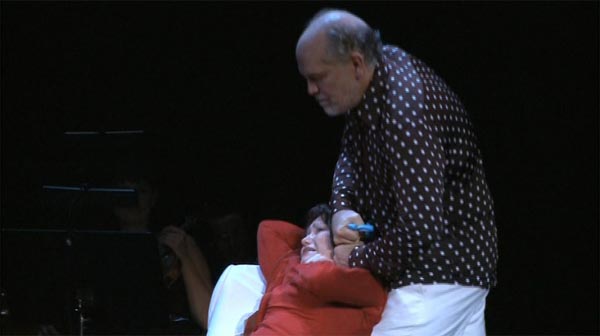
The Infernal Comedy: Confesions of a serial killer is a “Drama for one actor, two singers and orchestra” based around the story of real-life serial killer Jack Unterweger. It features John Malkovich, Laura Aikin, Aleksandra Zamojka and the Wiener Akademie under Martin Haselböck. It was written and directed by Michael Sturminger and filmed in front of a live audience in Vienna’s Kronacher Theater in 2009. It’s a really creepy piece in which Malkovich plays the dead Unterweger on a book tour promoting his posthumous memoirs. Unterweger’s string of anecdotes, puzzles and philosophising is punctuated by arias from the two sopranos from works by Vivaldi, Mozart, Weber and others on the theme of women’s mistreatment by men. During much of this Malkovich is portraying the humiliation and murder that Unterweger inflicted on his victims on the two singers. This is probably the only chance, short of a Stefan Herheim production, that you’ll get to see Laura Aikin strangled with her own bra. It’s really creepy.

The performances are really good. Malkovich, of course, is that rarity; a Hollywood star who can actually act.  Not only does act, and very well, he does it with an Austrian accent.  He is very convincing as Unterweger.  Some of his angry outbursts are really quite terrifying.  The girls sing really well and are totally committed to doing what they have to do on stage, which largely consist of putting up with considerable indignities from Malkovich/Unterweger while still managing to sing. The orchestra, on period instruments, sounds just right. The whole thing is very well filmed and has really good DTS 5.1 sound (DD 2.0 and 5.1 as well). The English subtitles for the arias are a bit odd. I have no idea what “I encore you to Lethe’s opposite bank” means! There’s a 45 minute “making of” documentary on the disk as well but it’s not very illuminating.

All in all, well worth a look.

Giulio Cesare in Australia

Opera DVDs from Australia are as rare as Canadian ones and for the same reason. The national broadcaster’s approach to the arts would put the Philistines to shame so opera broadcasts from which DVDs can be produced are passing rare. The one under review here is a 1994 production of Handel’s Giulio Cesare from the Sydney Opera House.

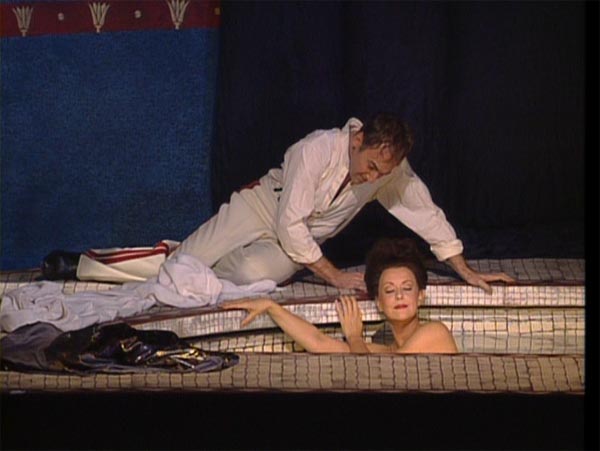
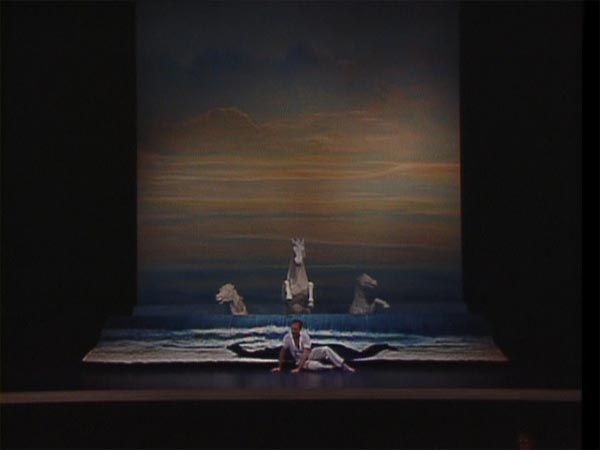
There’s a lot to like about it. The stage production by Francisco Negrin is fairly conventional but attractive to look at and contains some very effective touches. He makes good use of an apron in front of the pit and he uses the rather minor character of Nireno to some effect as a sort of silent chorus on the action. Costumes are sort of 1900ish with odd touches like breastplates and Egyptian dancers and supers in white body and face make up. Sets are mostly simple with typical Egyptian iconography. Cleopatra is naked in her bath when she receives Caesar which would probably be too much for the more staid North American houses today, let alone twenty years ago. The choreography by Gregory Nash makes very effective use of a talented group of dancers. Best if all from the point of view of watching on DVD the video direction by Peter Butler is very respectful of Negrin’s intentions and gives us a real good view of all of the action.

On top of that there is some excellent singing especially by Graham Pushee in the title role. Not everyone likes to see a countertenor in this role but Pushee makes a good case for it. He’s fuller toned than most and has excellent control of his coloratura and ornamentation. He’s also a very good actor. Overall, he may be the best in this role that I have seen. The Tolomeo of Andrew Dalton makes a good foil. He’s a reedy, nasal counter tenor of an older type but that works quite well for the weak and scheming character he portrays. The Achilla of Stephen Bennett is also top notch building to a fine climax in Act 3 with “In tal’ modi si premia”. Rodney Gilchrist as Nireno doesn’t have a lot to do vocally but he’s present and contributing so much of the time that he deserves a special mention. The orchestra under Richard Hickox uses modern instruments but doesn’t go heavy or mushy.

I was initially somewhat ambivalent about Yvonne Kenny’s Cleopatra. I’ve got used to this role being sung by much younger singers than the 44 year old Kenny and it has to be that she looks and sounds very mature for Cleopatra. That said she sings with great gusto and bold coloratura. She acts well too but she does struggle a bit to be the sex kitten who seduces the stuffy Caesar. Despite this by the third act and, especially, her really committed “Da tempeste il legno infranto” I was pretty much won over by her sheer enthusiasm. There’s something of the same problem with Rosemary Gunn’s Cornelia. It’s hard to think of Ms. Gunn as the bombshell who has half of Egypt lusting after her, despite a pretty decent performance overall..

What’s not to like? Not too much really. Elizabeth Campbell’s Sesto is a bit shrill and generally not very convincing dramatically. The biggest negative though is the technical quality of the disk which scarcely does justice to Butler’s efforts. The sound, Dolby 2.0, is OK but the 4:3 picture really isn’t all that great. There’s no way one can fit 207 minutes of opera onto a single DVD9 and have great video quality. 4:3 doesn’t help either as the stage is the sets are wide but not very high (so I guess an extra bonus point for avoiding the close up trap). The subtitles are English only and the documentation is limited to a chapter list. Bottom line, a good effort rather spoiled by el cheapo production for disk(1).

This version does have the merit of being inexpensive but it’s up against strong competition from Copenhagen and Glyndebourne. Both houses offer much more recent productions at much higher technical quality. At a price.

fn1. This performance appears to be available in a different package outside North America. It has Dolby 5.1 and DTS sound tracks and, I suspect, is spread across two disks. Certainly the track numbering n the version I watched and the way it behaves if played with vlc suggests two VIDEO-TS folders crammed onto one disk.

From corpse to corpse

I managed to get my hands on the DVD of the Gianni Schicchi that formed the second half of the evening’s entertainment with The Miserly Knight that I reviewed yesterday (Glyndebourne 2004). It’s the same creative team of Jurowski and Arden and they reinforce the end on a corpse, start on a corpse symmetry by using the aerialist Matilda Leyser as the corpse in Schicchi. Both Jurowski and Arden stress the dark side of the work in interviews but to be honest it comes off here more as a madcap comedy. Perhaps that was inevitable when following the very dark and enigmatic Rachmaninov piece. It’s set around the time of the work’s composition and a unit set with balcony and bed and a cupboard to stuff the body in serve throughout. It’s workmanlike and effective. The blocking is very precise and effective. After all there are at least eight characters on stage throughout this piece. Arden moves and groups them with precision and my only beef is that (surprise) we miss much of her careful work because of closeupitis.

The performances are excellent. Alessandro Corbelli is superb in the title role confirming my opinion of him as one of the great comic baritones. The acid aunt Zita is wonderfully played by the seemingly timeless Felicity Palmer and the rest of the family back her up strongly with excellent ensemble work. Sally Matthews as Lauretta and Massimo Giordano as Rinuccio are the romantic interest and they are both good. Matthews manages a version of O mio babbino caro that is lovely to listen to and spectacularly insincere. She also acts very well and looks the part. Giodarno has a lovely Italianate tenor voice, acts well and is also most pleasant to listen to. Jurowski handles the score well building to some impressive climaxes where required, for example in the scene where the family are imagining all the good things the monks will get to eat from Buoso’s legacy.

The video direction isn’t as egregious here as in the Rachmaninov but it’s still annoying. The scene where Schicchi is preparing to impersonate Buoso is particularly irritating. Technical details and standard of execution are the same as for the Rachmaninov. The interviews with Jurowski, Arden and Corbelli are also equally good. I could listen to Jurowski talk about music and its relationships to other art forms and social developments for a long, long time. Just a reminder that this is also available as a double bill with the Rachmaninov on Blu-ray as well as separately on DVD.

It will be interesting to see how this compares to the upcoming COC production which will be paired with the very dark Eine florentinische Tragödie by Zemlinsky from Wilde’s play. It has a starry cast, Sir Andrew Davis conducting and Catherine Malfitano directing so we may be in for a treat.

A Knight to remember

Rachmaninov’s The Miserly Knight is a very strange one act opera and it isn’t often performed. A production by as cerebral a creative team as Vladimir Jurowski and Annabel Arden looks like a very promising idea so I was very intrigued to see what they made of it in this 2004 Glyndebourne recording.

This work lasts only a little over an hour and is split into three scenes which scarcely relate to each other. In Scene 1 a young knight laments that he can’t keep up his social position on his meagre allowance. A Jewish moneylender refuses to extend further credit but suggests that he can provide the knight with poison if he wants to do his old man in. The knight refuses. Act 2 consists of a monologue in which the father, the Miserly Knight of the title, rhapsodizes over his six chests of gold in a fairly overtly sexual way for twenty five minutes. In Scene 3 the Duke orders the father to make an appropriate allowance to his son. The father refuses ultimately claiming, ironically, that his son is trying to poison him. The son rushes in and denounces his father. They have a row and the father drops dead. End of story. All this takes place to an incredibly complex score full of leitmotivs. In a real sense the orchestra is the main character, functioning as Chorus in the original Greek sense. How to bring some sense of the dramatic to this is no mean problem. Arden’s solution is to embody Greed in the form of an aerialist who is present whenever the father is present. This seems like a great idea and on the odd occasion the video director lets the DVD audience see the interaction between Greed and the father it seems to work. Unfortunately the video director, Franceska Kemp, is even more wedded than most of her ilk to superfluous close-ups and so most of Arden’s intelligent work is lost on us.

Musically this is pretty impressive. The music is not typical Rachmaninov. There are no big tunes and it looks forward to the musical language of early Schoenberg or Bartok as much as it looks back to Wagner and Tchaikovsky. In other words it’s an uncompromising early 20th century score. Jurowski gets this and conjures up superbly detailed and incisive playing playing from the London Philharmonic. He’s backed up by an excellent cast of singing actors. The star, clearly, is Sergei Leiferkus as the father. He manages a part that is usually cast for a bass but goes uncomfortably high for most basses. He can sing the music and he brings an absolutely revolting quality to his quasi sexual monologue about money and power. He’s amazing. The rest of the cast are more than adequate. I particularly liked Albert Schagidullin’s powerful baritone as the Duke. Richard Berkeley-Steele, Maxim Mikhailov and Vyacheslav Voynarovsky are solid as the young knight, the servant and the moneylender. Matilda Leyser is the aerialist portraying Greed. What little we see of her is impressive but I really would like to see much more.

Video direction aside this is pretty impressive as a DVD package. The DTS 5.1 soundtrack is superb (LPCM stereo also available). The picture is also excellent. There are French, German, English, Italian and Spanish subtitles. The extras on the disk include very useful interviews with Jurowski, Arden and Leiferkus as well as a quick look at the Gianni Schicchi with which it was paired at Glyndebourne. The documentation also includes a couple of essays that are worth reading. There’s also a Blu-ray release that includes both The Miserly Knight and Gianni Schicchi.

This is the only currently available video recording of The Miserly Knight so I think it’s worth a look despite the dreadful video direction. If that had been done properly I think this would likely have been really impressive.