
 I’ve listened to a lot of music for voice and piano and a lot of music by Shostakovich but it was only on listening to this new album by Margarita Gritskova and Maria Prinz that I realised that I had hardly heard any of Shostakovich’s art songs; except for a few with orchestra. So I was glad to discover the interesting collection on this CD. There are twenty songs taken from twelve different works. (most of DS’ song cycles seem to require multiple voice types. I guess labour was cheap in the USSR). The pieces are drawn from right across Shostakovich’s career from Op.4 to Op.145. The evolution of style is as clear as in his chamber or orchestral music.
Shostakovich Songs and Romances
Reply
 Earlier this month I was reviewing a new CD recording of Britten’s Peter Grimes for Opera Canada (you can read it in the Fall 2020 issue or
  Vladimir Jurowski is a notable Mahler interpreter so a new recording of Mahler’s great symphonic song cycle Das Lied von der Erde is welcome; especially when Jurowski’s own Rundfunk-Sinfonieorchester Berlin is combined with soloists as fine as Sarah Connolly and Robert Dean Smith.
 This new recording of Britten’s Peter Grimes was recorded from semi-staged performances in the Grieghallen in Bergen in November last year. It’s very good indeed. Of course, there are many good audio and video recordings of this piece going back to the composer’s own version with Peter Pears in the title role; recorded in 1959 and many fine singers have recorded the title role. To stand out from the field, a new recording needs an outstanding Grimes and in Stuart Skelton this version has one. He manages to encompass both the brutal, gritty side of Grimes as well as the more ethereal side. Pears did the latter brilliantly but could never quite manage the grit. Vickers, who practically owned the role in the 1970s, was brutal but didn’t have the voice or the stage skills to bring out the gentler side. Perhaps the first person to really portray the full complexity of the character was the late Philip Langridge and there’s much about Skelton’s portrayal that reminds one of him. It shades toward the delicate most of the time with some lovely singing in “Now the Great Bear” and in the mad scene. But when Skelton needs to be brutal he’s downright scary.
 This CD contains three works by Thea Musgrave. Two are fairly recent but the first, and to my mind the most interesting, dates back to 1973. It’s called Rorate coeli desuper! It’s a setting of text by the 16th century Scots poet William Dunbar interspersed with short Latin sections. The text is given, as sung, in Middle Scots and Latin but no translation. It’s a wonderfully varied and eclectic piece scored for five soloists and SATB choir. It is, I suppose, a sort of modern polyphony with lots of extended vocal techniques including droning, chattering, hissing and a very high soprano duet that imitates bird song. The text is wonderfully evocative. Here’s one verse as an example:
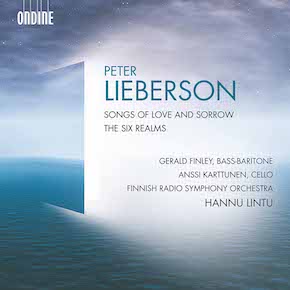 Songs and Love and Sorrow is a new CD of music by Peter Lieberson played by the Finnish Radio Symphony Orchestra and its chief conductor Hannu Lintu. There are two works on the album. The first is The Six Realms; a cello symphony in six movements heavily influenced by Tibetan Buddhism. The soloist here is Lieberson’s close friend Anssi Karttunen. Curiously this work was commissioned by the Toronto Symphony Orchestra as part of Yo-Yo Ma’s Silk Road Project and premiered by them with Yo -Yo Ma conducted by Jukka-Pekka Saraste. For more information on the piece see the
 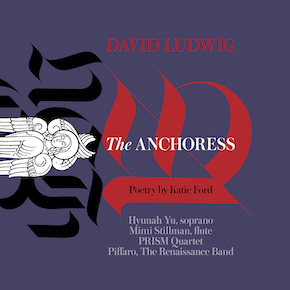 The Anchoress is a 2018 work for soprano and instrumental ensemble by David Ludwig setting texts by Katie Ford. There are eight “scenes” each exploring an aspect of life of the medieval anchoress; a woman who voluntarily secluded herself in a cell attached to a church. Such women were seen as almost saintly and thought to have great insight which was sought by all ranks of people. I
 David Lang’s love fail is a choral work inspired by the story of Tristan and Isolde. It was originally written for Anonymous 4 but later revised for the slightly larger forces of the Lorelei Ensemble (3 sopranos, 3 mezzos, 2 altos) who have now recorded it. It’s basically an a cappella piece though there are places where the singers play percussion instruments. The texts are a mixture of elements that the composer has taken (and translated where necessary) from various classic versions of the tale; Gottfried von Strassburg, Marie de France, Sir Thomas Malory and even Richard Wagner among others, and interspersed them with poems on themes of love and loss by Lydia Davis. The “classical” texts are somewhat repetitive and reflect the classic values of the story. Davis’ poetry is wordier and less obviously poetic and deals with relationships in more more modern, more personal, less mythic terms. It’s an interesting contrast that the composer exploits to find two rather different colour palettes within the constraints of eight female voices singing essentially tonal music. It works. The risk of tedium is avoided and the work hangs together for its full length.
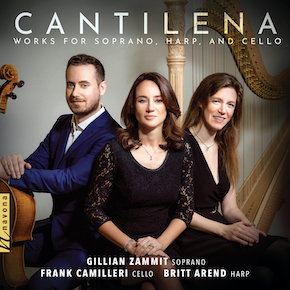 Cantilena is a CD of art songs by various composers arranged for soprano, harp and cello. It’s an interesting twist on music that one is likely to be fairly (sometimes very) familiar with in the usual voice and piano format. It’s a generous disk with nineteen songs in all. The composers featured are Debussy, Duparc, Fauré, Massenet, Tosti, Tedeschi, Richard Strauss, Gregory and Villa-Lobos. The performers are soprano Gillian Zammit, harpist Britt Arend and cellist Frank Camilleri. Arend and Camilleri are principals with the Malta Philharmonic Orchestra.
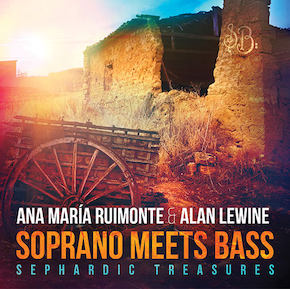 Sephardic Treasures is a collection of traditional Sephardic songs in less traditional arrangements. The texts (Ladino and Spanish) and melodies are original and drawn from a collection of songs thought to originate in the 12th to 15th centuries. The arrangements, by bassist Alan Lewine, draw on jazz, flamenco and Israeli folk music incorporating instruments like bass, trumpet, flamenco guitar, piano, flute, shofar and percussion to create quite a range of styles that fit the texts well. All of this is grounded in the stylish and idiomatic singing of soprano Ana Maria Ruimonte. It’s fun listening. Some of the songs have that twisted, even gruesome, quality of a lot of medieval songs; husbands who have their wives executed, wives who feed their step children to their husbands etc, but others are very light hearted, like the one about the cat who is so surprised by a proposal of marriage that he falls off the roof and is killed but when they try to bury him in a sardine box the smell revives him!
 operaramblings