I’m not entirely sure how to categorise Nicholas Weininger’s All Is Mere Breath. I guess, essentially it’s an oratorio inspired by the COVID pandemic when “breath” was very much on people’s minds. It’s written for three soloists; soprano, mezzo-soprano and baritone, men’s chorus and instrumental ensemble. It mostly sets texts from the Old Testament with the soloists singing in English and the chorus in Hebrew. It concludes with the Hebrew prayer “Oseh Shalom”. It begins though, in Hebrew, with the opening of Lamentations; “How she sits alone, the city once great with people.” which I guess sums up how many of us felt in 2020. when I remember walking down an utterly deserted Bay Street in the middle of a work day. The selection of texts really does reflect “desolation” which covers quite a bit of the Old Testament really.
All Is Mere Breath
Reply
 Here’s a round up of February shows not previously mentioned; mostly straight theatre.
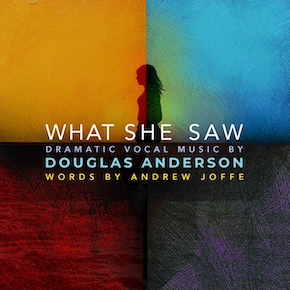 What She Saw is a new album of vocal music by New York composer Douglas Anderson. There are two works on the record. There’s a cycle of eleven Cassandra Songs for mezzo-soprano and piano and a monodrama for mezzo-soprano, piano and percussion called Through/In.
 Breathe is a new recital CD from Korean soprano Hera Hyesang Park. It’s a generous 79 minutes of music; most of it with orchestral accompaniment. There’s one piece for soprano and cello octet and also a few numbers where she’s joined by mezzo-soprano Emily D’Angelo.
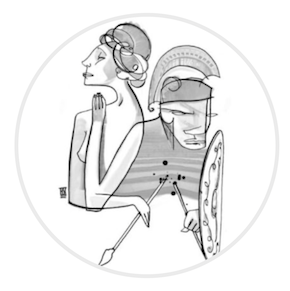 Lysistrata Reimagined is this year’s UoT Opera Student Composer Collective production. It’s a setting of a libretto by Michael Patrick Albano loosely inspired by Aristophanes’ Lysistrata. In fact about all of Lysistrata that remains is that it’s in Greece, there’s a sex strike to stop a war and a couple of character names are retained. But then, as the first scene tells us, nobody reads that stuff, or remembers it, anymore.