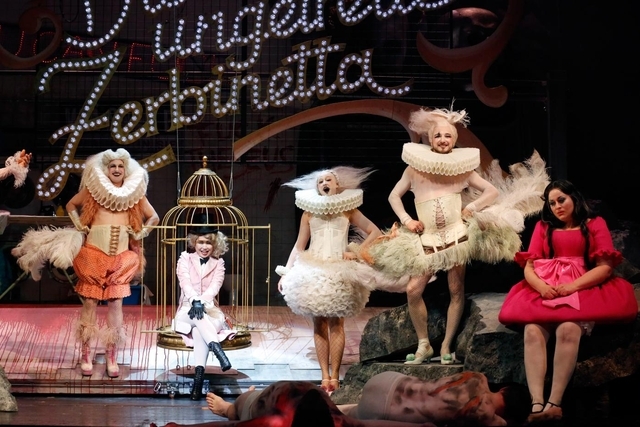
 From the Stadttheater Bern. It’s Ariadne auf Naxos of course. Your mission, should you choose to accept it, is to figure out who is who.
.


From the Stadttheater Bern. It’s Ariadne auf Naxos of course. Your mission, should you choose to accept it, is to figure out who is who.
.
 Talisker Players’ first concert of the season was an interesting mix of material around the general theme of travel; the music neing intersperse with related texts read most pleasingly by Derek Boyes. First up was soprano Virginia Hatfield with a French baroque rarity; Elisabeth Jacquet de la Guerre’s Le Sommeil d’Ulisse. This piece is scored for flute, violin and harpsichord continuo and the violin part in particular, very well played here, takes an important role. The piece, which is largely recitative, was sung stylishly, beautifully and, as always, extremely accurately by Ms. Hatfield. One quibble though. If one is expecting the audience to use the provided translation of the text it might be advisable to leave the lights up enough to allow them to be read!
 November 17th sees the second annual Elizabeth Krehm memorial concert. It’s at Metropolitan United Church at 8pm and will feature Beethoven’s 9th sympony. The soloists will be Rachel Krehm, Erin Lawson, Adrian Kramer and Jeremy Bowes with the Canzona Chamber Players and a choir drawn from the Univox Choir and friends of the Krehm family. Evan Mitchell conducts. Admission is by tax receiptable donation to St. Michael’s Hospital where Elizabeth spent the last month of her life.
On 28th November, at Runnymede United Church a starry cast are donating their services for a charity performance of Bach’s Weinachtsoratorium. The beneficiaries will be the Toronto Symphony Volunteer Committee Education Program and Open Table Community Meal at Runnymede United Church. Johannes Debus will conduct the Bach Consort with soloists Monica Whicher, Vicki St. Pierre, Lawrence Wiliford, Colin Ainsworth and Russell Braun. Tickets are $50 in advance or $60 on the door.
 2013/14 saw the decline in ticket sales and box office revenue at the COC continue, though less precipitously than in the previous couple of years. Sales were down from 109297 tickets in 2012/13 to 106748 seats sold in 2013/14. Revenue was also down from $9.9 million to $9.7 million. A reduction in performances boosted capacity utilisation to 94% but heavy discounting at both ends of the season left the revenue per seat essentially static at just under $91.
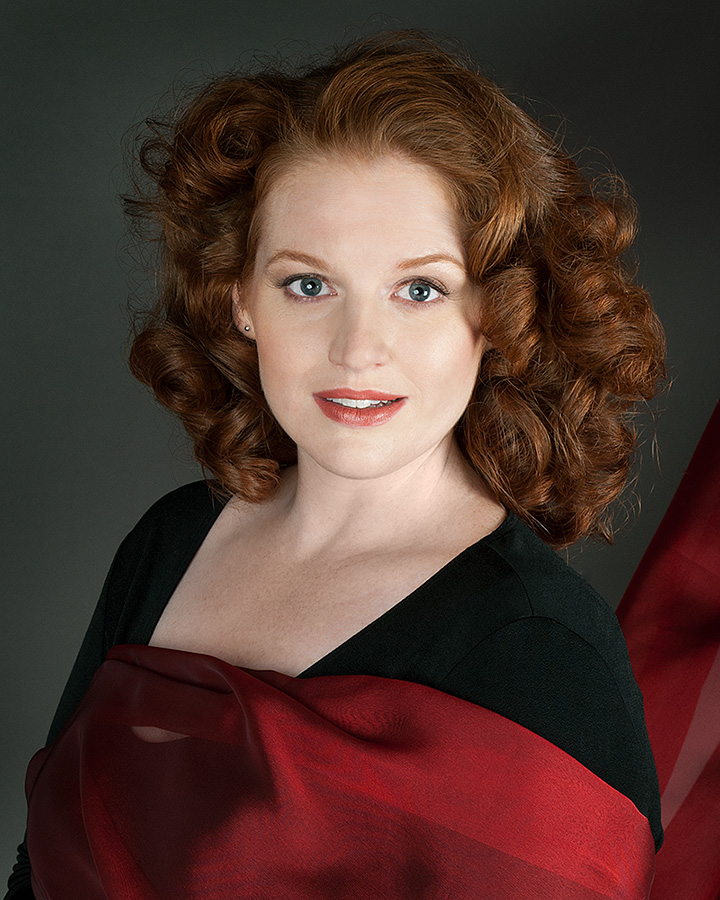 This evening at 7.30pm at Trinity St. Paul’s The Talisker Players have their first concert of the season entitled Songs of Travel. Virginia Hatfield will be performing the French baroque work Le Sommeil d’Ulisse by Elisabeth Jacquet de la Guerre and the rarely performed Algoma Central by Louis Applebaum. Also featured is baritone Geoffrey Sirett in Ralph Vaughan Williams’ Songs of Travel and Vally Weigl’s Songs of Love and Leaving. Also on tomorrow.
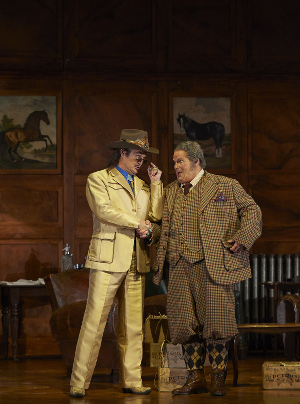
Photo: Michael Cooper
The nice thing about seeing a production for the the third time is that one can focus on what one wants to because the big picture is already known. After two looks at the COC’s current Falstaff from the Rings I was glad to be able to see it from closer up and this time I also remembered my opera glasses. The details in the production and the Personenregie are really amazing. In the scene where Fortuna is offering gifts to Falstaff, the five cases of wine are Pétrus. In a way that’s doubly funny because although Pétrus is typically the most expensive Bordeaux today it was relatively unknown in the 1950s. My 1970’s copy of Hugh Johnson’s The Wines of Bordeaux talks of how, if he lived in France, he would certainly cultivate a number of petits fournisseurs in the relatively unknown and undervalued Pomerol appellation! Anyway, back to Falstaff. The money in the suitcase of money is clearly US currency. Nice touch. The ornaments in Mrs. Ford’s 1960s chic kitchen are hilarious. I particularly liked the glass elephants. The antics of Pistola and Bardolfo also came more sharply into focus. They nick anything that’s not nailed down. Are we sure Falstaff is from Norfolk not Liverpool? The handbag snatch in the restaurant scene is especially good.
The other thing I noticed was how much fun the audience was having. There was none of the “opera is SRS business” vibe going on. Rather, much unaffected laughter and laid back enjoyment. We could use more of that. So when do we get Gerry Finley back?

Artists of Atelier Ballet with image of Meghan Lindsay as Alcina. Photo by Bruce Zinger.
Opera Atelier’s first real venture into Handel is accompanied by some significant shifts in aesthetic coupled with some slightly puzzling throwbacks. The work chosen is Alcina. It’s not Handel’s best known (or, indeed, best) but it’s a perfectly serviceable example of Handel’s Italian works for the London stage. The plot, ultimately from Ariosto’s Orlando Furioso, concerns the sorceress Alcina who has an illusory kingdom made up of the souls of men she has ensnared. Her most recent conquest is the knight Ruggiero. His betrother, Bradamante, disguised as her brother, Ricciardo, shows up with Ruggiero’s former tutor, Melisso. Melisso has a ring which shows things as they are, shorn of illusion. Eventually they use this to return Ruggiero to his duty and Alcina’s kingdom goes up in smoke. Along the way there’s also a sub-plot involving Alcina’s sister, Morgana, who falls in love with Ricciardo to the dismay of her lover Oronte. In the original there’s also a boy looking for his father and a lion but they got cut in Marshalll Pynkoski’s version. In fact there’s probably close to an hour in total cut from Handel’s score.
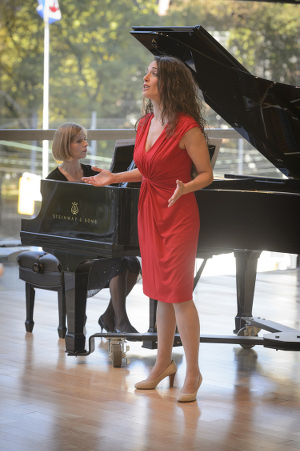
Lauren Segal performs in the Richard Bradshaw Amphitheatre. Photo: Chris Hutcheson
Today’s lunchtime concert in the RBA was given by mezzo-soprano Lauren Segal and bass-baritone Robert Gleadow with Sandra Horst at the piano. The programme was titled Gypsy Songs, Travel Songs. First up was Robert, who looks considerable less rakish without a beard, with three songs from Vaughan Williams’ Songs of Travel. All three; The Roadside Fire, Bright is the Ring of Words and Whither Must I Wander are familiar recital fare but sung as well as this are a joy to hear. Gleadow has a big, full sound with quite a range of colour but he can also float very beautiful high notes. It was very impressive.
Lauren came next with Dvorák’s Cigánské melodie. These songs cover a wide range of moods, all vividly captured by Segal. Her voice is dark toned and very mezzo; no soprano 2 here! Onewould think her perfectly suited for gloomy Slavic rep until, as she did later, she cut loose on de Falla’s Siete canciones populares Españolas. Here she was every bit the dark eyed Spaniard singing with fiery passion of love and loss. Both sets ended with fierce, bravura numbers brought off with panache. The lady knows how to work a crowd!
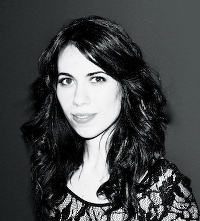
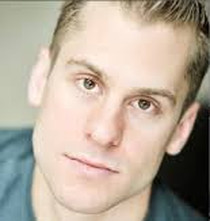 I spoke earlier today with Lucia Cesaroni and Adrian Kramer (via Skype to the west coast where Lucia is appearing with Pacific Opera Victoria) about their upcoming “recital” Extensions of Us; Melody and Movement at the Extension Room on November 13th. It’s pretty much received wisdom that in Toronto the traditional art song recital is dying or maybe already dead. Certainly audiences have declined and the format seems unable to draw the younger audience, even of opera goers. I asked Lucia and Adrian about the motivation and inspiration for their show and also asked them to tell me a little more about what we are going to see and hear.
There a few things coming up in Toronto over the next week or two that might be worth a look.

 Tomorrow at noon in the Richard Bradshaw Amphitheatre Lauren Segal and Robert Gleadow accompanied by Sandra Horst are giving a free concert featuring Dvořák’s Gypsy Songs, de Falla’s Siete canciones populares Españolas, Ibert’s Chansons de Don Quichotte and Vaughan Williams’ Songs of Travel.

