

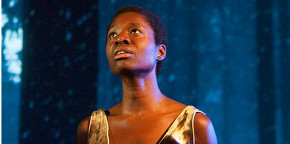
 There are a few things I didn’t mention in my back half of April post. Century Song opened a couple of nights ago at Crow’s Theatre. It’s a live performance hybrid, inspired in part by Virginia Woolf’s Orlando and Alice Walker’s In Search of Our Mother’s Gardens, Soprano Neema Bickersteth melds classical song (music by Sergei Rachmaninoff, Oliver Messiaen, John Cage, Georges Aperghis and Reza Jacobs) and movement to inhabit a century of women whose identities are contained within a single performer. Details here.
A few additions
Reply

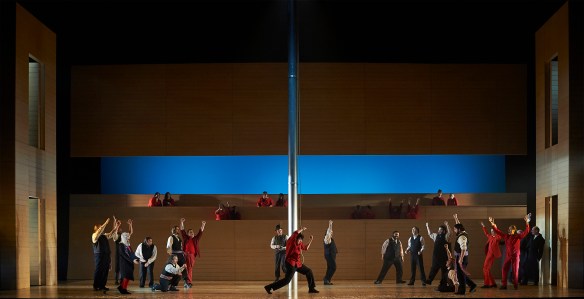
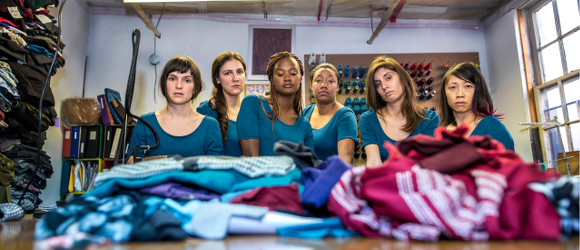
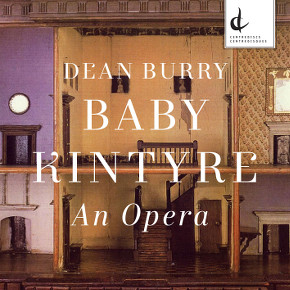 All families, they say, have secrets. Few perhaps are as lurid as what came to light at 29 Kintyre Avenue, Toronto (about 2km from here) in the summer of 2007 when a contractor renovating the house discovered the mummified body of an infant wrapped in a 1925 newspaper. Incredibly, the CBC was able to track down the last surviving member of the household from that era, a 92 year old woman living in a retirement home in up-state New York. Her recollections, which formed the subject of a short two part radio documentary, provided a lot of context and background but few hard facts. Who the baby was and how it came to be under the floorboards remains very much a mystery.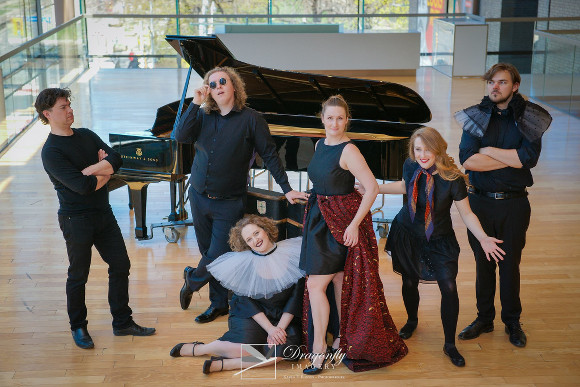
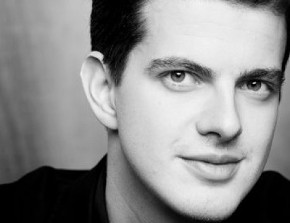 Last night Philippe Jaroussky appeared with Les Violins du Roy and conductor Matthieu Lussier in a mostly Handel program at Koerner Hall. It was a very good evening. Les Violons du Roy is a pretty small band; less than twenty including continuo, but they manage to produce quite a big sound while remaining elegant and flexible in a thoroughly idiomatic baroque way. The instrumental component consisted of a Handel overture, Fux’ Ouverture in D minor and Johann Gottlieb Graun’s (not the better known Carl Graun who was apparently his brother) Symphony in B Flat Major. It was a pretty good sampling of what one might have heard in the courts of Germany in the early 1700s and rather enjoyable.
 A couple of years ago I produced a series of “best of” lists for video recordings, which I’ve updated from time to time. One can find them on the
  Here’s a round up of news and announcements from my mail box.
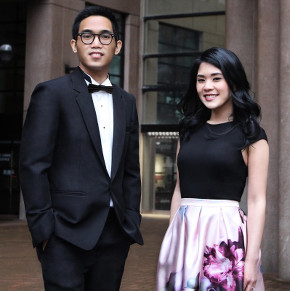 March was a curiously quiet month. April starts to look busier, at least once we get past Easter. Tonight, Against the Grain have their monthly pub night at The Amsterdam Bicycle Club. Snow is forecast so you should all stay away and then maybe I’ll be able to get in. On Saturday at 4pm there’s a free (or PWYC) recital in Ernest Baumer Studio featuring soprano Stephanie Nakagawa and pianist Peemanat Kittimontreechai. They will be performing arias from contemporary Canadian operas. On Thursday 13th Philippe Jaroussky and Les Violins du Roy will be appearing at Koerner Hall. It’s at 8pm and features mainly fairly obscure Handel material.
 operaramblings