

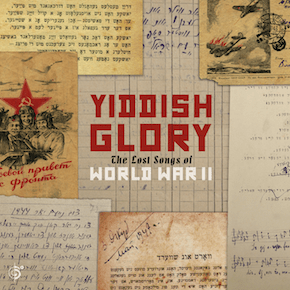
 OK so it’s a bit off the Operaramblings beaten path but there’s a concert coming up at Koerner Hall on August 28th that intrigues me. It’s called Yiddish Glory and it resurrects anti-fascist music that documents Nazi atrocities and Jewish resistance/partisan activities in the Soviet Union after the German invasion of 1941. They were collected by a team of Jewish Soviet ethnomusicologists led by Moisei Beregovsky during the war, but shortly afterwards, during Stalin’s anti-Jewish purge, the members were arrested, their work confiscated, and they died thinking the music was lost to history. In the early 2000s, a lucky coincidence brought University of Toronto Professor Anna Shternshis to Kiev, where she learned that the music had actually survived in the intervening decades following the researchers’ arrests, and in the years since, has led the research project to restore these songs. There’s also a CD. I’ve listened to a few tracks. The music is clearly Jewish and very much of the time. It’s redolent of horror and resistance and ultimately, hope. I find it deeply moving.
Yiddish Glory
2
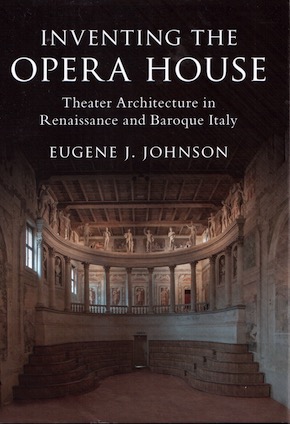 Inventing the Opera House: Theatre Architecture in Renaissance and Baroque Italy by Eugene J. Johnson is a scholarly but readable account of the prehistory and early history of the form we know today as an “opera house”. It’s fair to say that the road to the horseshoe shaped auditorium with ground floor seating and tiers of boxes looking over an orchestra pit to a deep stage was far from straightforward, perhaps even tortuous, and Professor Johnson lays out that journey in some detail.
 Tapestry Opera has announced participants for this year’s LIBLAB. This year’s librettists participants include playwright Colleen Murphy, Kanika Ambrose and Guildhall artist-fellows Lila Palmer and Daniel Solon. Composers joining the 2018 program are: Rene Orth, composer in residence at Opera Philadelphia, Benton Roark, composer of last season’s Dora-nominated Bandits in the Valley, Ian Cusson August Murphy-King. The 2018 LIBLAB ensemble will be led by musical directors Jennifer Tung and Andrea Grant and director Michael Hidetoshi Mori. Singers include soprano Teiya Kasahara, mezzo-soprano Stephanie Tritchew, tenor Keith Klassen, and baritone Peter McGillivray.
 So no Last Night of the Proms style extravaganza this year (Probably
 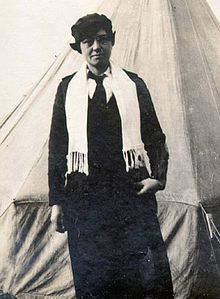 Your Daughter Fanny is a 45 minute long chamber opera with music by Alice Ho and libretto by Lisa Moore based on letters written by WW1 Newfoundland VAD nurse Frances Cluett (which can also be found in


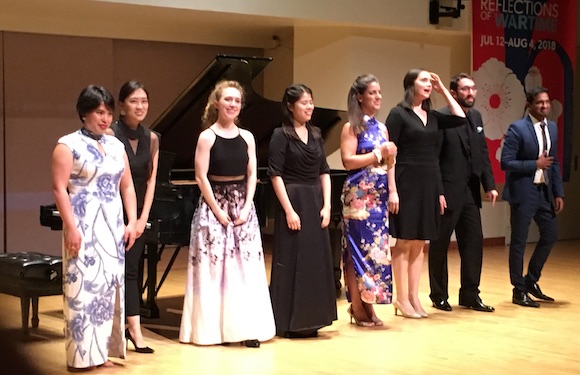
 operaramblings