

Suppose, rather than a plummy BBC voiced narrator, that Benjamin Britten had chosen an animated dog in space to narrate The Young Person’s Guide to the Orchestra and that, rather than use variations on a theme by Purcell he’d used extracts from contemporary Canadian composers he might just have come up something like the Kingston Symphony and Gazelle Automations’ Harmon in Space. Or maybe not. But in any case this new series for kids mixes animation with real musicians to create a guide to the instruments of the orchestra. The first episode (of a planned twelve) deals with the flute. And what rhymes with “flute”? Well “cute” of course. And it is. Very. You can find it on the KSO’s Youtube channel (subscribe for future episodes) or via this direct link.


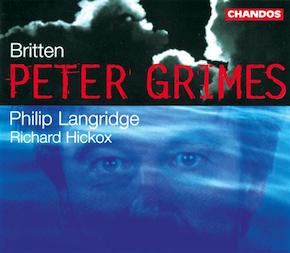 Earlier this month I was reviewing a new CD recording of Britten’s Peter Grimes for Opera Canada (you can read it in the Fall 2020 issue or

 The COC has announced a virtual (almost) fall season. It’s mainly community outreach with an emphasis on young people which is entirely consistent with conversations I’ve had with the COC (and indeed other companies).


 We are starting to see full length, made for streaming content appearing rather than the rather variable quality, mainly amateur efforts of a few months ago. Here a couple of examples:
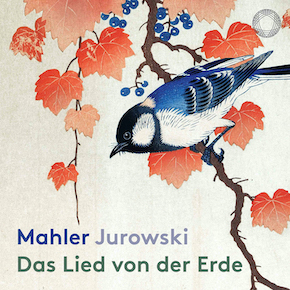 Vladimir Jurowski is a notable Mahler interpreter so a new recording of Mahler’s great symphonic song cycle Das Lied von der Erde is welcome; especially when Jurowski’s own Rundfunk-Sinfonieorchester Berlin is combined with soloists as fine as Sarah Connolly and Robert Dean Smith.
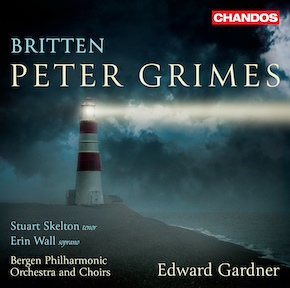 This new recording of Britten’s Peter Grimes was recorded from semi-staged performances in the Grieghallen in Bergen in November last year. It’s very good indeed. Of course, there are many good audio and video recordings of this piece going back to the composer’s own version with Peter Pears in the title role; recorded in 1959 and many fine singers have recorded the title role. To stand out from the field, a new recording needs an outstanding Grimes and in Stuart Skelton this version has one. He manages to encompass both the brutal, gritty side of Grimes as well as the more ethereal side. Pears did the latter brilliantly but could never quite manage the grit. Vickers, who practically owned the role in the 1970s, was brutal but didn’t have the voice or the stage skills to bring out the gentler side. Perhaps the first person to really portray the full complexity of the character was the late Philip Langridge and there’s much about Skelton’s portrayal that reminds one of him. It shades toward the delicate most of the time with some lovely singing in “Now the Great Bear” and in the mad scene. But when Skelton needs to be brutal he’s downright scary.

