Yesterday’s concert in the Music Garden at Harbourfront was a celebration of Métis resilience featuring works by three Métis composers performed by the Wood and Wire Quartet with mezzo-soprano Rebecca Cuddy. The full program is here.


Yesterday’s concert in the Music Garden at Harbourfront was a celebration of Métis resilience featuring works by three Métis composers performed by the Wood and Wire Quartet with mezzo-soprano Rebecca Cuddy. The full program is here.
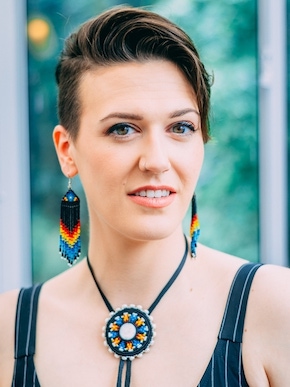 Today at 4pm in The Music Garden (Harbourfront) there’s a free concert of music by Métis composers performed by Rebecca Cuddy and the Wood and Wire Quartet. Here’s the full program:
N. Weisensel, Three Songs from Li Keur: Riel’s Heart of the North, book and text by SM Steele
“The Mending of Violence Song”
“Beneath the Endless Azure Sky”
“You Come and Go”
T. Patrick Carrabré, Métis Songs (2022)
Chanson de la Gornouillèr (from a song by Pierre Falcon)
My People Will Sleep… (story chosen by the soloist)
Since When (poem by Gregory Scofield)
I. Cusson, Five Songs on Poems of Marilyn Dumont (2017) (new arrangement for voice and string quartet)
Letter to Sir John A. MacDonald
The Red & White
Helen Betty Osborne
Half-Human/Half Devil (Halfbreed) Muse
The Devil’s Language
Sorry for the short notice but I only just heard about it.
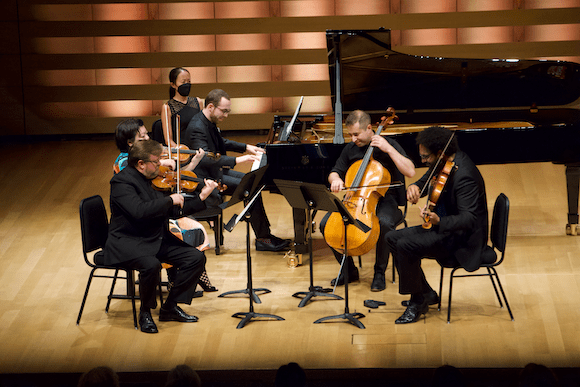
Toronto Summer Music opened on Thursday night at Koerner Hall with a concert called Inspirations featuring chamber and vocal music drawn from folk influences. It began with Schumann’s Five Pieces in Folk Style Op. 102 for piano and cello played by Rachael Kerr and Matthew Zalkind. The folk roots are pretty clear here and since the pieces were written with amateur performance in mind those roots aren’t over elaborated and the result is satisfying. Not that they got an amateurish performance. Quite the opposite.
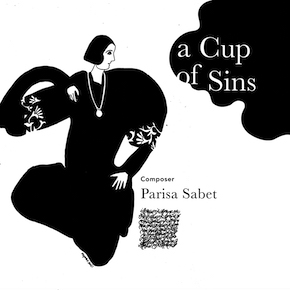 A Cup of Sins is a new CD release of works by Iranian-Canadian composer Parisa Sabet. If there’s a unifying theme it’s religious/cultural persecution in Iran and there’s a strong Bahai influence. The six pieces are scored for various combinations of voice, piano and small ensemble and add up to about an hour of very rewarding music.
The first piece, Shurangiz, is a riff on music for the tar (a kind of Iranian lute) and it’s scored for flute, clarinet, piano, violin and cello. It’s an interesting combination of traditional Iranian influences with a nod to Western minimalism. It’s quite meditative in mood. Continue reading
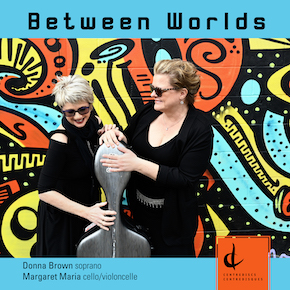 Between Worlds is a collaboration between composer/cellist Margaret Maria and soprano/poet Donna Brown. It uses words and music to explore the tension between Thanatos and Eros via a symbolic journey from Sunset to Sunrise. The piece is in eight movements totalling a little over half an hour of music. The style and technique varies widely. Two poems “Sunrise” and “Sunset” are spoken over a sparse cello commentary. Others are sung but they too vary from a fairly conventional singing style backed up by complex, extended cello technique to a more declamatory style with metronomic accompaniment. To me it felt (in a weird way) “bardic”. By which i mean that the instrument was largely being used to emphasise the text in a way that Homer or the Beowulf poet might have related to. It’s also clearly a very personal statement about art, life and death and one’s reception of it is going to be impacted by how closely one can align with it philosophically.
Technically it’s well recorded (at Raven Street Studios in Ottawa) standard CD quality and comes with full texts and extensive bilingual (English/French) documentation.
Catalogue number: Centrediscs CMCCD 30522
 Literally everything on my calendar for July is part of the Toronto Summer Music Festival. I previewed that back in April. The full schedule. including Regen and shuffle concerts is available on the TSMF website.
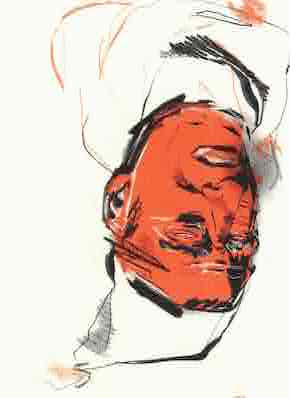 Last night the Happenstancers presented a short but extremely enjoyable Pierrot themed concert at 918 Bathurst. The major work, unsurprisingly, was Schoenberg’s melodrama Pierrot lunaire for voice and chamber ensemble. It was presented in two parts. The first fourteen poems formed the first half of the programme which closed out with the concluding seven. It was extremely well done. Danika Lorèn was an excellent choice as the voice. She has the technique for Schoenberg’s tricky sprechstimme as well as the innate musicality and sense of drama the piece needs. The standard “Pierrot ensemble” is perfectly suited for the Happenstancers typically eclectic mixing of instruments. Here we had Brad Cherwin on clarinets, Rebecca Maranis on flutes, Hee-See Yoon on violin and viola, Sarah Gans on cello and Alexander Malikov on piano. Simon Rivard conducted. Skilful playing and well timed interplay between instruments and voice made for a most satisfactory experience. Continue reading
Oscar Straus’ A Waltz Dream opened last night in a Toronto Operetta theatre production at the St. Lawrence Centre. The piece premiered in Vienna in 1907 and soon became a huge international hit with various English versions appearing quite early on. The version given by TOT appears to be a 1970s version with book by Michael Flanders, Edmund Tracey and Bernard Dunn and the music adapted and arranged by Ronald Hanmer.
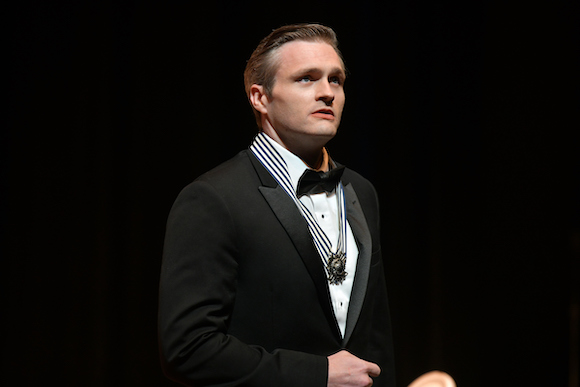
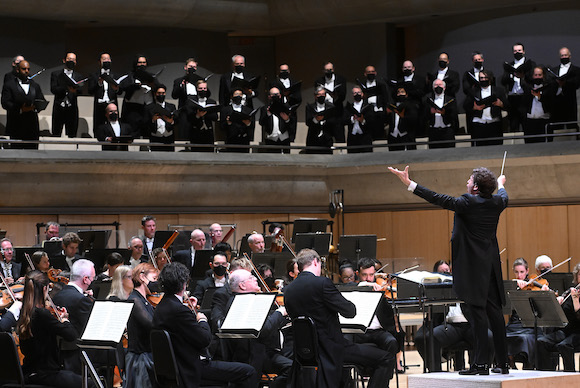
Last night’s TSO program, conducted by Gustavo Gimeno, kicked off with three short pieces by Canadian composers. All were impressive. The first two; Adam Scime’s A Dream of Refuge and Bekah Simms’ Bite are reflections (to some at extent at least) on the pandemic. The Scime piece is lighter and brighter. There is uncertainty there but ultimately it seems to speak of hope. The Simms piece wis much darker with heavy percussion and blaring brass. A sense of uncertainty permeates the string writing. It’s quite disturbing. Roydon Tse’s Unrelenting Sorrow was written for those who have lost loved ones. It’s quite melodic and has strong contrasts between dramatic and more lyrical passages. Sorrowful perhaps but not unrelentingly so.
 A couple more things coming up this month.
 operaramblings