Guth’s Clemenza

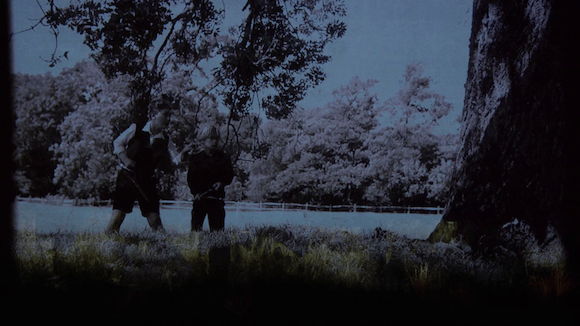
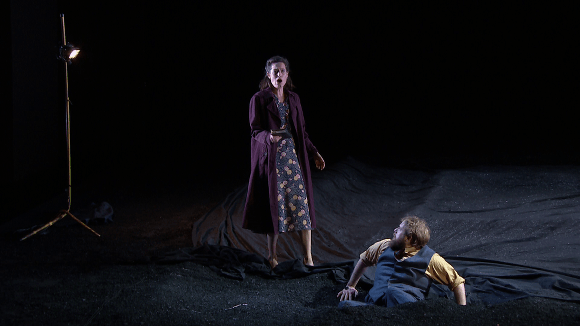
Claus Guth’s Salzburg da Ponte cycle is certainly my favourite trifecta and they are right up on my list for top picks for all three operas so I was intrigued to see what he would do with the much less recorded La clemenza di Tito which he directed at Glyndebourne in 2017.  Bottom line, I’m not at all convinced by it.

1.video

Continue reading

60s Figaro from Glyndebourne

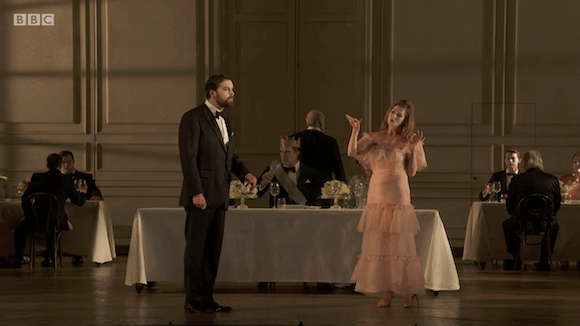
No opera says Glyndebourne like Mozart’s Le Nozze di Figaro.  It opened the first season in 1934 and inaugurated the new theatre in 1994.  Michael Grandage’s production which opened in 2012 was, I think, Glyndebourne’s fifth.  In any event it’s a fairly traditional affair though with the setting updated to the 1960s (though still set in a palace in Seville and I’ve got a nagging feeling that late Franco era Spain didn’t have much in common with the Haight and Carnaby Street but there you go).  The updated setting does allow for some visual gags with ridiculous 1960s dance moves but otherwise it could pretty much be anywhere, anytime.  There’s no concept and Grandage’s focus is on the interactions between the characters and the way they can be expressed in a relatively intimate house.

1.austinhealey

Continue reading

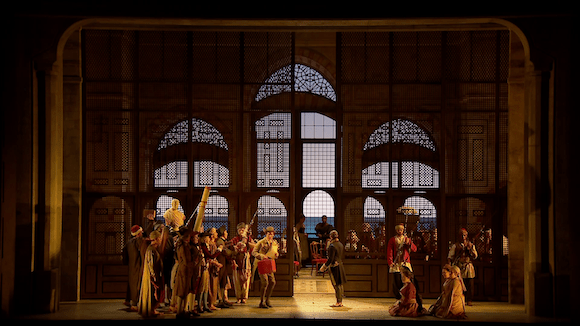
McVicar’s Entführung

I think I’ve got used to David McVicar productions or, at least, what he’s produced in the last ten years or so.  The director’s notes will sound erudite and convey the impression that he’s gained some vital new insight into a well known work.  The actual production on stage will be almost entirely conventional with maybe the odd visual flourish but nothing to start the synapses firing.  This is very much the case with his 2015 production of Die Entführung aus dem Serail from Glyndebourne.  The “big idea” is that Bassa Selim is caught between two worlds; the ‘west” and the “east”.  Well duh!  This is as revelatory as pointing out that Mimi has TB.  This “revelation” is the reason/excuse for presenting the work with dialogues unaltered and uncut.  This is very much a mixed blessing.  Yes, it does allow some character development that’s otherwise missing but on the other hand it emphasises the fact that without some interesting new angle Entführing is basically dramatically a bit feeble.  Is she faithful?  How dare he doubt it?  Please forgive me.  Why should I?  Lather, rinse, repeat.  Enter Osmin.  Hang them.  Impale them. Daggers and poison.  Over and over.

1.baumeister

Continue reading

It’s pure madness!

That’s what Laurent Pelly said about the idea of a Frenchman directing a French opera adaptation of a Shakespeare play for an English audience during Shakespeare 400.  Maybe he has a point but I think his 2016 production of Berlioz’ Béatrice et Bénédict probably gets as much as there is to be got out of a curiously uneven work.

1.chorusboxes

Continue reading

Brett Dean’s Hamlet

A new opera by Australian Brett Dean based on Shakespeare’s Hamlet premiered at Glyndebourne this summer.  A recording of it was broadcast on BBC television on 22nd October.  I’ve now had a chance to watch it in full.  I wasn’t sure what to expect as it get somewhat mixed reviews.  I was impressed.  Very impressed.  First off, Matthew Jocelyn, who wrote the libretto, and Dean know how to turn a play into an opera.  They understand that it’s not just about taking a bunch of dialogue and giving it a soundtrack.  What they do is very clever.  All the text is Shakespeare but it’s split up and moved around.  There’s repetition and sometimes words are reassigned to different characters. Characters sing parallel lines. Then, of course, there’s a chorus.  A good example is when the players appear before performing The Death of Gonzago.  They get lines taken from various of Hamlet’s soliloquies chopped up and rearranged.  It’s effective and allows the main elements of the story to be told in under three hours of opera.  The main bit that’s missing is the whole Fortinbras and the Norwegians thing but that often gets cut anyway.

1.ophelialaertes

Continue reading

Dani’s Rosina

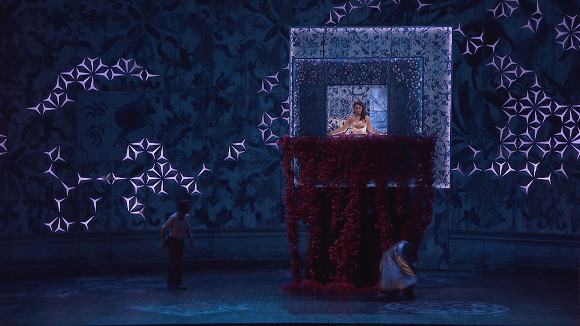
One rather gets the feeling that the 2016 Glyndebourne production of Rossini’s Il barbiere di Siviglia was built around the lady of the house.  It makes a lot of sense.  There may have been better singers in the role of Rosina but I doubt there has ever been a better mover than Danielle de Niese.  She’s matched move for move, eye candy for eye candy by the guys; Björn Burger as Figaro and Taylor Stayton as Almaviva.  There’s more mature comedy from the always fantastic Alessandro Corbelli as Bartolo and the irrepressible Janis Kelly as Berta.

1.balcony

Continue reading

The Romans, being wanton, worship chastity

Continuing my struggle with Britten’s The Rape of Lucretia I got hold of the Blu-ray recording of Fiona Shaw’s 2015 Glyndebourne production.  I’m beginning, I think, to see my way to understanding the problems inherent in the libretto and some of the strategies that can be used to overcome them.  The more minor problem is Junius and the odd scene early in Act 2 where he seems to be inciting the Romans to revolt while acting as a general in Tarquinius’ army while, also, apparently, been in some sense complicit in the rape.  So we have a two faced power hungry schemer who is oblivious to the consequences of his mischief making; whether rape or rabble rousing (a sort of Roman Boris Johnson).  Most productions ignore this aspect of things and probably rightly.

0-chorus

Continue reading

The clutter of bodies

The latest Handel oratorio to be given the operatic treatment by Glyndebourne is Saul, which played in 2015 in a production by Australian Barrie Kosky.  It’s quite a remarkable work.  The libretto, as so often the work of Charles Jennens, takes considerable liberties with the version in Samuel and incorporates obvious nods to both King Lear and Macbeth as well as more contemporary events.  David’s Act 3 lament on the death of Saul, for instance, clearly invokes the execution of Charles I.  What emerges is a very classic tragedy.  Saul, the Lord’s anointed, is driven by jealousy and insecurity deeper and deeper into madness and degradation and, ultimately, death.  This is the basic narrative arc of the piece.

1.head

Continue reading

The Rake at 35

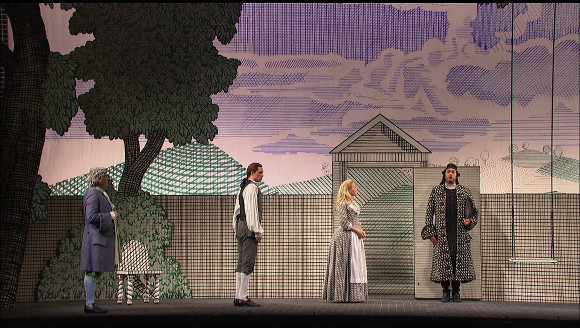
David Hockney and John Cox’s production of Stravinsky’s The Rake’s Progress first saw the light of day at Glyndebourne in 1975 and there’s a video of it from back then.  It’s been revived umpteen times since, all with Cox directing rather than an overawed revival director.  It was done again in 2010, with Vladimir Jurowski conducting, recorded and issued on Blu-ray and DVD.  It’s fascinating.

1.garden

Continue reading

Gounod’s Mireille

Gounod’s Mireille is a bit of a rarity and with good reason.  It’s got everything that modern audiences find hard to take in 19th century French opera.  It’s revoltingly wholesome with a bit of the supernatural, some patriarchal nastiness and a whole lot of Catholic schmaltz thrown in culminating in a final scene where the dying heroine (of course the heroine dies!) is carried off to heaven by angels while everybody else is suitably pious.  It also has some pretty good tunes and a fiendishly difficult soprano lead part.

1.cornfield Continue reading