
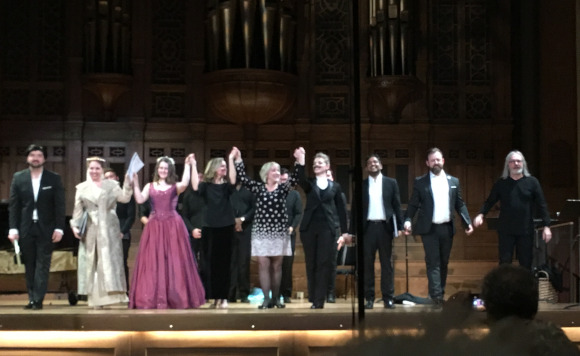
 Thursday’s concert in the Music in the Afternoon series at Walter Hall was curated by Marion Newman and featured herself, soprano Melody Courage, baritone Evan Korbut and pianist Gordon Gerrard. It featured some classic opera duets and trios ranging from the Flower Duet from Madama Butterfly to an exuberant “Dunque io son” from the Barber of Seville along with Berlioz’ “Vous soupirer” from Beatrice et Bénédict (which sounded like title should translate as “you will be immersed in warm soup”). These numbers were all very well done and there were a couple of solo pieces too with Melody singing the Poulenc La Fraicheur et le Feu with great verve and Evan chipping in with an exuberant “Sit down, you’re rocking the boat” from Guys and Doills.
Marion Newman and friends
2


 operaramblings