
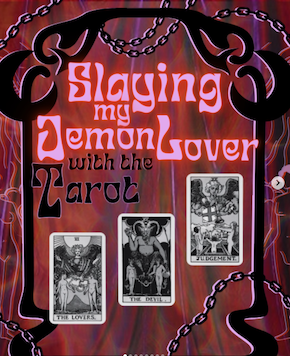
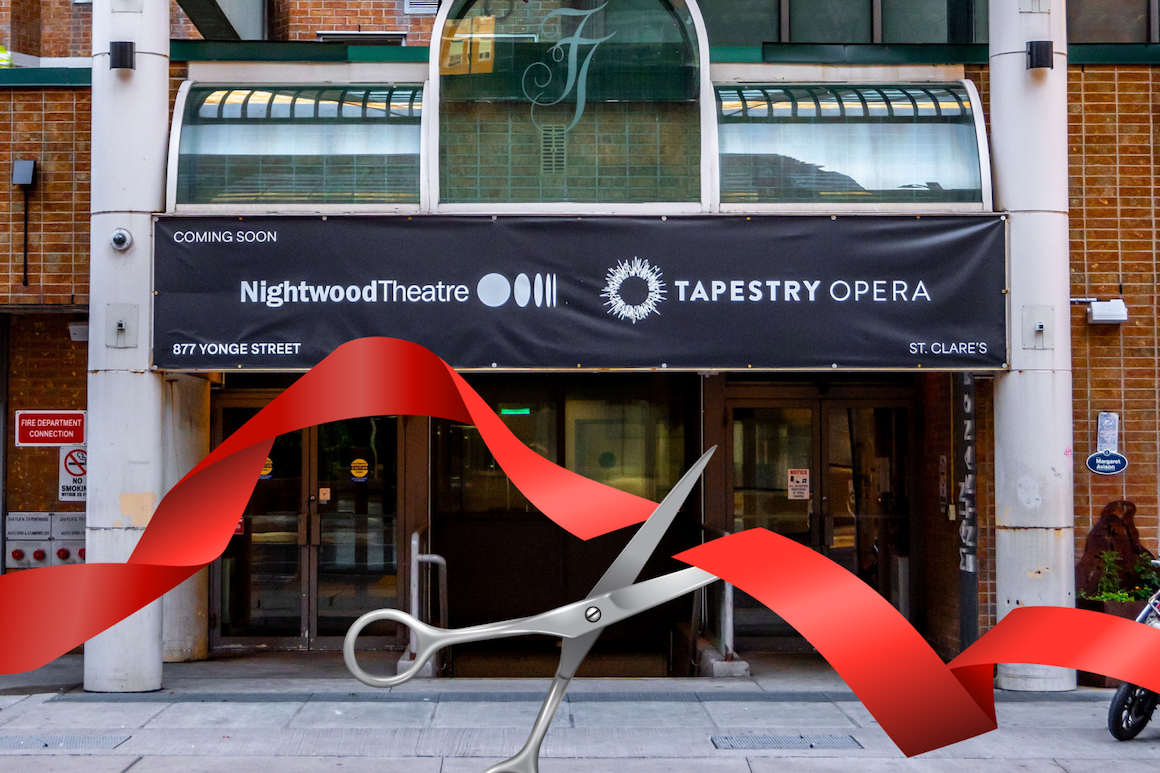
 I’ve been complaining fior ages that the sort of curated artsong concert by young singers disappeared with COVID. Monday night gave me cause for hope. The first concert in Tapestry Opera’s Free Underground Concert series was given on Monday evening by a new initiative called GentleFreak. It’s led by Danika Lorèn who has form in this area.
Slaying My Demon Lover is a concept by Daevyd Pepper and consists of readings and music around the idea of loss or break up (romantic or otherwise). Monday’s show was a cut down version of the whole thing which can be seen on the evening of the 15th at Arrayspace (tickets here). It’s very varied with some very lyrical pieces like Hahn’s L’heure exquise (sung beautifully by Queen Hezumuryango) and much mor abrasive material like Weill’s Je ne t’aime pas (sung forcefully by Reilly Nelson). There was musical theatre material on the same theme; for example Sondheim’s Losing My Mind (Danika) and some weirder or more playful numbers like George Aperghis Récitation 14 (Danika) and Vernon/Ivor’s 715 CRΣΣKS sung into the piano by Daevyd. Accompaniment throughout was by Claire Harris on piano. Bottom line it all worked and came together to make a most satisfying and very welcome show.
Tapestry’s Free Underground Concerts programme runs on selected Monday evenings from 6pm to 7pm at the Nancy and Ed Jackman Performance Centre. Next up on the 23rd is a preview concert of Kevin Wong’s new musical In Real Life.
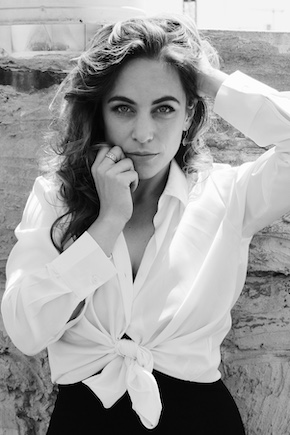
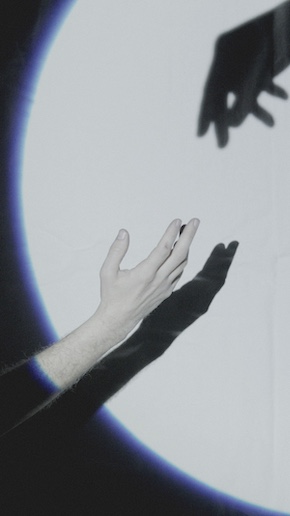

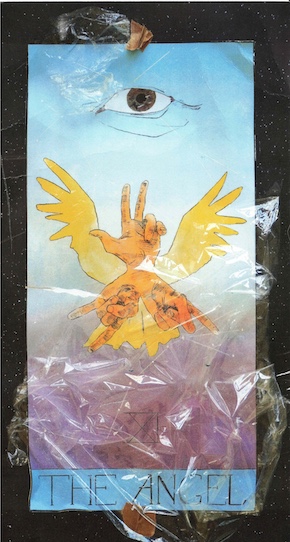 The second programme in this year’s West End Micro Music Festival had its first performance at Redeemer Lutheran on Friday night. It was a mix of contemporary instrumental and vocal works with some unusual Hildegard von Bingen and some interesting lighting (Billy Wong) and staging.
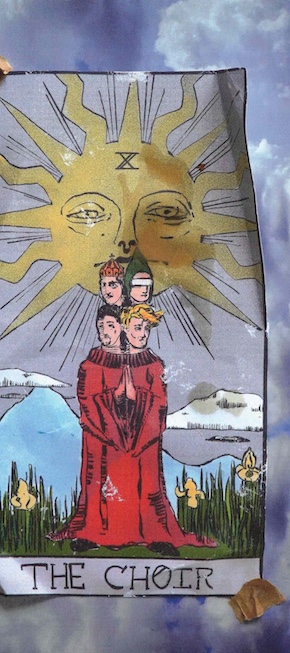 This year’s West End Micro Music Festival opened on Friday night at Redeemer Lutheran with a programme titled Ecstatic Voices. It was a mix of works for eight part a cappella vocal ensemble and a couple of solo tuned percussion pieces.
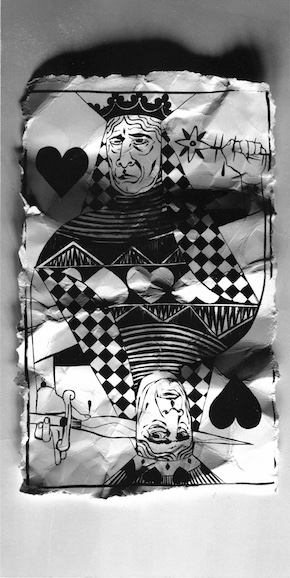 The Happenstancers ended their 2023/24 season last night at 918 Bathurst with a concert called Babes in Toyland. It consisted of mainly late 20th and 21st century chamber works with one unusual Mozart piece (K617 for glass harmonica (Kevin Ahfat), viola (Hee-Soo Yoon( ,cello (Peter Eom), oboe (Aleh Remezau) and flute (Tristan Durie) to spice things up.
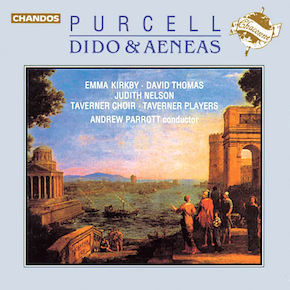 And so we come to the third in our historical sequence of recordings of Purcell’s Dido and Aeneas. We are talking about Andrew Parrott’s recording with the Taverner Players and Choir recorded at Rosslyn Hill Chapel in 1981. It’s a record that I bought when it first came out and has been a point of reference for me ever since.
 operaramblings