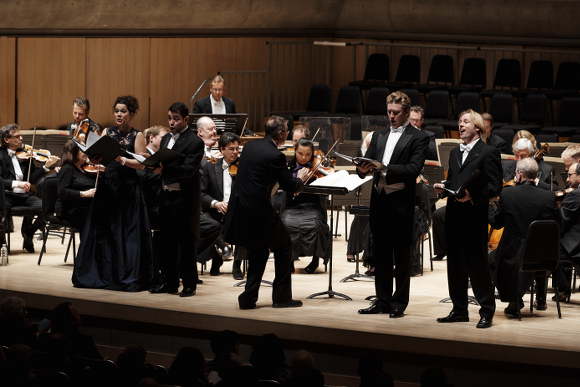
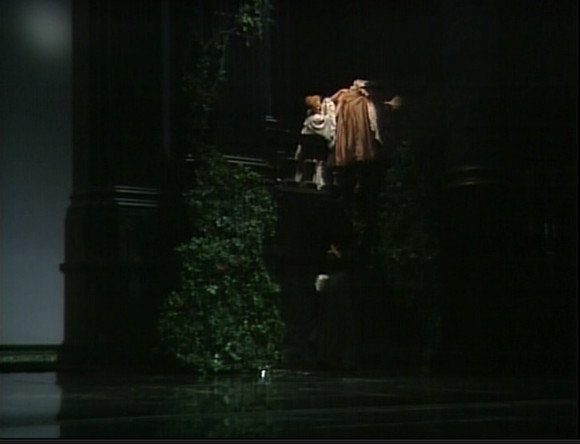
Last night, at Roy Thomson Hall, the TSO presented a two part Mozart program. The first half consisted of pieces from two abandoned opera projects; the buffa Lo sposo deluso and the Singspiel Zaide. The second half consisted of the better known, but incomplete, Mass in C Minor.
Tag Archives: mozart
Canadian Opera Company announces rather more than just the 2015/16 season
Last night was the “event” at which the COC brass and guests, with a bit of help from Brent Bambury, announced the upcoming season to a packed house of subscribers and friends. What struck me was how much news was packed in. It was far more than the usual schedule presentation with announcements of several major new projects. But first the season. Continue reading
Abduction in Aix
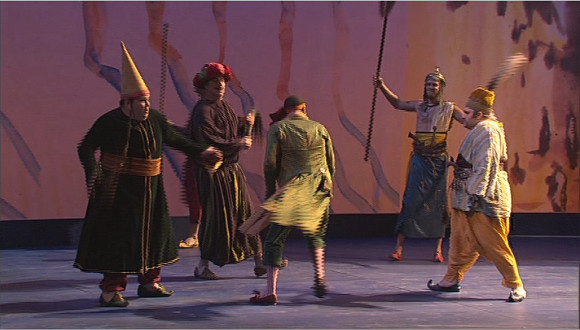
Mozart’s Die Entführung aus dem Serail is perhaps the most difficult of his major operas to bring off successfully. I dealt with some of the issues in a review of Hans Neuenfel’s production so I won’t repeat myself here. Jérôme Deschamps and Macha Makeïff’s production for the Aix-en-Provence Festival, filmed in 2004, has several interesting features that cast an interesting light on the main characters. The most drastic is the treatment of Osmin. Here he’s rather dignified and far from the fat, brutal, somewhat comic lecher of convention. That side of his character is conveyed by five, mostly silent, sidekicks. These guys are everywhere, portraying both Osmin’s baser nature and the “walls have eyes and ears” aspects of the story. They are made to look rather dim and get some fairly funny business to play with. Next we have Bassa Selim played by a dancer. This makes it easier to portray him as sensitive but not a wimp through the use of extremely virile choreography. Clever! Finally, both Pedrillo and Blondchen are sung by people of colour. That can’t be a coincidence. It certainly puts a very interesting spin on the confrontation between Osmin and Blondchen about how English girls are different from Turks. These ideas are played out against rather dramatically colourful sets and costumes with lots of comic business to make a fast paced and enjoyable romp that makes one think just enough about the underlying meanings.
Best of 2014
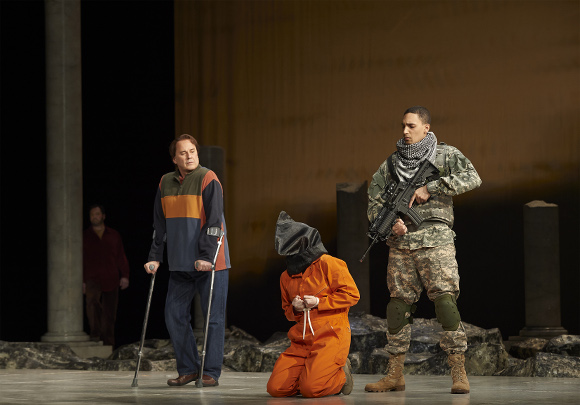
Well not so much “best of” as the good stuff that really made my year. It was a pretty good year overall. On the opera front there was much to like from the COC as well as notable contributions from the many smaller ensembles and opera programs. The one that will stick longest with me was Peter Sellars’ searing staging of Handel’s Hercules at the COC. It wasn’t a popular favourite and (predictably) upset the traditionalists but it was real theatre and proof that 250 year old works can seem frighteningly modern and relevant. Two other COC productions featured notable bass-baritone COC debuts and really rather good looking casts. Atom Egoyan’s slightly disturbing Cosí fan tutte not only brought Tom Allen to town but featured a gorgeous set of lovers, with Wallis Giunta and Layla Claire almost identical twins, as well as a welcome return for Tracy Dahl. Later in the year Gerry Finley made his company debut in the title role of Verdi’s Falstaff in an incredibly detailed Robert Carsen production. I saw it three times and I’m still pretty sure I missed stuff.
Bergman’s Magic Flute (Trollflöjten)
Despite having seen many Magic Flutes and pretty much every Bergman movie it’s only now that I’ve got around to watching his famous film of the Mozart opera, or rather Bergman’s version of the opera, because it differs in important ways from Shikaneder’s libretto. The basic concept is that Pamina is Sarastro’s daughter, who he has removed from the evil influence of her mother. He intends Pamina to inherit his kingdom and leadership of the Brotherhood but only after he’s found a suitable chap to keep her out of trouble which is, of course, where Tamino comes in. So whatever else has changed, the misogyny is intact. There are other changes too. Monostatos is almost written out of the script and a good deal of dialogue is changed or omitted, as are some musical numbers. The whole thing comes in at 135 minutes so maybe 30 minutes of material have been cut. None of this seems very radical today but must have raised a few eyebrows in 1975.
Uncle John
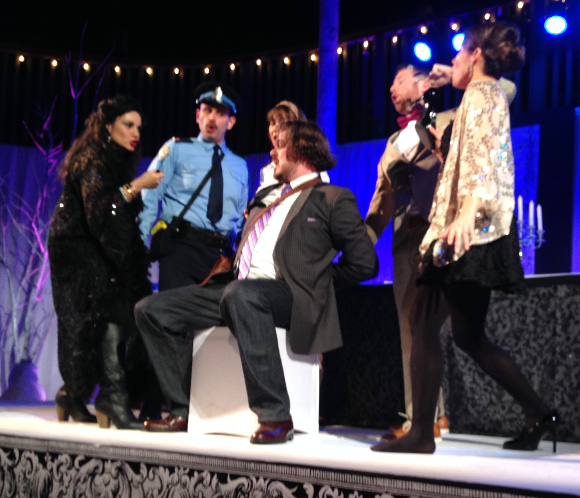
Against the Grain Theatre opened their new show last night on the worst day of the winter so far. Over 15cm of snow fell and the TTC was in utter chaos. It’s becoming a habit. Last year’s Messiah opened in weather almost as bad. Uncle John is the latest modern, Toronto based, adaptation of the Mozart/da Ponte trilogy. It follows on from last season’s smash hit Figaro’s Wedding and was created and produced with support from the COC and the Banff Centre. It will be followed by A Little Too Cosy next season. The formula is basically the same. It;s ataged in a non traditional spave; in this case a rock concert venue on Queen West. The libretto is in English and differs in detail from da Ponte while respecting the basic spirit of the original. It’s also very Toronto and a little bit Toronto opera scene insiderish. Much of the recitative is replaced by spoken dialogue. There’s no chorus and accompaniment to the singers is provided by piano and string quartet. It’s a musical solution I like. It adds enough weight and colour that one hardly misses the full orchestra while being, of course, much more affordable. It all works really well and if you can you should see it. I’m putting my more detailed thoughts under the cut because they contain lots of spoilers which you may not want to read if you are going.
The one we’ve all been waiting for
So Toronto’s hottest indie opera company, Against the Grain Theatre, has finally announced a 14/15 season. Not entirely unexpectedly they are bringing #UncleJohn; a transladaptation (©Lydia Perovic) of Mozart’s Don Giovanni to Toronto after it’s successful appearance in Banff this summer. With a new English libretto by Joel Ivany, #UncleJohn will be staged at The Black Box Theatre at 1087 Queen St. West’s vintage rock venue, The Great Hall. .
Don Tom
There are over 40 video recordings of Don Giovanni in the catalogue, dating back to 1954, and Thomas Allen sings the title role in quite a few of them. This one was recorded at La Scala in 1987 and features a very strong cast in a careful, traditional staging. It’s also pretty decent technical quality for the era. The director was Giorgio Strehler in a comparatively rare opera outing. His sets and costumes are of some vague aristocratic past with liveried footmen, big hats and twirling capes. It’s quite handsome but not in any way revelatory. Nor is any aspect of the production really. We are clearly in an aristocratic milieu. Tom Allen’s Don Giovanni is arrogant and proud with plenty of swagger. There’s no hint of ambiguity about Edita Gruberova’s Donna Anna or Ann Murray’s Donna Elvira and Francisco Araiza is a properly dutiful chump of a Don Ottavio. It’s all quite serious with comic relief only in the most obvious places. Having said that, there are some very effective scenes; especially the ending which has a an interesting lighting plot and manages not to be anti-climactic.
Roots
I was talking to Leslie Barcza of barczablog at a concert yesterday. He asked me what I was most looking forward to in the upcoming season and I was a bit stumped for an answer because there’s lots of good stuff in Toronto this season but nothing that really sets my pulse racing. Finally I answered with the TSO’s Dream of Gerontius, which, it turns out, is not exactly high on Lesley’s bucket list. This led to a brief discussion about how origins affect our reactions; that is until the actual concert interrupted our talk.
Abstraction from the Seraglio
Mozart’s Die Entführung aus dem Serail is a problematic opera. It’s got some great music but the libretto is pretty weak and its depiction of Turks is pretty unflattering. Maybe it seemed edgy less than a hundred years after the Ottomans besieged Vienna but today it just seems mildly embarrassing. Fortunately it’s a singspiel with dialogue rather than opera with recitatives so it’s fairly easy to play with the story line. For his 1998 production Stuttgart at the Staatsoper Stuttgart, Hans Neuenfels goes much further. He double each of the singers with an actor and pretty much rewrites the dialogue. He also introduces an element of metatheatre. This is a performance and everyone knows it. For example when Pedrillo is asked how he’s going to get hold of a ladder for the escape scene he replies that he’ll use the one they always use in this opera.