My review of the performance of Monteverdi’s L’incoronazione di Poppea that opened Toronto Summer Music is now up at La Scena Musicale.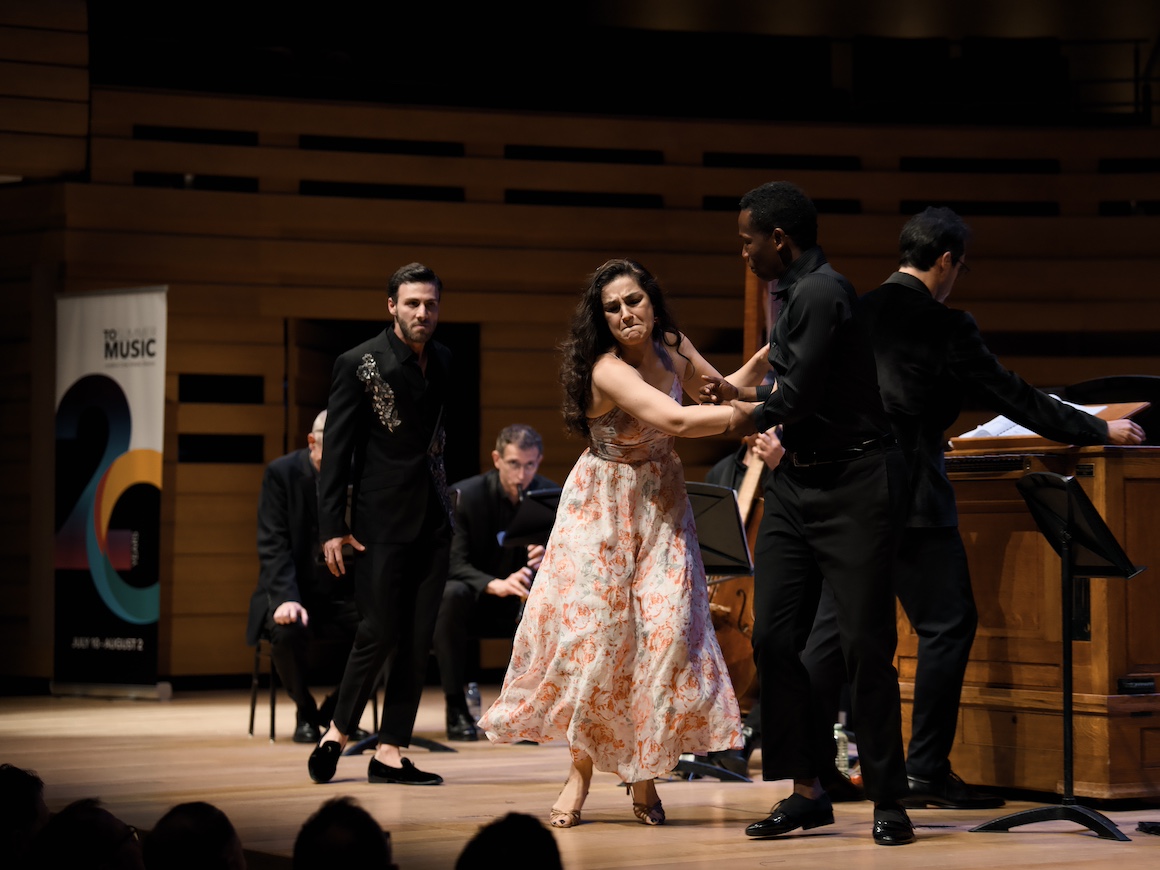
Photo:Lucky Tang

My review of the performance of Monteverdi’s L’incoronazione di Poppea that opened Toronto Summer Music is now up at La Scena Musicale.
Photo:Lucky Tang
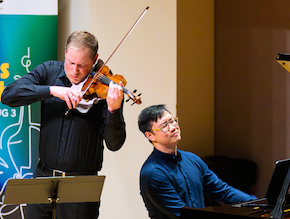 Last Tuesday lunchtime in the RBA we got a sneak preview of some of the music that will feature at this year’s 20th anniversary Toronto Summer Music.
There was soprano Caitlin Wood with Philip Chiu performing three French chansons; at least one of which will feature in Mary Bevan and Roger Vignoles’ Walter Hall recital. Cait herself will be performing as part of the cast of Brian Current’s opera Missing during the festival.
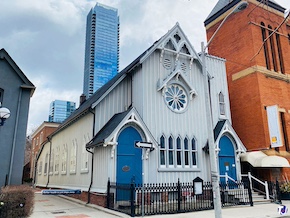 The final programme of Confluence Concerts season took place at Heliconian Hall on Wednesday night. It was billed as The Confluence Songbook and, if there was a theme, it was about doing live versions of music that had been streamed during the Plague. But really by the time we saw it it had outgrown that. For, in addition to the full line up of Confluence artistic associates there was a raft of guests which resulted in a fairly lengthy and very eclectic programme. Continue reading
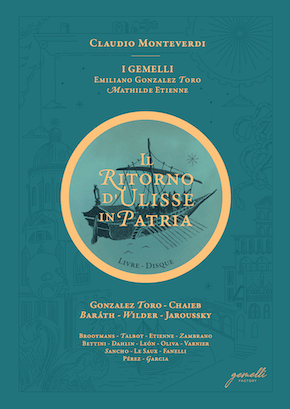 I use the word sumptuous in at least two senses. This is a really good recording with a fine period instrument ensemble and voices carefully matched to parts. It’s also very carefully researched in the quest to get as close as what Monteverdi’s audience heard as possible. It’s also sumptuous in presentation. It’s a beautiful hardback book with 3 CD slots built in. The binding and printing are Folio Society quality. It’s sumptuous also in terms of book content. The English language version has 165 pages of explanatory essays plus libretto and translation! There is a wealth of information on what was happening in Venetian theatre , as well as influences from further afield. There’s a section on how discoveries in the sciences were reshaping perspectives on art and aesrthetics and there’s a load of detail on the links between the commedia dell’arte and the opera stage. For a music loving bibliophile it’s a real treat.
The last time I reviewed a recording of Monteverdi’s L’Orfeo was ten years ago and it included Jordi Savali with La Capella Real de Catalunya and Le Concert des Nations. Oddly enough they also figure in a recording made last year at the Opéra Comique in Paris. Pauline Bayle’s production though is very different from the very HIP Liceu version.
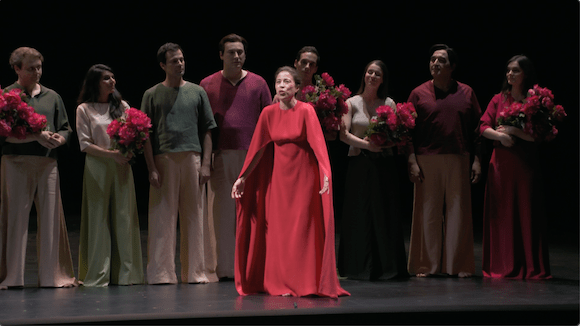
UK based vocal octet VOCES8 sang Tuesday night at St. James Anglican Cathedral. The whole thing was arranged by Daniel Taylor of the Theatre of Early Music at the UoT and marked VOCES8’s Canadian debut. I confess to a weakness for choral music in the Anglican tradition so this was a welcome opportunity to hear some very highly regarded performers. They didn’t disappoint. They are a finely tuned and highly skilled group.

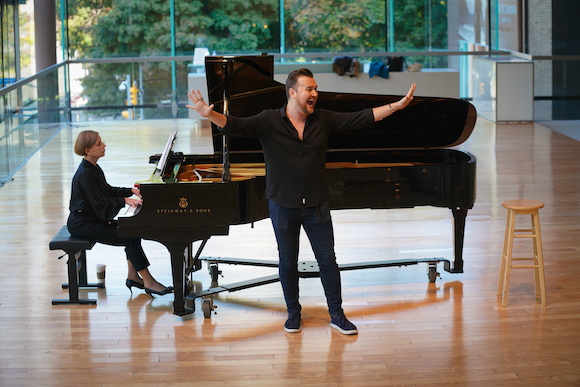
Tenor Mlles Mykannen, currently on the COC main stage as Steuermann in Der fliegende Holländer performed in the RBA on Tuesday accompanied by Sandra Horst. It was a bit unusual. There was no published programme and Mykannen talked a lot. Also a quiz at the end (really). He’s extremely engaging, even funny, and an excellent singer. His opera choices were unusual; Arnalta’s lullabye from L’incoronazione di Poppea, an “aria” from Silent Night and “Miles, Miles” from The Turn of the Screw. The last was particularly good with maximum spookiness achieved (though not for the first time I noticed just how “wrong” TotS sounds on piano!)
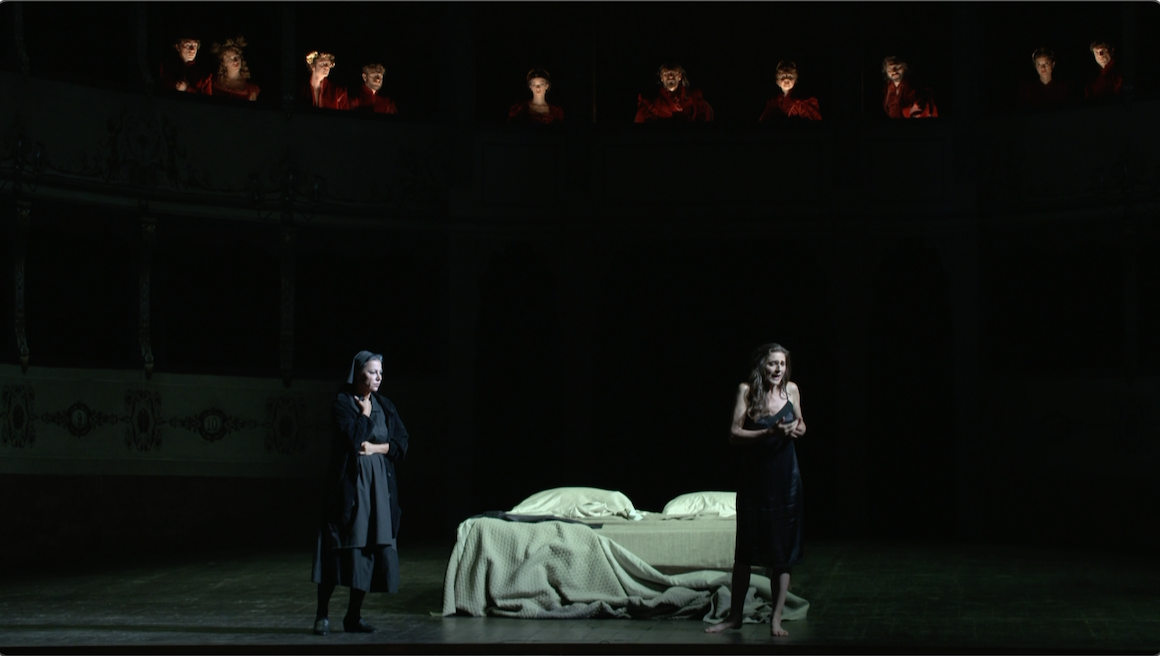
Robert Carsen’s 2021 production of Monteverdi’s Il ritorno di Ulisse in patria was recorded at the Teatro della Pergola during the Maggio Musicale Fiorentino. The theatre, opened in the 1660s and very much a “renaissance theatre”, is very much part of the production; the loge boxes are used during the prologue, entrances are made through the unusual parterre (individual chairs not rows of seats) and the gallery behind the stage is used by the gods to observe the action below. Monteverdi used three distinct styles of music for gods, royals and lesser folk, Carsen mimics this by giving the three orders distinct costume and acting styles. The gods (and there is the full pantheon, not just the ones who appear in the opera, each with his or her distinctive emblem), costumed in opulent crimson 16th century style costumes, act in a stylised manner. The royals get smart modern dress and naturalistic acting while the others are scruffier and act more broadly.
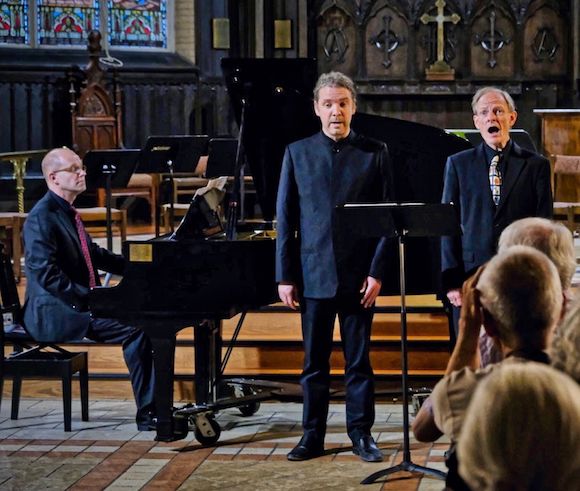
Last night’s Toronto Summer Music concert at the Church of the redeemer was headlined by Daniel Taylor, Charles Daniels and Steven Philcox but, somewhat to my surprise, also featured multiple fellows from both the art song and chamber music programmes.
The “headliners” kicked things off with Britten’s canticle Abraham and Isaac, based on one of the Chester Mystery Plays. I thought I knew this piece but soon realised I was confusing it with the setting of Owen’s The Parable of the Old Man and the Young in the War Requiem! It’s an interesting piece with a very medieval Catholic take on an Old Testament story. It was performed here with the delicacy and attention to detail I’d expect from these performers.

David Fallis
David Fallis’ last show after 28 years as Artistic Director of the Toronto Consort is, perhaps appropriately, the earliest opera in the repertoire; Monteverdi’s Orfeo. The first performance of three was last night at Trinity St. Paul’s. It’s a concert performance with surtitles and some interesting orchestration. The expected strings and woodwinds are supplemented here by the sackbuts and cornettos of Montreal based La Rose des Vents as well as triple harp and an assortment of keyboards including, I think, two different organs. Continue reading
 operaramblings