The Glenn Gould School’s fall opera production this year is Humperdinck’s Hansel and Gretel given in Brent Krysa’s English language, highly condensed version, originally created for the COC Ensemble Studio School Tour. It really is condensed. There’s no chorus and it comes in at just over the hour mark. The main plot elements are retained but I think quite a bit of the darkness, and most of the religiosity, are gone, though the latter isn’t eliminated entirely. After all, the Evening Prayer and the final chorus are musical highlights and pretty much have to be there. It doesn’t leave any room for the director to explore ideas like child abuse or addiction and pretty much forces, for better or worse, a straightforward emphasis on the basic story.

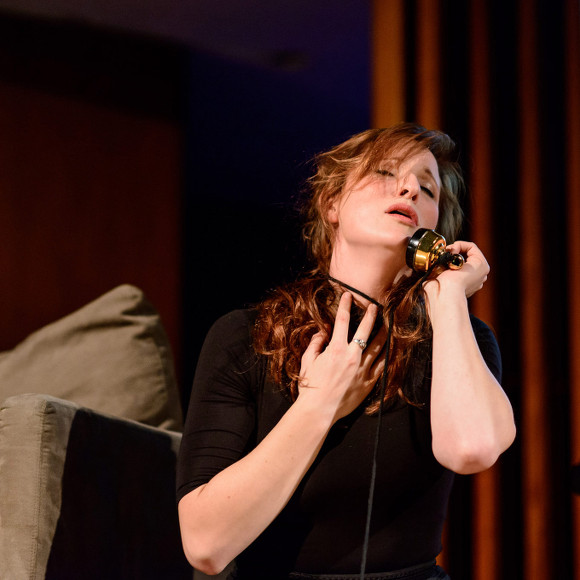
 Schubert’s Winterreise is sometimes described as the Everest of lieder singing and, as such, is something of a rite of passage for baritones. It’s much rarer to hear it sung by a soprano but today, on a day when there was more snow in Toronto than one encounters these days on the Hillary step, Adrianne Pieczonka, accompanied by Rachel Andrist, offered it up in the intimate Mazzoleni Hall. It took me two or three songs to get into it. The colours of the soprano voice are so not baritonal that the music sounded unfamiliar and disconcerting. By Der Lindenbaum though I was won over. Here was singing of a limpid beauty few baritones could match and from then on I was revelling in the new perspectives that hearing a soprano sing this music brings. I think it was greatly helped by Adrianne’s approach which definitely favoured bringing out the drama and the emotion of the text rather than wallowing in beautiful tone. That was there when she wanted it but there was much else besides. It was an emotional roller coaster from the (relative) optimism of Die Post through to the devastating last couple of numbers. By the end of Der Leiermann I was a puddle but possibly not quite as damp and deep as the critic sitting next to me (whatever Twitter might report). Rachel’s work at the piano was equally illuminating. This is a show they need to take to a much larger audience.

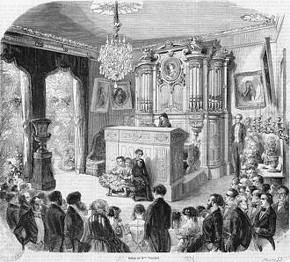 Pauline Viardot is one of those names that crops up quite a bit when one is researching the opera of the late nineteenth and early twentieth centuries. She was a mezzo-soprano of some note, friend (at the least) of both Turgenev and Chopin, hosted a notable Parisian salon and composed; though, being female, she was not taken entirely seriously by the musical establishment of the time. Among her compositions is a “chamber operetta”, Cendrillon, designed for performance at her salon and written when Viardot was already in her eighties. It’s going to be performed again this fall in Mazzoleni Hall at the Royal Conservatory and I sat down yesterday with director Joel Ivany to talk about the issues involved in staging such an unusual piece in a venue that’s not entirely opera friendly.
 The Royal Conservatory announced the concert line up for the 2016/17 season last night. As usual it’s a very eclectic mix with over 100 concerts in a rather staggering variety of genres. The one loose them is the Canada Sesquicentennial with 70% or so of the line up having some CanCon. Here are the highlights for the classical vocal music fan.
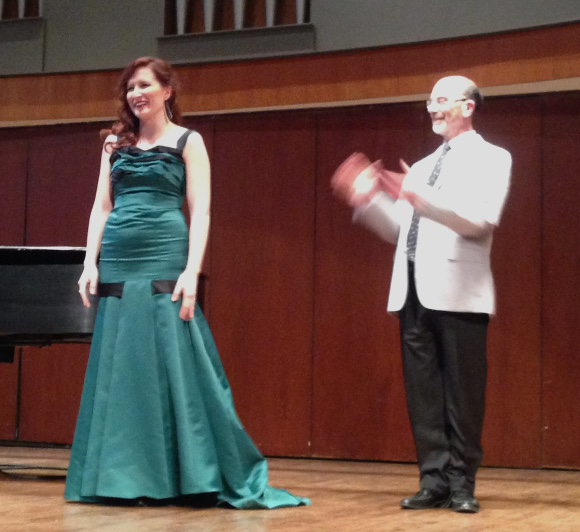
 The Glenn Gould School Vocal Showcase at Mazzoleni Hall last night was a chance to see twenty of the school’s singers in action. It was a curious mix actually; one bass, one baritone, a handful of tenors and mezzos and a lot of sopranos. There was a huge range of age and experience too from 18 year old first years to quite seasoned post-grads. As usual with these things I’m not going to attempt to be comprehensive but instead focus on the highlights as I saw them.