Christian Gerhaher’s recording of Mahler Lieder with the Orchestre Symphonique de Montréal under Kent Nagano is his first recording of the great Mahler cycles with orchestra. The disc contains Lieder eines fahrenden Gesellen, the Kindertotenlieder and the Rückert Lieder. This is singing of the highest class with great beauty, no lack of power and intense attention to the text. It’s hard to imagine a singer being more in this music than Gerhaher. Being Gerhaher, it’s quite individual and quite restrained (much less exuberant than Fischer-Dieskau) but without sounding unduly mannered. It sounds exactly right and yet no-one else would sing these songs quite the same way. The accompaniment from the Montreal orchestra is also very fine with great clarity of texture and lovely playing of the important woodwind solos.
The recording quality is excellent with a judicious balance between voice and orchestra and a limpidity that does justice to the clarity of the orchestral playing. Full texts and translations are provided.
 Although recorded in 2010 and 2013 and released in Europe in 2016 Barbara Hendricks’ recording of Mahler Lieder on her own Arte Verum label has only recently been released in North America. It’s quite an interesting choice of works. Lieder eines fahrenden Gesellen and the Abschied from Das Lied von der Erde are given in the Schoenberg chamber arrangements. The Rückert Lieder come in the piano version.
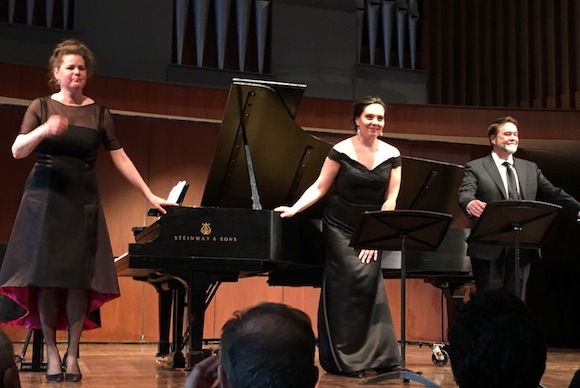
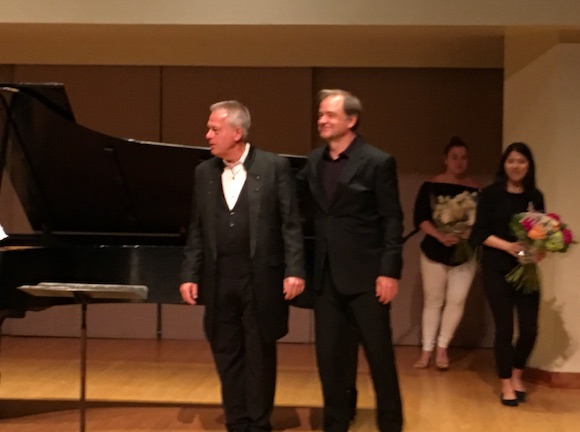
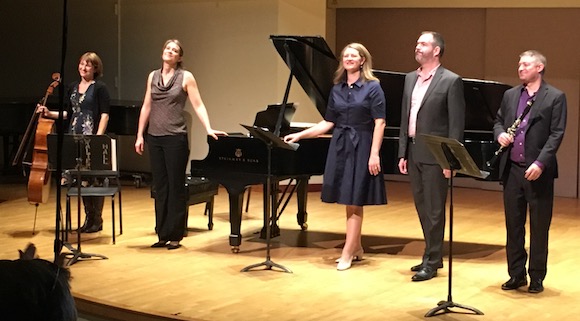
 I went to Walter Hall last night to see a couple of Mahler works in chamber reduction played by the Faculty Artists Ensemble conducted by Uri Mayer. I think I like Mahler in chamber reduction a lot. With one instrument to a part complex textures become clearer. No doubt there are conductors that can produce that clarity with a big orchestra but there are also, sadly, too many who reduce it to a grisly stew of unidentified body parts. It also allows singers to be heard without screaming. The only time I want to hear a tenor sounding like a goat being slaughtered is in that Dean Burry piece. I guess chamber reduction might not work for, say, the 8th Symphony but for the orchestral song cycles, the 4th Symphony, and, I’d hazard a guess, the 2nd Symphony I like it just fine.