
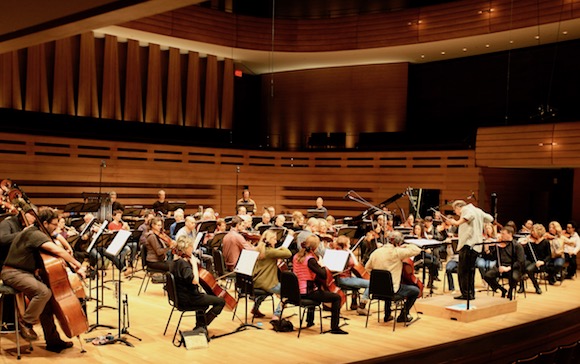
I went to see Esprit Orchestra’s show Plug in at Koerner Hall last night. I don’t often go to purely orchestral concerts but Jenn Nichols was dancing and I have this feeling that I ought to listen to more contemporary music.
The first piece; Symphonie minute by José Evangelista, is a highly compressed “symphony” in four movements. Each movement only lasts a couple of minutes and it uses a large orchestra. It’s intriguing that in such a short time each movement has a clearly defined character. It’s quite dissonant but very easy to listen to and doesn’t outstay its welcome.
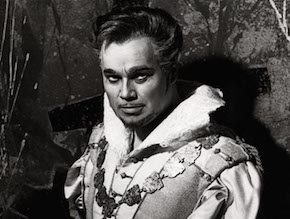 I guess it’s starting to quieten down a bit. Next week there are a couple of things of interest. On Monday the Faculty Artists at UoT have a concert in Walter Hall with Uri Mayer conducting. It’s an all Mahler program with the Lieder eines fahrenden Gesellen and the Fourth Symphony. The vocal soloists are Monica Whicher and Darryl Edwards. Later in the week the UoT Opera has its main fall production. This time it’s Don Giovanni conducted by Uri Mayer and directed by Marilyn Gronsdale. That’s in the MacMillan Theatre at 7.30pm on Thursday, Friday and Saturday with a matinée on Sunday. There will, as usual be two casts; one on Thurs/Sat and the other Fri/Sun. On Friday there’s another Whose Opera is is Anyway? from LooseTEA Theatre; Toronto’s opera improv. That’s at 7.30pm at the Comedy Bar. They are moving from there (good!) to Bad Dog Theatre for their December show on the 20th which should also be hosting a monthly show in 2018.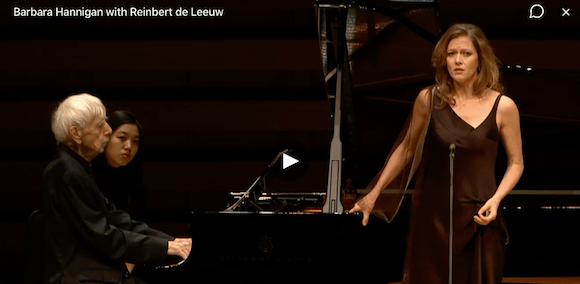
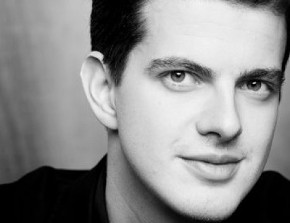 Last night Philippe Jaroussky appeared with Les Violins du Roy and conductor Matthieu Lussier in a mostly Handel program at Koerner Hall. It was a very good evening. Les Violons du Roy is a pretty small band; less than twenty including continuo, but they manage to produce quite a big sound while remaining elegant and flexible in a thoroughly idiomatic baroque way. The instrumental component consisted of a Handel overture, Fux’ Ouverture in D minor and Johann Gottlieb Graun’s (not the better known Carl Graun who was apparently his brother) Symphony in B Flat Major. It was a pretty good sampling of what one might have heard in the courts of Germany in the early 1700s and rather enjoyable.
 The Royal Conservatory has just announced its Koerner Hall line up for the 2017/18 season. There are 23 classical and 6 jazz concerts. This doesn’t include the Glenn Gould School or concerts in the RCM’s other halls. Highlights from a vocal point of view are as follows:
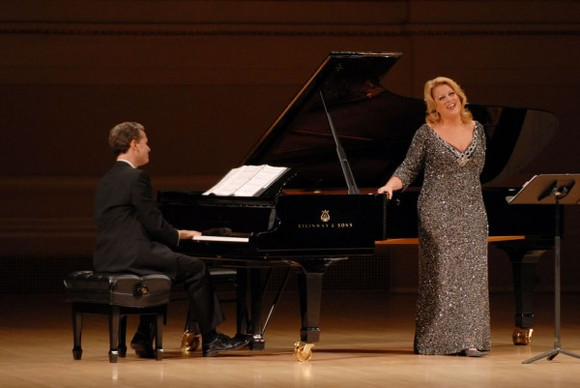
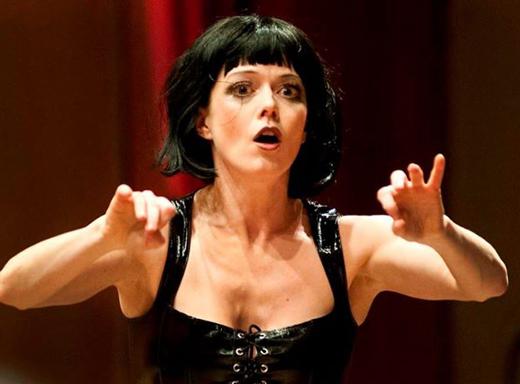
 Last night’s Soundstreams Koerner Hall presentation; Magic Flutes was an interesting experience. Aside from interesting (mostly) contemporary flute pieces it was very much an experiment in different ways of staging a concert. I’m all for breaking down the conventions of Mahlerian solemnity and I think experimentation is great. It’s in the nature of taking risks though that some things don’t quite work.
