
There’s a lot on today. Handel’s Ariodante opens at the COC at 2.30pm. There’s also a concert featuring Russell Braun with the Amici Ensemble at 3pm in the Mazzoleni Concert Hall at the Conservatory. The Elmer Iseler Singers and the Toronto Mendelssohn Choir also have concerts. Thursday sees the opening of Purcell’s Dido and Aeneas at Opera Atelier with Wallis Giunta and Chris Enns as the lovers which promises both eye and ear candy. That’s at the Elgin at 7.30pm. Then on Saturday there’s Singing Stars of Tomorrow, the result of a Sondra Radvanovsky intensive, at the Alliance Française at 7.30 pm. The line up is Valerie Belanger,soprano; Stephanie De Ciantis, soprano; Natalya Gennadi, soprano; Beth Hagerman, soprano; Jessica Scarlato, soprano; Sara Schabas, soprano; Caitlin Wood, soprano; Danielle MacMillan, mezzo-soprano; Marjorie Maltais, mezzo-soprano; Asitha Tennekoon, tenor. Quite a mix, from people I’ve never heard of to one who has already made her COC debut.
In other news, the COC and Show One Productions have announced a gala concert to take place at the Four Seasons Centre on April 25th next year. It’s billed (modestly) as Trio Magnifico: The Ultimate Opera Gala and the big draw is the Canadian debut of Anna Netrebko. She will appear with her husband tenor Yusif Eyazov and baritone Dmitri Hvorostovsky. They will be accompanied by the COC Orchestra conducted by Jader Bignamini. Given that Dima alone turned Koerner Hall into a frenzy of screaming Russian grannies, this could get interesting.

 This review first appeared in the print edition of
  It’s that time of year when it’s traditional to do best of the year lists. Fortunately this is all about music because in most other respects 2016 was a bit of a horror show. So here goes. As far as opera proper was concerned it was a pretty good year. There were no real howlers in the COC’s season. It was solid and, at its best, better than that, For me, Ariodante was the standout; an intelligent, thought provoking production backed up by extremely good acting and singing. I was really expecting to like the Claus Guth Marriage of Figaro more than I did. I enjoyed it but I was a bit perplexed by the lightening up that had taken place since Salzburg in 2006. Opera Atelier had their best show in quite a while with Lucio Silla but even Wallis Giunta couldn’t save a misconceived Dido and Aeneas.
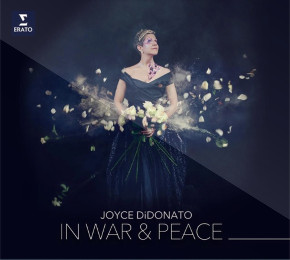 Joyce DiDonato’s latest CD In War and Peace is a compilation of baroque arias on the theme of war and peace, apparently prompted by the terrorist attacks in Paris. The arias are divided, apparently, into the two categories and while I get that Handel’s Scenes of Sorrow, Scenes of Woe from Jeptha is “war” I’m not at all sure how Purcell’s Dido’s Lament finds itself on that side of the balance sheet. No matter there’s lots of Handel; very well done, and quite a bit of Purcell, some of it quite little known; even better, with some Leo, Jommelli and Monteverdi along the way.
 It’s that time of year when one ponders the vexed question of how many Messiahs, and which ones, one is going to see this year. For Torontonians there seem to be four principal contenders; two fairly conventional and two less so. At the conventional end of things there’s the TSO of course. This year it’s back to the usual performing edition though fans of Sir Andrew’s “Big Fat Messiah” as heard last year can now acquire it on CD from the Chandos label. Baroque specialist Nicholas McGegan conducts so it’s probably as close to HIP as the TSO are ever going to get. Soloists are Yulia Van Doren, Abigail Levis, Isaiah Bell and Daniel Okulitch. I’m not familiar with either of the ladies but the guys are top notch. As ever the orchestra will be joined by the Toronto Mendelssohn Choir. There are five performances at Roy Thomson Hall on the 18th at 3pm and the 19th, 20th, 21st and 23rd at 8pm.
 Toronto Masque Theatre have announced their 2016/17 season. There are two main stage productions and three salon concerts. First of the main stage shows is a double bill of Handel’s dramatic cantata Apollo and Daphne with Jacqueline Woodley and Geoffrey Sirett and dancer Stéphaie Brochard, directed and choreographed by Marie-Nathalie Lacoursière paired with Richard Strauss’s Enoch Arden based on the epic poem by Tennyson, performed by actor Derek Boyes and pianist Angela Park. This one is at 8:00 pm on November 17th, 18th and 19th with a pre-show event at 7:15 pm each evening at the Enoch Turner Schoolhouse.
 operaramblings