
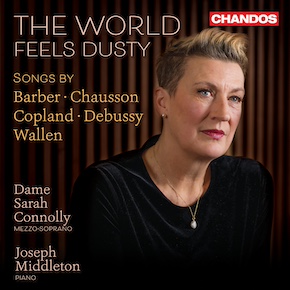
 Dame Sarah Connolly and Joseph Middleton have teamed up for another interesting recital album. It’s quite varied. It starts with Chausson’s La Poème de l’amour et de la mer which is actually two songs with a piano interlude. It’s very fin de siècle chanson with the piano line rather more interesting than the vocal line but pretty decent stuff, if a bit emotionally overwrought.
Barber’s Three Songs Op.10 are quite well known, especially the last; “I hear an army”. They are dark and dramatic and suit Connolly’s voice very well. Next is the often heard Debussy piece Trois Chansons de Bilitis which purports to be settings of translations of actual Sapphic texts but which sound exactly like a 19th century Frenchman would imagine a Sapphic text to be; i.e languorous. Nicely done though. Next we come to a pair of declamatory songs by Copland; “The world feels dusty” and “I’ve heard an organ talk sometimes”. Definitely a welcome change of pace. Continue reading
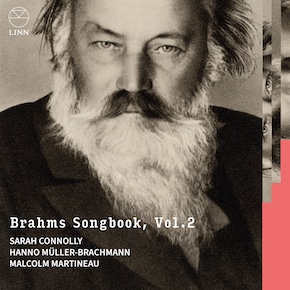 The second disk in pianist Malcolm Martineau’s project to record all the Brahms songs will soon be available. It features twenty nine songs for low voice with, as far as i could tell, no theme. All the works have titles like Fünf Gesänge Op.72 which actually starts the disk.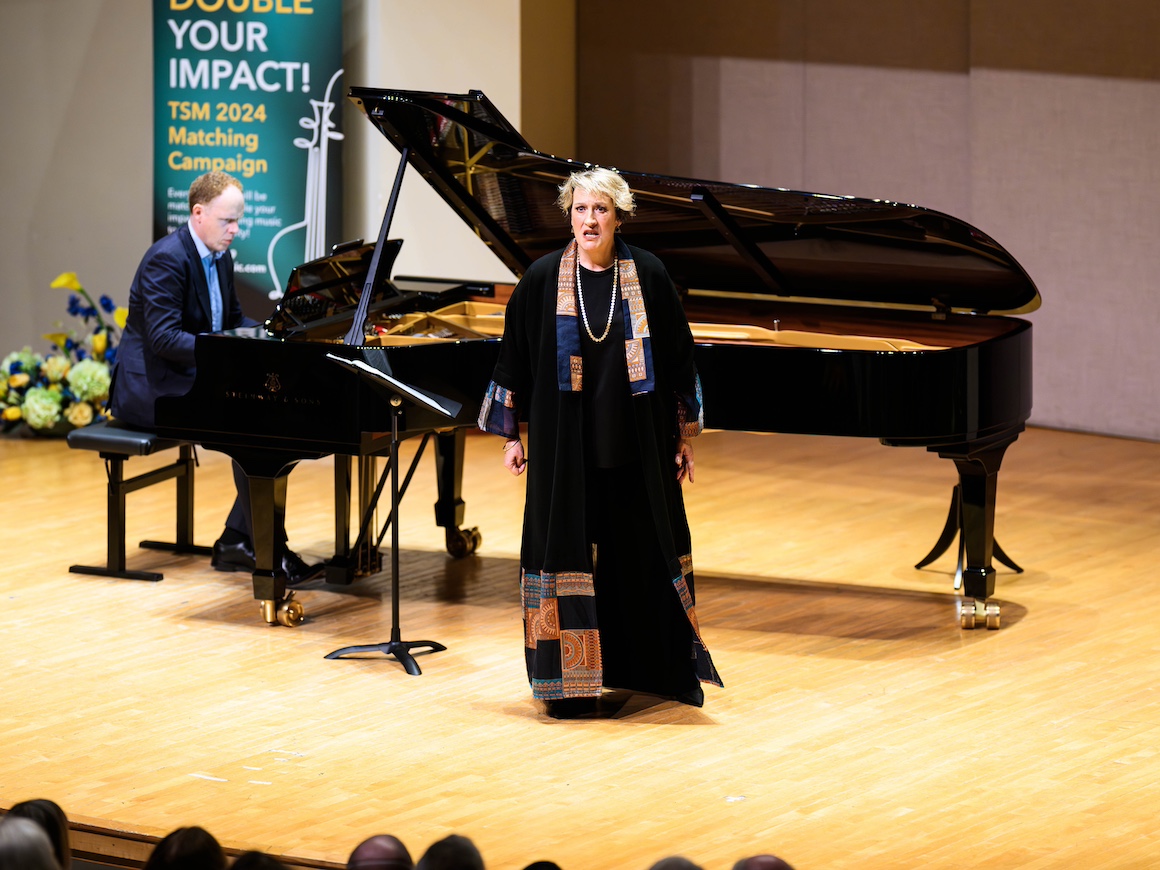
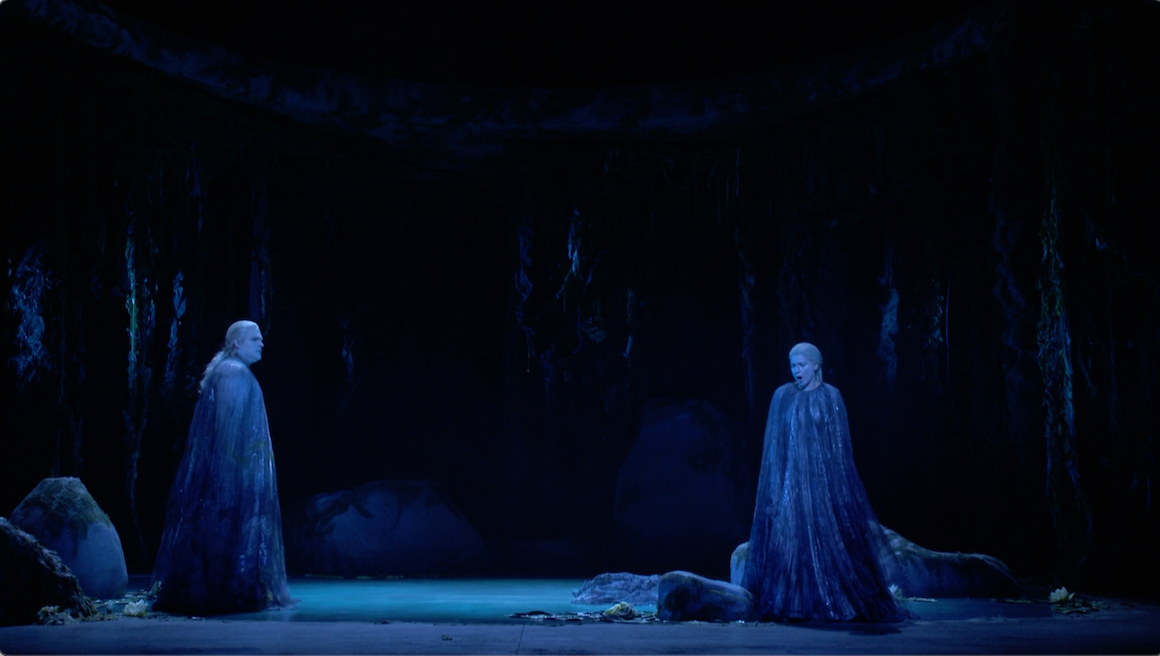
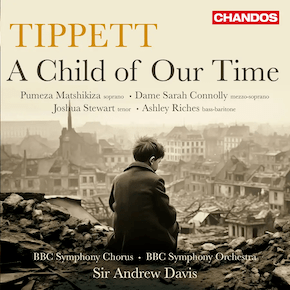 The late Sir Andrew Davis was a life-long advocate for the music of Sir Michael Tippett so it’s fitting that one of his last recordings (perhaps the last?) should be of that composer’s A Child of Our Time. It’s an unusual piece in many ways. It’s an oratorio for solo quartet, chorus and orchestra and its structure reflects both Messiah and the Bach Passions. The subject matter is anti-Semitism in Germany as a specific example of “man’s inhumanity to man” more generally.
 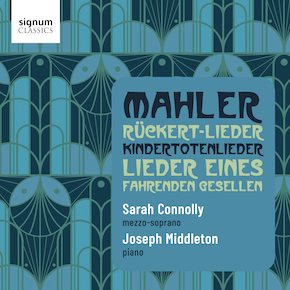 Mezzo-soprano Sarah Connolly and pianist Joseph Middleton have produced a CD with three of Mahler’s best known song cycles; the Rückert-Lieder, Lieder eines fahrenden Gesellen and the Kindertotenlieder. It’s a very fine recording. Both performers are, of course, expert recitalists and they take quite an individual way with these well known pieces. In general they are quite slow (less so in the Rückert songs than the other two sets) but very clearly articulated. The phrasing, by both singer and pianist, is very deliberate and sometimes quite individual. This is most pronounced in the Rückert songs. It’s an interesting approach which I enjoyed.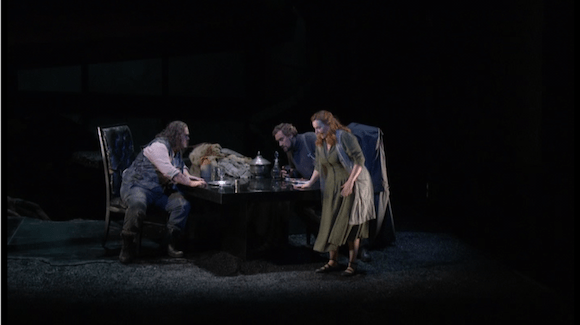
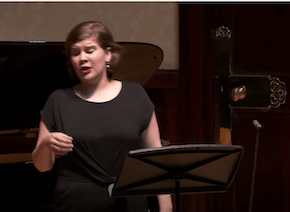 I think my best recent discovery on the web has been Wigmore Hall’s Youtube channel. There’s a wealth of material in various genres but, from my point of view, the real glory are the song recitals. I’ve seen particularly good ones from Gerry Finley and Sarah Connolly and, more recently, really well thought out programmes from Allan Clayton and Stephanie Wake-Edwards and from Ema Nikolovska. Many readers will remember
  Vladimir Jurowski is a notable Mahler interpreter so a new recording of Mahler’s great symphonic song cycle Das Lied von der Erde is welcome; especially when Jurowski’s own Rundfunk-Sinfonieorchester Berlin is combined with soloists as fine as Sarah Connolly and Robert Dean Smith.
 operaramblings