Clockwork Cenerentola

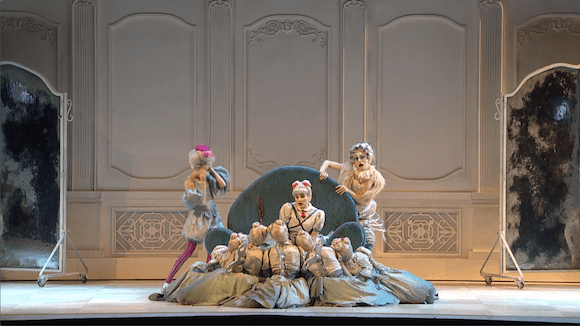
Following on from Massenet’s dreamlike, ambiguous Cendrillon I took a look at a fairly recent recording of Rossini’s much more straightforward, if somewhat moralising, opera buffa on the same theme La Cenerentola.  There’s no magic here.  The fairy godmother is replaced by the prince’s tutor Alidoro who engineers Angelina’s trip to the ball.  There’s no stepmother either but rather a stepfather and it’s unclear what has happened to either of the mothers one imagines must have been involved.

1.angelinadolls Continue reading →

Cendrillon – dream or nightmare?

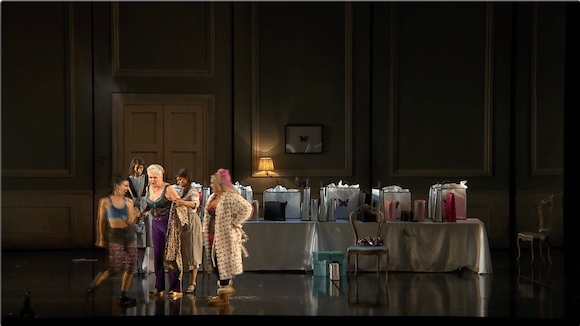
The libretto of Massenet’s Cendrillon is much more ambiguous than Rossini’s straightforward La Cenerentola and given that we all “know” the Cinderella story exploiting those ambiguities is likely to prove attractive to a director.  Fiona Shaw, whose Glyndebourne production was revived in 2019 under the revival direction of Fiona Dunn, finds rather more than. most.

1.shopping

Continue reading →

Searing Simon Boccanegra

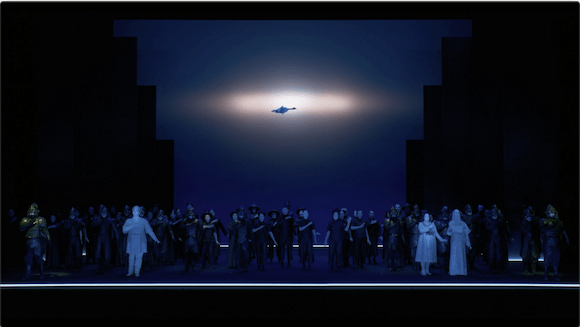
Sometimes a video recording just seems to have it all and I would put the 2019 Salzburg Festival version of Verdi’s Simon Boccanegra in that category.  It’s quite an interesting production but it’s the sheer quality of the music making that puts it in the very top bracket.  It’s also technically very good in all departments.

1.tweets

Continue reading →

Violanta

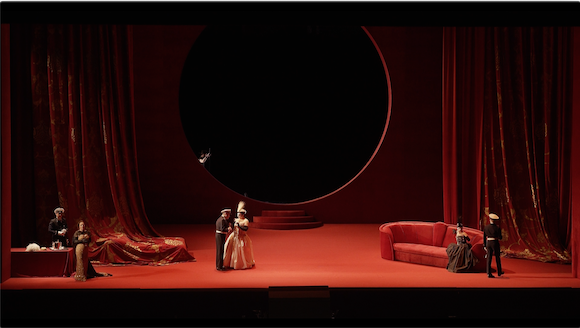
Violanta is one of those works which seem oddly out of place, among other things.  It’s a one act opera by the eighteen year old Erich Korngold which premiered in Munich and Vienna in 1916.  It hardly needs saying that most eighteen year olds in Europe in 1916 were engaged otherwise than in composing rather overwrought operas about seduction and death in 15th century Venice but there you go.

1.party

Continue reading →

Orphée à Salzburg

The Salzburg Festival rarely does operetta but in 2019 they decided to commemorate the 200th anniversary of Offenbach’s birth with a new production of Orphée aux enfers by Barrie Kosky.  With Kosky and comedy one sort of knows what to expect but there’s always something very original.  Here, in order to get the (German) dialogue as crisp as possible he takes it away from the singers and gives it to a new character; John Styx, played by actor Max Hopp, who not only speaks all the dialogue in an amazingly wide range of voices but also produces all the sound effects.  The only other character who speaks is Anne Sofie von Otter as L’Opinion publique and even she is doubled by Hopp.  Not that the singers have nothing to do during the dialogues.  They pantomime their words, often in quite an exaggerated fashion and to great effect.

1.euridicestyx

Continue reading →

Turandot as symbolism

Robert Wilson’s take on Turandot is interesting.  It’s symbolic, even ritualistic and it’s perhaps best seen as a performance of a performance.  It’s certainly not in any way naturalistic.  Throughout the characters are “abstracted” by colour scheme in costume and make up and they move in highly stylized patterns.  This is especially apparent in Act 3 where when Liù dies nothing happens.  She just stands in a pose.  She and Timur then walk back and forth across the stage a few times before slowly processing into the wings.  It’s the same with the final scene with Calaf and Turandot.  They never even touch each other which makes Calaf’s rather lurid description of what he’s going to do to Turandot seem even rapier than usual.  The words and the music (the IMHO overblown Alfano completion) seem at odds but maybe make sense in a ritualistic way.  The approach does make for some very striking stage pictures though.

1.goose

Continue reading →

The Magic Flute in the Hotel Sacher

Canadian design/direction team Barbe & Doucet were engaged to create a new production of Mozart’s Die Zauberflöte at Glyndebourne in 2019. As they explain in the introductory feature The Making of the Magic, they had refused for 20 years to tackle this work because of what they saw as its inherent racism and sexism. Part of the interest therefore in watching this recording is to see whether and how they deal with those two issues.

1.3ladies Continue reading →

Le postillon de Lonjumeau

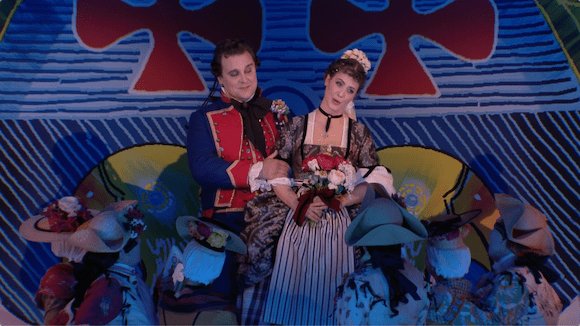
Most people probably know Adolphe Adam as the  composer of the music for the ballet Giselle but he was more than that. He was also a scholar who worked hard to study and revive the work of Rameau and other pre-Revolution composers. So, when tasked with composing a piece for the Opéra Comique he chose to combine elements that had produced previous “hits”; a vocationally based plot, a love story and so on with a Louis XV setting that allowed him to include pastiche Baroque. The result was Le postillon de Lonjumeau; a work that had much success across Europe during the mid 19th century (Wagner conducted it in Riga) but which had long disappeared from the repertory when the Opéra Comique revived it in 2019. Denise Wendel-Poray reviewed it in the Summer 2019 issue of Opera Canada and it has now been released on DVD and Blu-ray.

1.marriage

Continue reading →

Spare and compelling Tristan

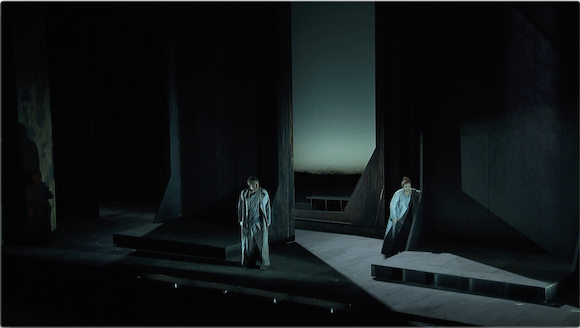
I’m rarely disappointed by a Pierre Audi production and his Tristan und Isolde for Teatro dell’opera di Roma, recorded in 2016, was far from that.  It’s a bit of a slow burn but then so, really, is the work itself.  It’s starkly simple.  The sets contain few elements and no fuss.  Costuming is almost drab but the direction of the singers is compelling and it builds to a brilliant staging of the Liebestod with Isolde silhouetted, motionless in a kind of frame and absolutely nothing happening which, paradoxically, is riveting.

1.ship

Continue reading →

Grim, dark Hoffmann

One of the interesting things about Offenbach’s Tales of Hoffmann is that there is no definitive edition so creative teams have a lot of flexibility in how they cut and combine material.  Director Tobias Kratzer and conductor Carlo Rizzi created a really interesting take for their production at Dutch National Opera in 2018.  It’s a very modern, very dark interpretation that while it keeps Offenbach’s music (though not interpolations like Scintille diamante) and the words are all from (some version of) the libretto the storyline varies a lot from what we are used to while keeping intact the central psychological fact that Hoffmann is incapable of relating to real women.

1.party

Continue reading →