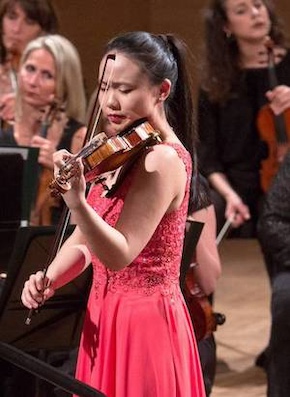
Stella Chen
Last night at Trinity St.Paul’s we got the first of two concerts in the fourth iteration of the OPUS Chamber Music series. Music director and pianist Kevin Ahfat had arranged an impressive group of young string players to join him in a varied and enjoyable programme.
From the United States we had violinist Stella Chen; a Queen Elisabeth Prize winner and Gramophone Young Artist of the Year, and up and coming violist Matthew Lipman. There was Berlin based cellist Brannon Cho. The local talent consisted of and violinist Isabella Perron, as well, of course as Kevin himself.
First up were Ahfat and Lipman with Rebecca Clarke’s Sonata for Viola and Piano of 1919. It’s quite a substantial piece with more than a hint of Debussy, especially in the piano part. The first movement is marked “Impetuoso” but it’s nothing like as frenetic as the second movement; “Vivace”, which is really densely scored. There’s a lovely, lyrical and expressive concluding “Adagio” which culminates in a very involved final section in high romantic style. Some gorgeous playing and great communication between the musicians here. Continue reading →

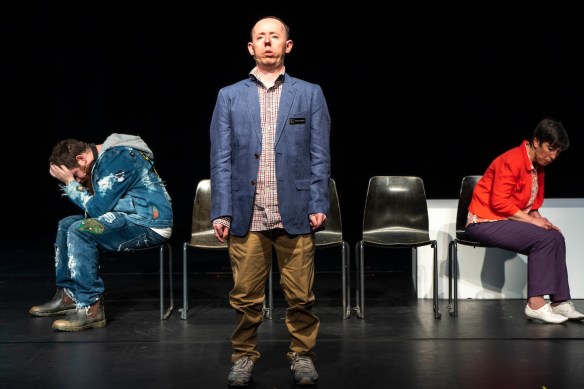

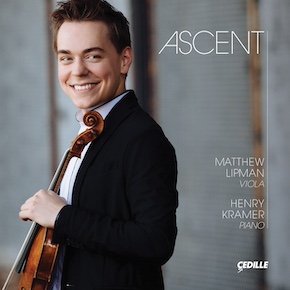 Having been impressed by violist Matthew Lipman at the two OPUS IV concerts earlier this week I decided to check out his CD, Ascent, which consists of a number of works for viola and piano with pianist Henry Kramer (currently faculty at Université de Montréal).


 Not so long ago if one wanted to do interesting electronic music things one needed a studio full of enormously expensive equipment, access to which was likely restricted to a fortunate few. Now with a few relatively inexpensive mikes, a laptop and some speakers one can create all kinds of cool stuff and perform it in almost any venue. The recording ‘m going to talk about here was made a few years ago but it’s good and pretty typical of what I’m talking about.
 Problematica is an upcoming solo CD with some interesting twists from Canadian cellist+ India Gailey. I can’t call it a solo cello CD because Gailey contributes vocals as well as some truly virtuosic cello playing and there’s lots of electronics and electronic processing involved. There are also some unusual presentation options. There are seven works by younger Canadian composers on the disk and recording engineer John DS Adams of Stonehouse Sound makes a major contribution.
