Requiem aeternam

SeventhSeal3Sunday night I attended a performance of Mozart’s Requiem Mass and the Ave Verum Corpus at Grace Church on the Hill.  It was a charity event in memory of Rachel Krehm’s younger sister Elizabeth.  All the cast and so on details are here.

I was/am in no fit state to write any kind of analytical review.  There has been far too much death in my life recently and the music and the packed church was pretty much what I needed to process some of my own demons but not to tease out the nuances of the music or the performance.  Enough!  It was all in aid of St. Michael’s ICU and it must have raised a ton of money judging by the number of people there.  I’m really grateful to Rachel for organizing this and for the invite.

In New York

giuseppe_verdi_verdi_squareThe lemur and I flew to New York yesterday.  We are going to see Die Frau ohne Schatten at the Met tomorrow.  Anyway, following the train ride from Newark to Penn station and then the subway to our hotel, this was the first thing we saw after regaining the upper airs.  Appropriate or what.

David McVicar’s Die Meistersinger

David McVicar chooses to set his production of Die Meistersinger, staged at Glyndebourne in 2011, in the 1820s or thereabouts.  It’s an interesting choice as it puts German nationalism in a specifically cultural rather than political context and also rather clearly makes the point that “foreign rule” = “French rule”.  That said, he really doesn’t develop any implications from that and what we get is a production typical of recent McVicar efforts.  There’s spectacle aplenty and very good character development but he doesn’t seem to have any Big Ideas; for which, no doubt, many people will be grateful.  The only place he seems to go a bit overboard is in laying on some fairly heavy German style humour.  People who think that slapping waitresses on the bottom is the height of comedic sophistication will probably appreciate it.

1.Eva and Walther Continue reading

Flute of death and life

It’s hard to fault any aspect of the new recording of Mozart’s Die Zauberflöte recorded earlier this year at the Baden-Baden festival.  The soloists are consistently good, and in some cases very good indeed, Simon Rattle is in the pit with the Berlin Philharmonic and Robert Carsen’s production is beautiful to look at and thought provoking without being pointlessly provocative.  Add to that first rate video direction and superb Blu-ray sound and picture quality and one has a disk that looks competitive even in the very crowded market for Zauberflöte recordings.

1.ladies Continue reading

Korngold’s Silent Serenade at the Glenn Gould School

Joel Ivany

Joel Ivany

Korngold’s Silent Serenade is, to put it mildly, odd.  The plot could have been taken from Dario Fo and the only possible excuse for the schmaltzy music is that Korngold initiated many of the saccharine clichés he relies on.  Last night the students of the Glenn Gould School under the direction of Joel Ivany and the musical leadership of Pieter Tiefenbach bravely tried to rescue it from well deserved obscurity.

The plot concerns a dressmaker who is accused of breaking into the bedroom of, and trying to abduct, one of his clients; an actress who happens to be engaged to the Prime Minister.  In Naples this is a hanging offence.  Meanwhile someone has made an unsuccessful attempt to assassinate the unpopular Prime Minister with a bomb.  The king is dying and, we learn from his confessor, wishes to make a great act of mercy before he finally snuffs it.  He wishes to pardon the bomber.  Unfortunately the police don’t have a suspect.  The solution is obvious.  The dressmaker must confess to both crimes so that he can be pardoned and hanged for neither.  Unfortunately the king dies before signing the pardon and so the dressmaker must hang.  Following this so far?  Fortunately for him the unpopular Prime Minister is killed in a popular uprising and he is installed in his stead much to the annoyance of the anarchist who did plant the bomb.  They agree that the dressmaker will return to his salon and the actress, who has now fallen in love with him and is, conveniently, no longer engaged.  There’s also a subplot concerning a newspaper reporter and an aspiring actress.

Continue reading

Topher does it again

Topher Mokrzewski does it again.  This time it’s an operatic spoof on our appalling, indeed surreal, mayor.  Aaron Dimoff sang the role of Rob Ford. Alex Beley and Tyler Fitzgerald are the Ford Nation Chorus. All the singers are part of Calgary Opera Emerging Artist Development program.

Hat tip too to Brent Bambury and the CBC.

Love and Life

Songs of Life&Love HR (4 of 25)Anne Larlee and Simone Osborne brought their Maureen Forrester recital tour to Toronto today, courtesy of Jeunesses Musicales Canada and the COC’s free lunchtime concert series.  The programme featured works by Bellini, Schumann, Hahn and Richard Strauss plus two specially commissioned pieces from Brian Current.

I particularly enjoyed the Schumann and Strauss pieces.  Simone’s interpretation of the Frauenliebe und -Leben showed a very wide range of emotion and tone colour and exceptionally good German diction.  The three Strauss songs also displayed considerable power.  This was very classy lieder singing.

Continue reading

Ensemble Studio candidates announced

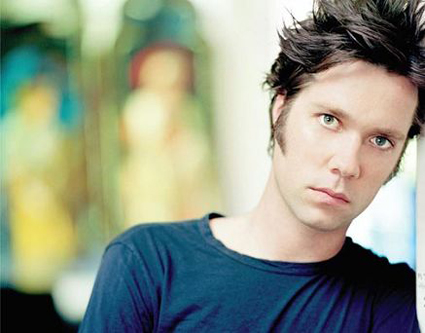
rufus_goingtoatownThe competitors for the Ensemble Studio competition to be held on November 26th have been announced.  They are: soprano Karine Boucher (Quebec City, QC); mezzo-soprano Emma Char (Kitchener, Ont.); mezzo-soprano Francesca Corrado (Vancouver, B.C.); tenor Jean-Philippe Fortier-Lazure (Kitchener, Ont.); bass-baritone Nathan Keoughan (Charlottetown, P.E.I.); bass-baritone Iain MacNeil (Brockville, Ont.); tenor Jean-Michel Richer (Montreal, QC); soprano Lara Secord-Haid (Winnipeg, Man.); and mezzo-soprano Rachel Wood (London, Ont.).

As previously announced this year’s competition will be a glitzy gala affair and apparently Rufus Wainwright will MC.

Beyond pale

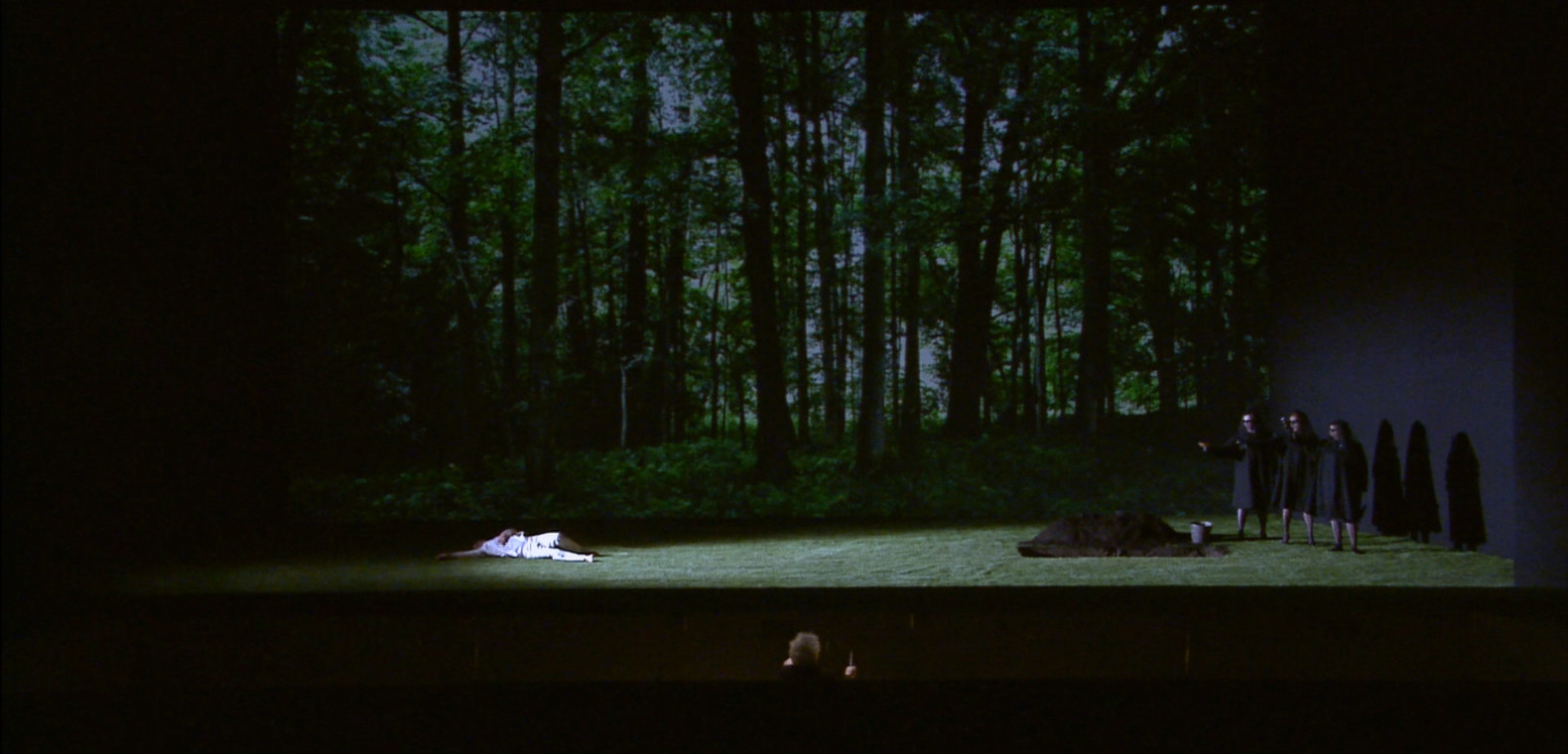
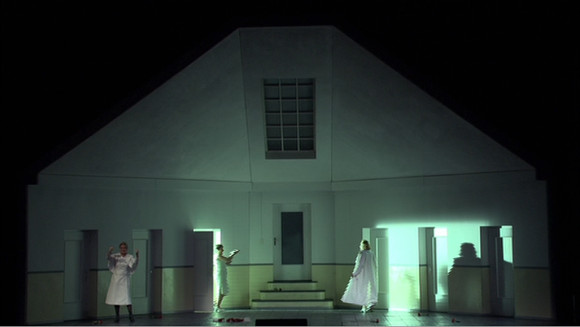
Paul Dukas’ Ariane et Barbe-bleue is a setting of a libretto by the symbolist poet and playwright Maeterlinck.  It’s roughly contemporary with both Debussy’s Pelléas et Mélisande and Strauss’ Salome.  It shows.  It really is a product of a particular fin de siècle world view.  Like Debussy’s piece, Ariane is loosely based on a folk tale.  In this case it’s the gory story of Duke Bluebeard and his six wives but here it’s curiously etiolated.  It’s as if Maeterlinck is reacting to the ultra-realism of, say, Zola, by retreating into a strange inner world.  It’s not even the troubled inner world of Freud or Jung either.  It’s colourless (and we’ll come back to that).  All this is reinforced by Maeterlinck’s style of telling rather than showing.  Much of what “action” there is takes place off stage and is narrated by the on stage characters.  Both words and music are used to fill in the gaps.

1.set Continue reading