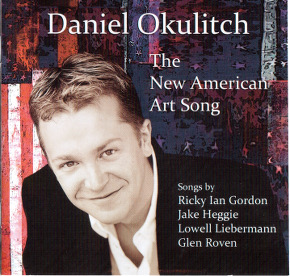
The New American Art Song

okulitchThe New American Art Song is a CD of, unsurprisingly, American art songs.  Canadian bass-baritone Daniel Okulitch is accompanied by the composers in four contrasting sets.  The first set is Quiet Lives by Ricky Ian Gordon; eight songs setting texts by various poets.  The music is tonal with occasional elements of minimalism but overall a bit of a retro “piano lounge” feel that didn’t particularly excite me.

Second up were two songs, Of Gods and Cats, by Jake Heggie to texts by Gavin Geoffrey Gillard.  These are sly, witty, jazzy and much more contemporary sounding.  Much more musically inventive too.  It’s easy to see why Heggie is in the upper tier of contemporary American composers.  The disc also has a bonus Heggie song; a setting of Browning’s Grow Old Along With Me, that I really liked.

Continue reading →

400

It’s taken since May 16th 2014 to get from 300 to 400 recordings in the DVD review database.  But now we are there with 84 Blu-rays and 316 DVDs.  Surprisingly the Toronto Public Library is still a major source of material though one can see that the statistics are perhaps skewing a little more to my personal tastes.  This despite someone at TPL having a taste for 19th century turkeys from French and Belgian regional houses.  So, here’s the round up of the summary stats.

language400Italian is still the most common language with 30% of recordings but German has moved up relatively from 24% to 27%.  Perhaps surprisingly the proportion of recordings in English has hardly changed at all at 13%.  I would have thought that the proportion of contemporary works, many/most in English would have impacted the stats more.
Continue reading →

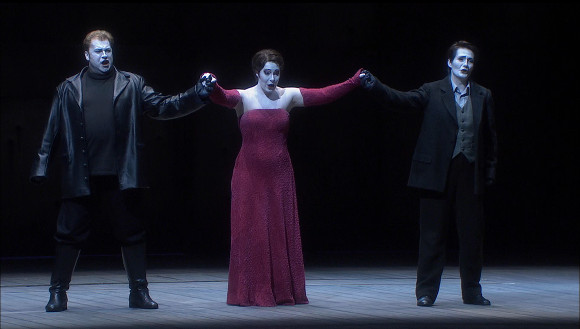
Rienzi

Wagner’s Rienzi is really quite an interesting work.  It follows the conventions of the French grand opera rather than the more integrated structure of most of the later works, although as presented in Toulouse in 2012 some of those elements, for example the ballet, have been removed in the interests of cutting the work down to manageable size.  Even with the Toulouse cuts it runs three hours.

1.trio

Continue reading →

Fenlon x2

fenlonandfenlonLast night at Gallery 345 Rachel Fenlon gave a preview performance of her new one woman show Fenlon & Fenlon:Liebesbotschaft.  It’s a program of fifteen more or less well known Schubert lieder put together to create some kind of thematic arc around love and loss and redemption.  There’s scarcely a Bächlein to be seen.  The USP, of course, is that Rachel accompanies herself on the piano.

It’s curiously difficult to figure out just how this approach makes the experience different for the audience, especially when, as in this case, one is not familiar with the singer in normal mode.  It’s also quite hard to sort out what one thinks ought to be happening from what objectively is.  For example, I initially thought that Rachel sounded balanced much further back relative to the piano than usual.  Then I shut my eyes and the impression completely disappeared.  It’s odd.  Certain songs certainly seem to gain from the approach.  Gretchen am Spinnrade perhaps most of all, with the piano more than ever seeming to be the spinning wheel.  Another effect was it made me reconsider my impression that the piano parts in Schubert are pretty simple (in a sense they are compared to, say, Strauss) but played this way one realises that they are far from trivial.

Continue reading →

Fenlon and Fenlon

23It’s that quiet time of year but this week there’s a bit of an unexpected bonus.  Canadian soprano Rachel Fenlon, usually based in Berlin, is giving a somewhat unusual recital at Gallery 345 at 8pm on Friday.  It’s a recital of Schubert songs in which she accompanies herself at the piano.  Rachel is an accomplished pianist and could have chosen a solo career on that instrument rather than singing.  Since there isn’t a Schubert cycle written specifically for female voice she’s curated one for herself and called it Liebesbotschaft. I don’t know if the manner of performance would have been common in Schubert’s day but surely not unheard of.  Anyway, it should be fun.  It’s also a preview of sorts as Rachel plans to tour this program in Europe.
More details here.

Three Bats on a Chest of Drawers

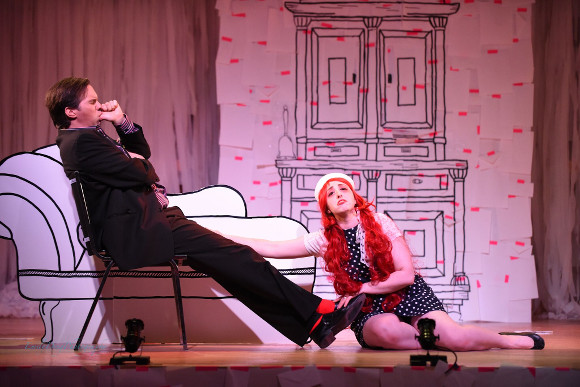
Opera 5’s interactive production of Johann Strauss II’s Die Fledermaus opened last night in the Great Hall at 918 Bathurst.  It’s an intriguing but, above all, fun show.  I think it’s fair to say that presented straight Die Fledermaus has more than a few elements of meta-theatricality.  Here it’s central to the plot from MC Pearle Harbour’s initial apology for the lack of a fourth wall because “we can’t afford one” through a whole series of “interventions” by various characters.  Unpacking it all would probably make as much sense as Umberto Eco’s Three Owls on a Chest of Drawers and I’m not as clever as the late Professor Eco and, in best Fledermaus tradition, it’s the morning after and I’ve only had five hours sleep.  So, I’ll avoid the meta and try and describe the show.

unspecified

Continue reading →

Conservatory 16/17

Adrianne-Pieczonka-4-credit-Johannes-IfkovitsThe Royal Conservatory announced the concert line up for the 2016/17 season last night.  As usual it’s a very eclectic mix with over 100 concerts in a rather staggering variety of genres.  The one loose them is the Canada Sesquicentennial with 70% or so of the line up having some CanCon.  Here are the highlights for the classical vocal music fan.

Koerner Hall will feature recitals by Deb Voigt (November 11th) and Natalie Dessay (May 2nd) plus Phillippe Jaroussky with Les Violins du Roy (April 13th).

The GGS fall opera is Viardot’s Cendrillon with Peter Tiefenbach as music director in Mazzoleni Hall (November 18th and 19th).  The big spring production, at Koerner, will be Piccini’s La Cecchina with Les Dala conducting (March 15th and 17th).  No word on directors yet.  There’s also the GGS Vocal Showcase in Mazzoleni Hall on February 4th.

Continue reading →

Hyper traditional Figaro

The 2009 production of Mozart’s Le nozze di Figaro from Madrid’s Teatro Real had me doing a bit of a double take.  It’s all pouffy wigs, breeches and heaving bosoms.  In fact it’s so traditional that it wouldn’t be out of place in Winnipeg or Omaha but comes as something of a surprise in a major European house.  In the “Making of” feature, included as an extra, director Emilio Sagi suggests that the opera is so “perfect” that only a “hyper-realist” approach is appropriate.  It’s an interesting idea but “hyper-realist” here turns out to mean a bunch of established opera conventions that bear as much of a relationship to “reality” as, say, a James Bond film does.  There is one minor directorial intervention.  A air of buxom extras appear in almost every scene.  I’m not entirely sure why.  Perhaps they are the Wonderbra of the production as their sole purpose seems to be to uplift the cleavage quotient.  For the record, the piece is presented uncut so Basilio and Marcellina get their big arias in the last act.  The traditional approach, I know, has its adherents.  I’m not one of them.  I could have used a few ideas!

1.act1

Continue reading →

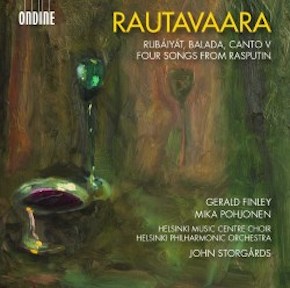
Rautavaara – Rubáiyát etc

Rautavaara_Rubaiyat_ODE12742This review first appeared in the print edition of Opera Canada.
This CD contains four recent works by Finnish composer Einojuhani Rautavaara. With the recent announcement of his death they are no doubt among his last and are representative of his final stylistic period in which he abandoned earlier experiments in dodecaphony, use of bird song etc to return to a high romantic style reminiscent at times, inevitably, of Sibelius and even more, perhaps, of Dvořák, though always, always sounding like Rautavaara.

Continue reading →

Language, dialect and accent

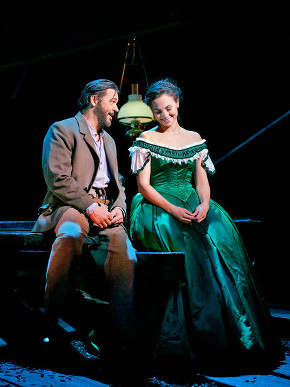
07COLDMOUNTAIN1-blog427I had a curious operatic experience recently.  I was listening to a CD recording of a new American opera; Cold Mountain to be precise, and it’s sung in rather distinct southern American tones.  In fact, so much so that a different accent is given to the black character (I only recall one).  I’m really not sure how I feel about this.  Generally, I think, there’s a “standard” operatic version of each of the major opera languages and it’s usually only departed from for comic effect.  Ochs’ rustic accent in Der Rosenkavalier being a case in point.  I think I’d be surprised, maybe even shocked, to hear Peter Grimes sung in a Suffolk burr or Die Meistersinger in deepest Bavarian.  Even Jake Heggie’s Moby Dick is sung in standard operatic English with a nary a New England “a” in earshot, at least in the SFO production.  So why would anyone choose to break this convention for Cold Mountain?  I’m really quite curious to canvass opinion on this.  Do please share your thoughts in comments.